Why are so many local contractors still paying massive weight overage fees for bins that weren’t engineered for their specific materials? It’s a costly mistake that stalls progress and drains your project budget. Finding a dependable construction dumpster rental Los Angeles partner means more than just getting a box on-site; it requires a provider that understands the logistical hurdles of the city.
We know that you value transparency and reliability above all else. You need your equipment delivered on time without the headache of permit confusion or hidden charges. This guide will help you master the logistics of waste management, from selecting low boy bins for heavy concrete to navigating the specific LADOT requirements for street placement. We’ll cover how to secure the right permits and choose the exact bin size to ensure your site stays clean and your schedule remains on track.
Key Takeaways
- Match bin engineering to material density to avoid costly weight overages and ensure safe hauling.
- Navigate LADOT street permit requirements for your construction dumpster rental Los Angeles to prevent project delays.
- Utilize specialized Low Boy Dumpsters for heavy debris like concrete and dirt to maintain site safety and compliance.
- Select the ideal bin size from 10 to 40-yard options based on your specific residential or commercial site footprint.
- Master weight estimation for high-density materials to keep your project budget transparent and predictable.
Selecting the Right Construction Dumpster Rental in Los Angeles
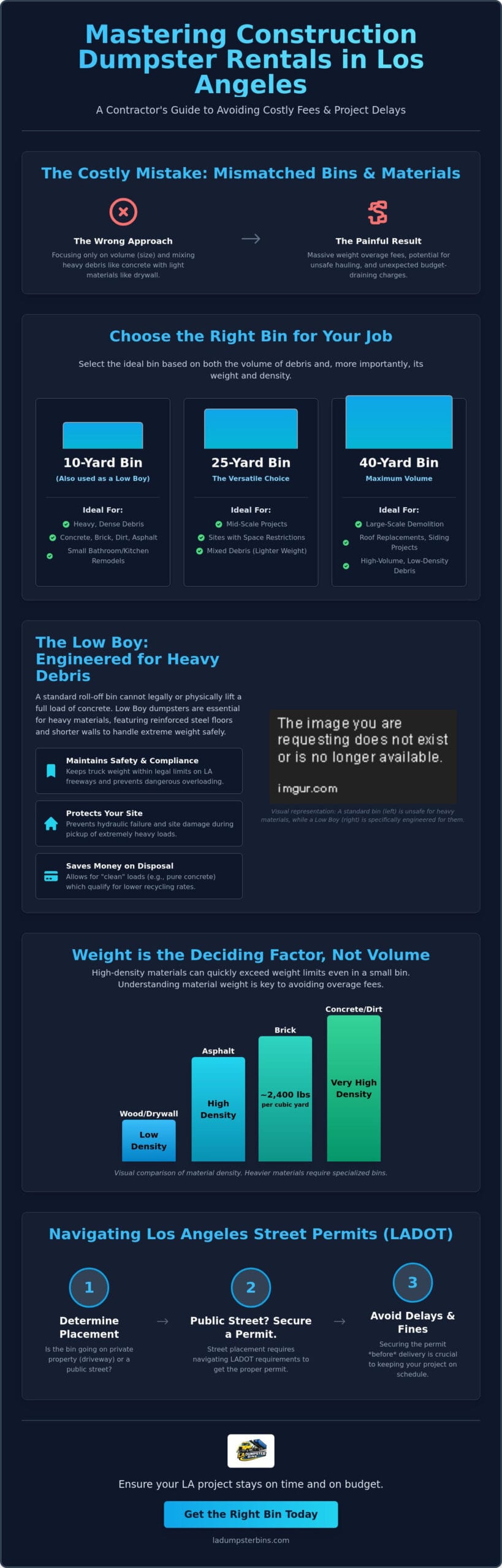
Success on a job site starts with selecting the right equipment. Before you book a construction dumpster rental Los Angeles, you must identify exactly what you are throwing away. Mixing heavy concrete with light drywall can lead to unexpected billing issues. Most contractors mistakenly focus only on volume, but weight is the factor that often determines your final cost. High-density materials like asphalt or dirt require specialized bins regardless of how much space they take up.
Space is at a premium in Southern California. Consider the physical footprint of the bin before delivery. Tight residential streets in Silver Lake or the hills of Bel Air don’t always accommodate large equipment. Roll-off dumpsters need significant room for the truck to maneuver and drop the container safely. Measure your driveway or designated street spot to ensure a seamless drop-off without blocking neighbors or traffic.
Timing also impacts your bottom line. Evaluate your project timeline honestly. While a standard rental period usually covers a week, daily extensions can add up quickly if your crew hits a snag. Booking the right size from the start reduces the need for multiple hauls. This approach is often more cost-effective than renting a slightly smaller bin and paying for frequent swaps. Always distinguish between volume-based debris, like furniture or wood, and weight-based debris, like stone and tile.
The 10-Yard Bin: Small Remodels and Heavy Debris
This size is the ideal choice for bathroom renovations or small kitchen tear-outs where space is limited. When you are dealing with high-density waste like concrete, brick, or dirt, the 10-yard bin is the industry standard for high-density waste. It often serves as a Low Boy Dumpster, designed with shorter walls to handle the extreme weight of masonry materials without exceeding legal hauling limits on city streets.
The 25 and 40-Yard Bins: Large Scale Demolition
For whole-home siding projects, roof replacements, or commercial interior gutting, you need significant volume. The 40 Yard Dumpster is the most cost-effective option for high-volume, low-density debris like wood, cardboard, and general trash. If you are working in the San Fernando Valley, check your overhead clearance. Low-hanging trees and narrow gate widths can prevent a 40-yard bin from reaching its intended spot. In these cases, a 25 yards roll off dumpster often provides the necessary capacity while fitting into more restrictive spaces.
Specialized Low Boy Dumpsters for Heavy Materials
Standard roll-off bins are designed for volume, but mass is the primary concern for demolition projects involving masonry. If you attempt to fill a standard 40-yard container with concrete, no truck in California can legally or physically lift it. This is why a Low Boy Dumpster is essential for heavy debris. These units feature shorter walls and reinforced steel floors specifically engineered to handle the extreme density of rock, soil, and pavement. Choosing the right equipment for your construction dumpster rental Los Angeles prevents site damage and ensures the hauler can safely navigate the steep grades of the 405 or the tight curves in the Hollywood Hills.
Safety regulations on LA freeways are strict regarding gross vehicle weight ratings. Overloaded trucks pose a significant risk to the public and the driver. Using a low boy keeps the center of gravity low and ensures the load stays within legal tonnage limits. This specialized engineering also protects your project’s bottom line. Disposal facilities often offer lower rates for “clean” materials that can be recycled. Mixing general job site trash with concrete or asphalt ruins this recycling potential, forcing the entire load to be billed at higher municipal waste rates. If you need help determining which bin suits your specific material, check our local equipment availability to find the right match.
Concrete and Dirt Disposal Requirements
Disposal facilities distinguish between “clean” concrete and concrete with rebar. Clean concrete must be free of trash, wood, and excessive metal to qualify for lower recycling rates. Dirt disposal is even more restrictive. It must be “clean fill,” meaning it’s free of contaminants like oil, lead, or organic debris. If a load is found to be contaminated, you could face massive disposal surcharges at the landfill. Low boy bins prevent hydraulic failure on delivery trucks by keeping the weight within the equipment’s mechanical limits during the loading process.
Asphalt and Brick: Managing Density
Managing density is the key to avoiding overloading fees. Brick weighs roughly 2,400 pounds per cubic yard, meaning even a small bin fills up fast. LA Dumpster Bins handles heavy material logistics across all terrains, including the challenging, narrow streets found in hilly neighborhoods. Always load heavy debris evenly across the floor of the bin rather than piling it against the back door. This balance is critical when the truck winches the bin onto the bed. When placing these heavy loads on a public street, remember to verify Los Angeles County dumpster permits to ensure your site stays compliant with local right-of-way regulations.
Estimating Debris Weight to Avoid Overage Fees
Hidden fees usually stem from a misunderstanding of tonnage limits. When you book a construction dumpster rental Los Angeles, your quote includes a specific weight allowance. If you exceed this limit, you’ll face overage charges at the transfer station. A 40 Yard Dumpster has a massive volume, but it isn’t a license to dispose of unlimited weight. Filling it to the brim with heavy materials like plaster or roofing tiles will almost certainly result in a penalty. You must balance the volume of the container with the density of your specific debris.
Roofing shingles and wet debris are the most common weight traps for local contractors. Asphalt shingles are deceptive; they don’t take up much space, but they are incredibly dense. Similarly, plaster from older Los Angeles homes is much heavier than modern drywall. If your project involves these materials, you must track your load carefully. Los Angeles transfer stations calculate fees based on the difference between the truck’s weight upon entry and exit. These scales are precise. Any weight over your contracted limit is billed at a per-ton rate. Understanding these mechanics helps you maintain a lean project budget.
Don’t overlook the “water weight” factor during the rainy season. Los Angeles winter storms can turn an open bin into a heavy liability. Water is heavy; it weighs approximately 8.34 pounds per gallon. If your dumpster is left uncovered during a downpour, the debris absorbs the moisture and the bin collects standing water. This can add hundreds of pounds to your total weight. Use a tarp to keep your costs predictable and avoid paying the city to haul away rainwater.
Material Weight Cheat Sheet
Estimating your load requires a basic understanding of material density. One square (100 square feet) of asphalt shingles weighs between 200 and 250 pounds. In contrast, standard drywall weighs about 50 pounds per 4×8 sheet. When you use a 25 yards roll off dumpster for mixed construction waste, place the heaviest items at the bottom. This ensures the load is stable and makes it easier to gauge when you are approaching your tonnage limit.
Proactive Weight Management
Clear communication with your crew is the best way to avoid surprises. Establish strict fill lines for heavy materials. Tell your team that “just one more pile” can lead to significant extra costs. At LA Dumpster Bins, we provide reliable weight estimates during the booking process to help you choose the right capacity. We want your project to stay on budget without the stress of unexpected transfer station bills.
Navigating Los Angeles Dumpster Permits and Street Placement
Placement determines your legal obligations and your project’s total cost. If you can fit your construction dumpster rental Los Angeles entirely on private property, such as a driveway or a designated dirt lot, you don’t need a city permit. However, any bin placed on a public right-of-way, including the street or sidewalk, requires official authorization. This is a common point of confusion for contractors working on local job sites. Failing to secure the proper paperwork before the truck arrives can lead to immediate fines or the driver refusing to drop the bin, which stalls your entire crew.
According to the 2025-2026 fee schedule, an individual encroachment permit for a dumpster involves a $214 Issuance Fee and a $387 Processing Fee, totaling $601. These costs are fixed by the city and are separate from your equipment rental price. While dumpster rental companies must pay an annual permit fee of $2,508 to operate within the city, the specific site permit is still a requirement for the project location. If your project is in a high-traffic area, you must also follow strict safety requirements. Using traffic cones and reflective tape is mandatory to ensure the bin is visible to drivers during the night.
Planning for lead times is vital for maintaining your construction schedule. While some permits are processed quickly, you should allow for several business days of lead time, especially for projects in the San Fernando Valley where demand is high. Coordinating with local traffic flow is part of the job. If you’re ready to start your project and need to confirm equipment sizes, check our local bin availability today to ensure you have the right footprint for your permitted space.
LADOT and Bureau of Street Services Rules
Applying for a temporary street use permit requires coordinating with the Bureau of Street Services. You’ll need to provide the exact location and the duration of the placement. If the spot is in a metered area, you must also account for “No Parking” signs. These signs usually need to be posted at least 24 hours in advance to be enforceable. Street permits are the responsibility of the permit holder, not the hauler.
Tight Access and San Fernando Valley Logistics
Navigating narrow alleys and cul-de-sacs in the Valley requires precision. We recommend scheduling deliveries outside of peak Los Angeles traffic hours to avoid delays. Ensure our drivers have any necessary gate codes or site access instructions for early morning drop-offs. Providing clear photos of the drop-off area during booking helps us identify potential overhead obstructions like low-hanging power lines or tree branches that could interfere with the lift.
Why LA Dumpster Bins is the Choice for Local Contractors
Choosing a partner for your construction dumpster rental Los Angeles requires more than just a phone number. You need a team that knows the city’s streets and job site pressures. We provide direct access to local experts who understand the logistical hurdles of Los Angeles neighborhoods. Whether you are dealing with tight residential access or massive commercial demolition, we have the specialized equipment ready. Our inventory includes 10, 25, and 40-yard options to match your project’s specific material volume. We skip the corporate fluff and prioritize transparent, no-nonsense communication to keep your project moving forward.
Dependability is our standard. We know that a stalled site is a losing site. Our commitment to 24/7 availability means we are responsive to urgent construction needs that don’t fit into a standard nine-to-five window. You get a hardworking, local service provider that values your schedule as much as you do. By focusing on efficiency and clear pricing, we help you solve logistical problems without the headache of hidden fees or delivery delays.
Professionalism also extends to your brand’s physical presence; for high-quality site signage and project marketing materials, you can visit Linemark for expert printing solutions.
While managing your bins is a priority, maintaining the overall condition of your site is equally important. For comprehensive property maintenance and specialized debris solutions, JBM Custom Contracting offers professional services that help contractors and business owners keep their environments pristine.
Reliability on the Job Site
On-time pickups are the backbone of a productive construction schedule. A late haul can block progress and create safety hazards on a crowded site. Our around-the-clock service model is designed to be responsive and attentive to the immediate needs of our specific geographic area. For large commercial builds that generate massive amounts of debris, our 40-yard dumpster provides the high-volume capacity required to keep your site clean and compliant.
Get a Professional Estimate Today
Working with a privately owned, local Los Angeles business gives you a level of accountability that national chains can’t match. When you call, you speak with someone who knows the San Fernando Valley and the surrounding basins. To get an accurate quote, simply provide your project details, including material type and any site access restrictions. This helps us provide an estimate that reflects your actual needs. Ready to secure your bin? Request your complimentary construction dumpster quote and experience the difference of a truly local partner.
Streamline Your Job Site Logistics
Efficient site management requires more than just a place to throw trash. It demands an understanding of material density and city-specific permitting. By utilizing specialized Low Boy bins for your heaviest concrete and dirt loads, you protect your budget from hydraulic failures and legal weight penalties. Navigating the street permit process correctly ensures your project moves forward without LADOT interruptions or neighborhood complaints. Mastering these logistics keeps your crew productive and your project costs predictable.
Our team has provided local San Fernando Valley expertise since 2021. We understand the unique challenges of LA neighborhoods and the specific job site logistics required for success. We offer 24/7 availability for contractors because we know that construction doesn’t always happen during standard business hours. Your next construction dumpster rental Los Angeles should be a seamless experience that supports your timeline and your bottom line. We prioritize transparency and reliability so you can stay focused on the build.
Book your Los Angeles construction dumpster rental today to secure your equipment and schedule your delivery. We’re ready to provide the dependable service you need to finish your project strong and on schedule.
Frequently Asked Questions
What materials are prohibited in a construction dumpster rental in Los Angeles?
Hazardous waste, flammable liquids, and toxic substances are strictly prohibited in our bins. This includes items like wet paint, batteries, tires, and asbestos. Standard construction dumpsters are designed for inert debris and general building materials only. Disposing of hazardous items in your construction dumpster rental Los Angeles can lead to legal penalties and immediate site shutdowns.
Do I need a permit if the dumpster is placed on my own driveway?
No, you don’t need a city permit if the bin is placed entirely on your private property. Permits are only mandatory for placement on the public right-of-way, such as city streets or sidewalks. Ensure your driveway is clear and has enough overhead space for the delivery truck’s lift mechanism to operate safely without hitting power lines or trees.
How much weight can a 10-yard low boy dumpster hold?
A 10-yard low boy is specifically engineered to hold approximately 10 tons of heavy debris. This specialized design allows it to carry the weight of concrete, dirt, or asphalt without exceeding the truck’s hydraulic lifting capacity. Always fill the bin level with the top edge to ensure safe transport on Los Angeles freeways and avoid spills during transit.
Can I mix concrete and dirt in the same low boy bin?
Yes, you can mix concrete and dirt, but it often changes your disposal rate at the transfer station. Many facilities offer lower rates for “clean” loads consisting of a single material type. Mixing materials creates “mixed inert” debris, which usually costs more to process than pure concrete or pure soil. Check with us during booking to find the most cost-effective option.
How far in advance should I book my dumpster for a project in the San Fernando Valley?
We recommend booking at least 24 to 48 hours in advance for projects in the San Fernando Valley. While we strive for rapid delivery, high demand in the Valley can limit specific equipment availability during peak construction seasons. Booking early ensures you get the exact bin size needed to keep your job site schedule on track.
What happens if the dumpster is over the weight limit at pickup?
If a dumpster exceeds the legal weight limit, the driver cannot safely or legally lift it onto the truck. You’ll be asked to remove the excess debris until the bin reaches a safe hauling weight. You may also be subject to a dry run fee for the attempted pickup and per-ton overage charges once the load is weighed at the landfill.
Are there specific rules for disposing of roofing shingles in LA?
Roofing shingles are incredibly heavy and must be placed in a bin that can handle high-density weight. Local regulations require that construction and demolition debris be sent to certified processing facilities to meet recycling mandates. Avoid mixing shingles with general trash to ensure your load qualifies for standard construction waste processing and to avoid unexpected surcharges.
How does LA Dumpster Bins handle 24/7 availability for emergency repairs?
We maintain a round-the-clock service model to assist with urgent restoration and emergency repairs across the city. Our local team understands that pipe bursts or structural failures don’t wait for standard business hours. We prioritize rapid response times for contractors needing immediate equipment delivery to secure a site or begin cleanup after an unexpected event.