
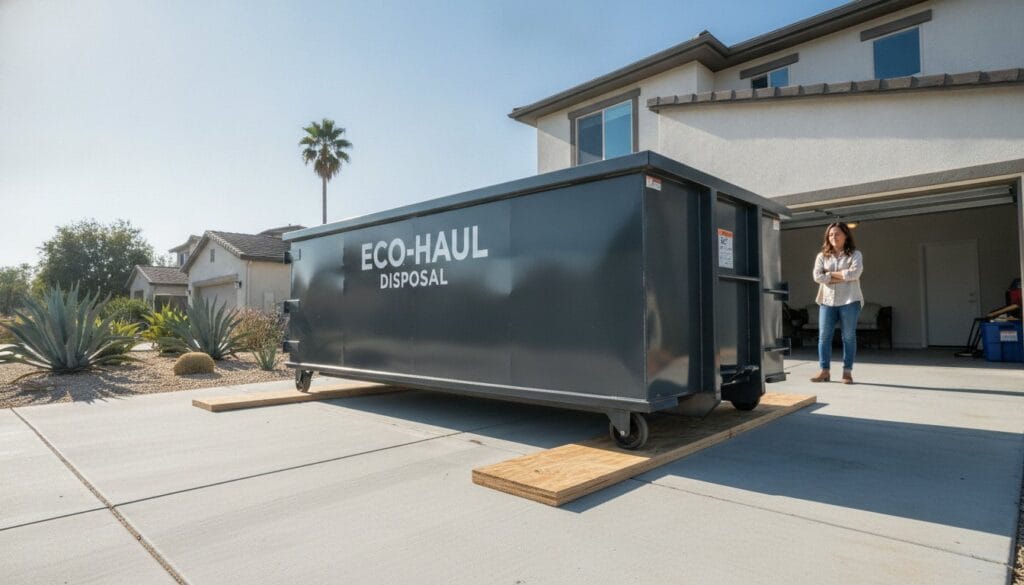
A 20-yard dumpster can weigh over 10,000 pounds when full, which is more than enough force to crack residential concrete or leave deep gouges in asphalt. Without the right driveway protection for dumpster rental, a simple home cleanup can quickly turn into a multi-thousand dollar pavement repair project. Most rental companies include clauses that release them from liability for surface damage, leaving the responsibility entirely on your shoulders.
It’s natural to feel uncertain about whether your driveway can handle the weight of heavy debris like dirt or concrete. You shouldn’t have to guess which materials will actually work or how thick your protective boards need to be. We’ve simplified the process so you can focus on your project without the stress of property damage.
This guide provides the exact steps and materials you need for a damage-free rental experience. You’ll get a specific shopping list for protection materials and learn how to prepare your site for even the heaviest roll-off containers. We’ll walk through everything from plywood selection to weight distribution tactics that provide total peace of mind.
Key Takeaways
- Identify the specific mechanics of roll-off deliveries and why high PSI levels from heavy bins threaten residential pavement.
- Get a clear shopping list for the industry-standard 3/4-inch CDX plywood used to create a buffer between steel wheels and your driveway.
- Implement surface-specific strategies for asphalt, concrete, and pavers to prevent sinking, oil absorption, or slab shifting.
- Learn the “Even Load” rule and moisture management techniques to keep your total dumpster weight within safe limits.
- Master the exact steps for driveway protection for dumpster rental to ensure a damage-free experience for any 10, 25, or 40-yard project.
Understanding the Risks: Why Driveway Protection is Essential
Most homeowners view a dumpster as a simple metal box. It’s actually a massive piece of industrial equipment. A standard Roll-off (dumpster) arrives on a heavy-duty truck that uses a hydraulic hoist to tilt the bin. During delivery, the steel wheels and rails of the container make direct contact with your pavement. These steel components don’t flex. They exert extreme pressure on very small contact points as the bin slides into place.
Residential driveways aren’t built for industrial loads. Most feature 4 inches of concrete or a thin layer of asphalt over a gravel base. These surfaces are rated for standard passenger vehicles, not 10,000-pound containers. A 40-yard dumpster filled with debris can easily exceed the Pounds per Square Inch (PSI) rating of your driveway. When the weight concentrated on those steel wheels surpasses what the surface can hold, the material underneath begins to fail. Proper driveway protection for dumpster rental prevents these cosmetic and structural issues before they start.
Damage isn’t always immediate or obvious. You might notice small cosmetic scrapes or rust stains at first. Over time, these develop into structural “spider-web” cracking. If the ground underneath shifts, you may even see entire slabs of concrete start to sink or tilt. Most rental contracts include a damage waiver that places the burden of property protection entirely on the customer. If the bin cracks your driveway, you’re the one stuck with the repair bill.
The Role of Weight and Debris Type
The type of waste you’re tossing changes the risk level. Standard household junk is relatively light, but heavy “Low Boy” loads like concrete or asphalt are different. You also have to consider the “static load” versus the “dynamic load.” The static load is the weight while the bin sits. The dynamic load is the force applied during the drop-off and pick-up process. This movement creates a grinding effect that can chew through asphalt. Even a half-full dumpster is risky if the weight isn’t distributed evenly. Loading everything into one end concentrates the pressure on a single set of wheels, increasing the chance of a surface collapse.
The Vulnerability of Los Angeles Driveways
Los Angeles properties face unique challenges due to the climate. Intense Southern California heat softens asphalt, making it prone to deep indentations from heavy bins. In the San Fernando Valley, many homes have older concrete that’s already brittle from decades of sun exposure. This “heat-sink” effect makes the driveway surface more vulnerable to structural failure. Without driveway protection for dumpster rental, a heavy bin can leave permanent ruts in sun-softened asphalt or shatter aging concrete slabs that lack the flexibility to handle the pressure.
The Professional Plywood Method: Step-by-Step Setup
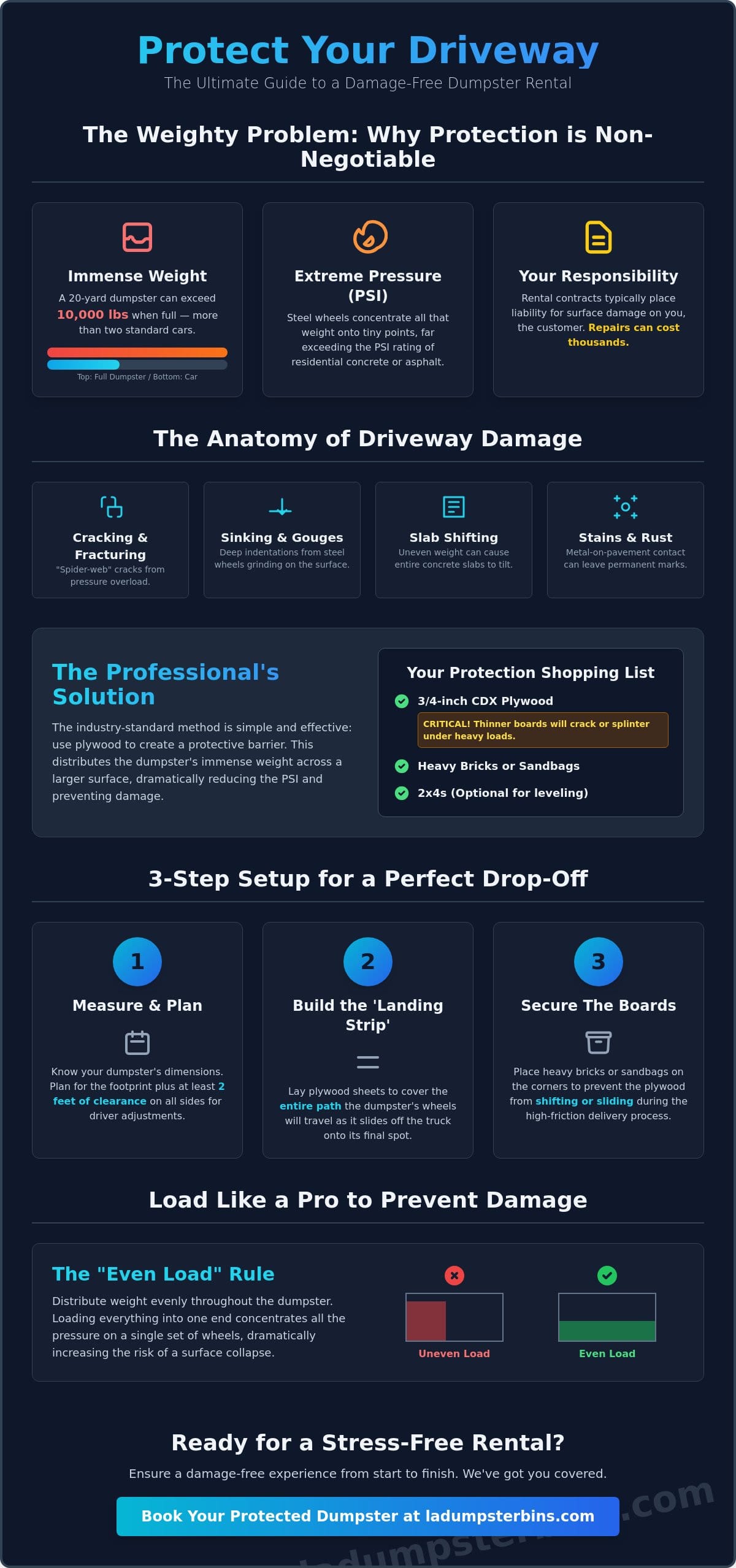
Using plywood is the most reliable way to ensure driveway protection for dumpster rental. It works by distributing the concentrated weight of the steel wheels across a larger surface area. You should specifically look for 3/4-inch CDX plywood. While thinner boards are cheaper, they often splinter or compress under the weight of a heavy container. The “CDX” rating simply means it’s durable enough for outdoor use; the thickness is what prevents the wood from failing.
Start by measuring the footprint of the bin you ordered. A 10 yard dumpster is typically 12 to 14 feet long, while a 40 yard dumpster can reach 22 feet. You need to calculate enough space for the bin plus at least two feet of clearance on all sides. This extra room accounts for any slight adjustments the driver makes during the drop-off. If you’re unsure about the dimensions for your residential roll off dumpster rental, ask for exact measurements before you head to the lumber yard.
The “Landing Strip” technique is the industry gold standard. Instead of just placing boards where the dumpster will sit, lay out a path of plywood sheets that covers the entire route the roll-off wheels will take. This prevents the steel from grinding against your pavement as the bin slides off the truck. To enhance durability under heavy loads, make sure the plywood sheets are flush against each other. Secure the boards by placing a heavy brick or sandbag on the corners so they don’t shift during the high-friction delivery process.
Required Materials Checklist
Your protection kit should include more than just plywood. Thick wood is the priority for weight distribution. You may also need 2×4 or 4×4 timber for “cribbing.” This is useful if your driveway has a steep incline or if you need to level the bin. While rubber mats and specialized pads exist, they’re often more expensive and harder to find than standard plywood. Stick to 3/4-inch sheets for the best balance of cost and performance.
Placement Instructions for Delivery Day
Align your plywood sheets early on delivery day. Use chalk to mark the “drop zone” for the driver. Pay special attention to the “curb jump.” This is where the truck first enters the driveway. Placing a piece of timber at the edge of the curb prevents edge-cracking as the heavy tires roll over. If you’re renting a Low Boy dumpster for heavy materials like dirt or concrete, double-layer your plywood. Two sheets of 3/4-inch wood provide a 1.5-inch buffer that can handle extreme downward pressure without failing.
Asphalt vs. Concrete vs. Pavers: Surface-Specific Protection
Different driveway materials react to industrial loads in unique ways. You must tailor your protection strategy to the specific surface at your property. Asphalt is a flexible pavement, meaning it can bend under pressure. However, the intense Los Angeles sun creates a major problem. Dark asphalt absorbs heat, which softens the binder and makes the surface pliable. If you place a heavy bin on hot asphalt without driveway protection for dumpster rental, the steel wheels will leave permanent ruts or “potholes” in your driveway. Asphalt also acts like a sponge for oil and hydraulic fluid. A protective barrier prevents these stains from becoming permanent eyesores.
Concrete is a rigid material that doesn’t flex. While it has high compressive strength, it’s very brittle. The most common damage occurs at the edges and corners of slabs. If the weight of the bin isn’t distributed, the concrete will suffer from “spider-web” cracking or total slab failure. Stamped or colored concrete requires even more care. Steel rails can easily scratch or gouge the decorative surface, leading to expensive resurfacing projects. Concrete relies on its high shear strength to resist cracking under vertical pressure, whereas asphalt depends on its ductility to flex without breaking, though this flexibility makes it vulnerable to heat-induced ruts.
Paver driveways and natural stone surfaces are the most difficult to protect. The danger here isn’t just vertical pressure; it’s horizontal shifting. As the truck pulls the dumpster onto its bed, the friction can cause individual pavers to shift or “unzip” from their pattern. This creates uneven surfaces and trip hazards that are difficult to reset. You must ensure your protection materials are locked together to prevent this lateral movement.
Surface Protection Comparison
| Surface Type | Risk Level | Primary Threat | Best Protection Material |
|---|---|---|---|
| Asphalt | High | Heat-softened indentations | 3/4-inch Plywood Sheets |
| Concrete | Medium | Corner and edge cracking | Plywood + 2×4 Timber |
| Pavers | High | Horizontal shifting | Rubber Mats + Plywood |
Protecting decorative borders and landscaping is just as important as the driveway itself. Ensure your plywood sheets don’t overlap onto soft soil or flower beds. If the dumpster wheels catch the edge of a garden bed, they will sink instantly and cause the bin to tilt dangerously.
Addressing Slope and Drainage
Many San Fernando Valley hillside properties have significant inclines. Protecting these driveways requires extra safety protocols. You must prevent the bin from sliding by using heavy-duty chocks in addition to your plywood. Ensure your protection boards don’t block drainage gutters or area drains. Rainwater trapped under a dumpster can wash away the sub-base of your driveway, leading to a collapse. Always place your plywood so that water can flow freely around it during a storm.
Load Management: Preventing Damage After the Bin is Dropped
Effective driveway protection for dumpster rental continues long after the delivery truck leaves your property. The way you fill the container directly impacts the pressure exerted on your pavement. Follow the “Even Load” rule strictly. Avoid the temptation to toss all heavy items into the back of the bin first. Distribute debris across the entire floor. When weight is concentrated at one end, the PSI on those specific wheels can double. This causes the plywood to compress or the underlying surface to crack. Keep the load level as you work to ensure the weight remains manageable for your driveway’s structural capacity.
Managing moisture is another critical factor. Debris like drywall, wood, and soil act like sponges. If a storm hits, a full bin can gain thousands of pounds in water weight overnight. This unexpected mass can push a 25 yards roll off dumpster past its safe weight limit, leading to pavement sinking. Use a tarp to cover the opening if rain is in the forecast. Regular daily inspections are also necessary. Walk around the bin to check if the plywood has shifted or if the edges of the wood are starting to splinter. Catching these issues early allows you to make adjustments before permanent damage occurs.
Heavy Debris Strategy
Low Boy Dumpster options are specifically designed for heavy materials like dirt, rock, and concrete. While a 10-yard Low Boy is smaller than a 40 Yard Dumpster, it often carries a higher risk for residential driveways due to the density of the load. Never fill these bins past the designated “Fill Line.” Overloading a Low Boy makes the pick-up process much more violent. The truck must use significantly more force to winch the bin, which can cause the container to lurch and grind against your driveway. Avoid throwing in prohibited items like chemicals or paints. Leaks from these materials can eat through driveway sealants and leave permanent stains that plywood cannot stop.
Pick-Up Day Precautions
Prepare for the pick-up as carefully as you did for the delivery. Ensure the path around the bin is completely clear of loose rocks or construction debris. If a small pebble gets trapped between the plywood and your driveway, the weight of the bin will crush it into the surface during the “winch and pull” process. Communicate with your driver when they arrive. Guiding them as they back up helps minimize unnecessary friction. Once the bin is gone, remove the wood immediately and sweep the area. If you need a reliable partner for your next project, book your roll off dumpster rental today to ensure a professional and safe experience.
Stress-Free Rentals with LA Dumpster Bins
LA Dumpster Bins understands the unique logistical challenges of Los Angeles and San Fernando Valley neighborhoods. We’ve seen every type of property layout, from narrow Hollywood Hills entries to sprawling Valley estates. Our fleet provides the versatility you need for any project size. Whether you require a 10 Yard Dumpster for a garage cleanout or a 40 Yard Dumpster for a major renovation, we have the right equipment ready to go. We also offer a 25 yards roll off dumpster and specialized containers for heavy materials.
Our drivers are local experts who prioritize property safety. They understand the importance of precision placement to support your efforts in driveway protection for dumpster rental. We work with you to ensure the bin lands exactly on your prepared plywood “landing strip.” This attention to detail minimizes the risk of scrapes or structural stress on your pavement. We believe in transparent pricing with no hidden fees. You get reliable service and professional advice on how to keep your property damage-free from start to finish.
Our Specialized Low Boy Service
Heavy construction projects in LA often involve concrete, dirt, or asphalt removal. Our Low Boy Dumpster rentals are the preferred choice for these high-density loads. These bins are engineered to handle extreme weight while maintaining a lower profile for easier loading. We assist our customers in planning for these heavy disposals to avoid property damage. By choosing the right bin size and following our weight distribution guidelines, you protect your driveway from the intense pressure these materials exert. We help you calculate weight limits so you don’t face unexpected issues on pick-up day.
Booking Your Rental Today
We’ve streamlined our booking process into three simple steps for LA residents. First, select your bin size based on your specific debris type. Second, prepare your site using the protection methods we’ve discussed. Third, schedule your delivery window. We’re responsive to the immediate needs of our service area and offer clear communication throughout the rental period. We’re ready to work around the clock to ensure your project stays on schedule. Don’t leave your pavement to chance during your next project. Get a Free Estimate for Your LA Dumpster Rental and experience a no-nonsense, professional service that values your property as much as you do.
Secure Your Property for Your Next Project
Effective driveway protection for dumpster rental is a straightforward process that saves thousands in potential repair costs. By using the professional plywood method and understanding how your specific surface reacts to weight, you eliminate the risk of cracks and ruts. Remember to distribute your debris evenly and account for the unique challenges of the Los Angeles climate. These simple steps turn a high-pressure logistics task into a manageable part of your renovation or cleanup.
LA Dumpster Bins has served the Los Angeles and San Fernando Valley areas since 2021. We provide specialized Low Boy bins for heavy concrete or dirt projects to keep your property safe. Our team offers 24/7 availability for urgent projects, ensuring you have the support you need whenever you need it. We prioritize transparency and reliability in every transaction. You can focus on your work while we handle the heavy lifting with precision and care.
Rent a Driveway-Safe Dumpster in Los Angeles Today
Take control of your project today with a partner who values your property. We’re ready to help you finish your cleanup safely and efficiently.
Frequently Asked Questions
Will a dumpster crack my concrete driveway?
Yes, a dumpster can crack concrete if the weight is not properly distributed. Steel wheels concentrate thousands of pounds of pressure onto four small points. If your driveway has existing air pockets or thin spots, the brittle concrete may snap. Using proper driveway protection for dumpster rental, such as plywood, spreads the load and prevents these structural failures.
What thickness of plywood should I use under a dumpster?
You should use 3/4-inch CDX plywood for the best results. Thinner boards often splinter or compress under the weight of a 10, 25, or 40-yard bin. If you are renting a Low Boy Dumpster for heavy materials like concrete or dirt, we recommend double-layering the sheets to create a 1.5-inch buffer for maximum safety.
Can I put a dumpster on the street in Los Angeles to avoid driveway damage?
You can place a dumpster on the street, but you must obtain a permit first. In Los Angeles, permits from the Bureau of Street Services typically cost between $20 and $200. No permit is required for placement on private property. Placing a bin on a public right-of-way without the correct paperwork can lead to significant fines.
Does LA Dumpster Bins provide the plywood for protection?
No, we do not provide plywood or protection materials. Customers are responsible for purchasing and laying out their own boards before the delivery truck arrives. We recommend having your 4×8 sheets of 3/4-inch plywood positioned in the “drop zone” to ensure our drivers can place the bin exactly where you need it.
How much weight can a standard residential driveway hold?
Most residential driveways are built to support passenger vehicles weighing between 4,000 and 6,000 pounds. A full 20-yard dumpster can weigh over 10,000 pounds, which far exceeds standard residential ratings. This weight difference is why industrial-grade driveway protection for dumpster rental is necessary to prevent surface sinking or “spider-web” cracking.
What happens if the dumpster causes damage to my property?
Most rental agreements include a liability waiver that makes the customer responsible for any driveway damage. If the bin cracks your concrete or ruts your asphalt, you will likely have to pay for the repairs yourself. Taking preventative measures with plywood and proper load management is the only way to ensure a damage-free experience.
Is it better to put a dumpster on grass or a driveway?
A driveway is much safer than grass. Soft soil and turf will sink immediately under the weight of a heavy container, making it nearly impossible for the truck to winch the bin back up for pick-up. If you have no choice but to use a lawn, you must use specialized ground protection mats or a thick gravel base.
How can I prevent rust stains from a dumpster on my driveway?
Plywood acts as a physical barrier that prevents rust from transferring to your pavement. Steel bins often leave orange oxidation marks, especially after a rainstorm. Keeping the metal rails on wood boards stops this contact. You can also cover your bin with a tarp to reduce water runoff that might carry rust onto your driveway surface.