
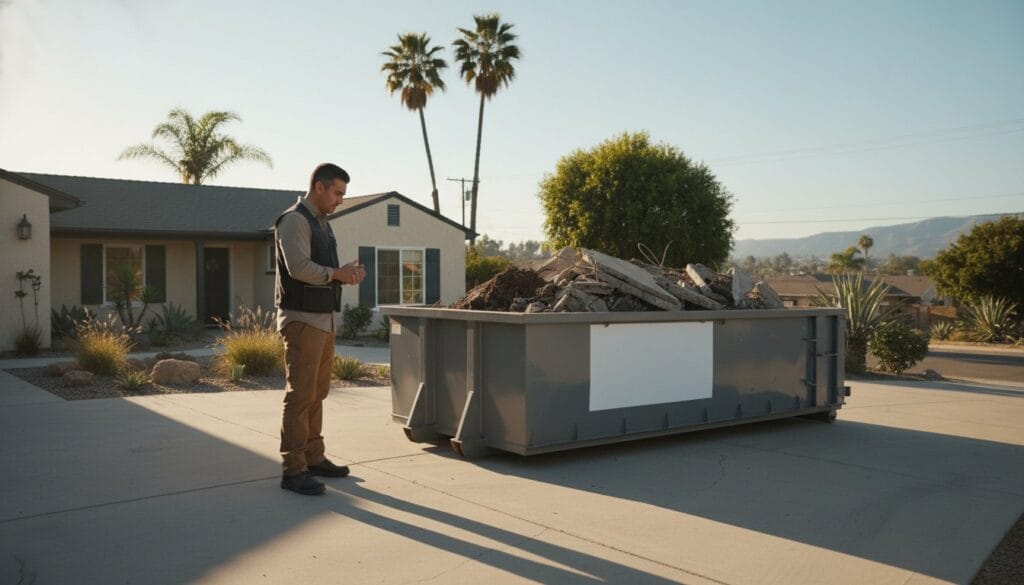
The most expensive mistake you can make with a waste project has nothing to do with the size of the bin and everything to do with the weight of the debris inside. Many Los Angeles renters assume that as long as the trash fits under the rim, the price stays fixed. Then the final bill arrives with unexpected tonnage charges that can significantly increase your total. If you are focused on avoiding dumpster rental overage fees, you must understand that weight and volume are two very different things. It’s a common frustration that turns a simple cleanup into a budget nightmare.
You deserve a straightforward rental experience without hidden surprises. This guide shows you exactly how to master your project by matching your material density to the right equipment. We’ll cover how to choose between a 10 yard dumpster and a Low Boy, while explaining how LA’s 65% waste diversion rules impact your disposal plan. You’ll learn the practical steps to estimate your debris weight accurately so your final bill remains predictable and fair. By following these industry standards, you can ensure your project stays on budget from delivery to final pickup.
Key Takeaways
- Learn how overage fees work and why landfill tipping fees directly impact your final project cost.
- Discover the “density trap” to understand why material weight matters more than the volume of your bin. This knowledge is your best tool for avoiding dumpster rental overage fees on heavy projects.
- Differentiate between mixed waste and clean-fill loads to avoid contamination charges. Proper sorting helps you stay compliant with Los Angeles disposal rules and diversion requirements.
- Use proactive strategies like the “Tarp Method” to prevent rain from adding hundreds of pounds to your load. Simple security measures also stop neighbors from adding unauthorized weight to your rental.
- Choose the right equipment for your specific debris type, whether you need a Low Boy for concrete or a 40 yard dumpster for large cleanouts. Matching the bin to the material ensures a flat-rate experience.
What Are Dumpster Overage Fees and How Do They Work?
An overage fee is a straightforward charge. It represents the cost per ton for any debris that exceeds the weight limit included in your rental agreement. When you rent a bin, you are essentially pre-paying for a specific amount of disposal capacity. If your load is heavier than that allowance, the landfill charges the hauler more, and that cost is passed to you. Understanding these dumpster rental cost factors is the first step toward avoiding dumpster rental overage fees on your final bill.
Weight limits aren’t arbitrary numbers. They exist because of landfill tipping fees and legal hauling capacities. Every ton of waste dumped at a facility costs the rental company a specific fee. Additionally, trucks have strict gross vehicle weight ratings. Hauling a bin that is too heavy can lead to safety risks and expensive traffic fines. Most companies use two main pricing models. A flat-rate model includes a set amount of tonnage in the price. A variable-rate model might have a lower base cost but charges you for every pound disposed of at the scale.
Landfills use a precise process to determine your bill. When the truck arrives, it drives onto a massive scale to record the gross weight. This is the combined weight of the truck, the container, and your trash. After dumping the load, the truck is weighed again to find the tare weight. The difference between these two numbers is the exact weight of your debris. This transparency ensures you only pay for what you actually threw away.
Common Weight Limits by Bin Size
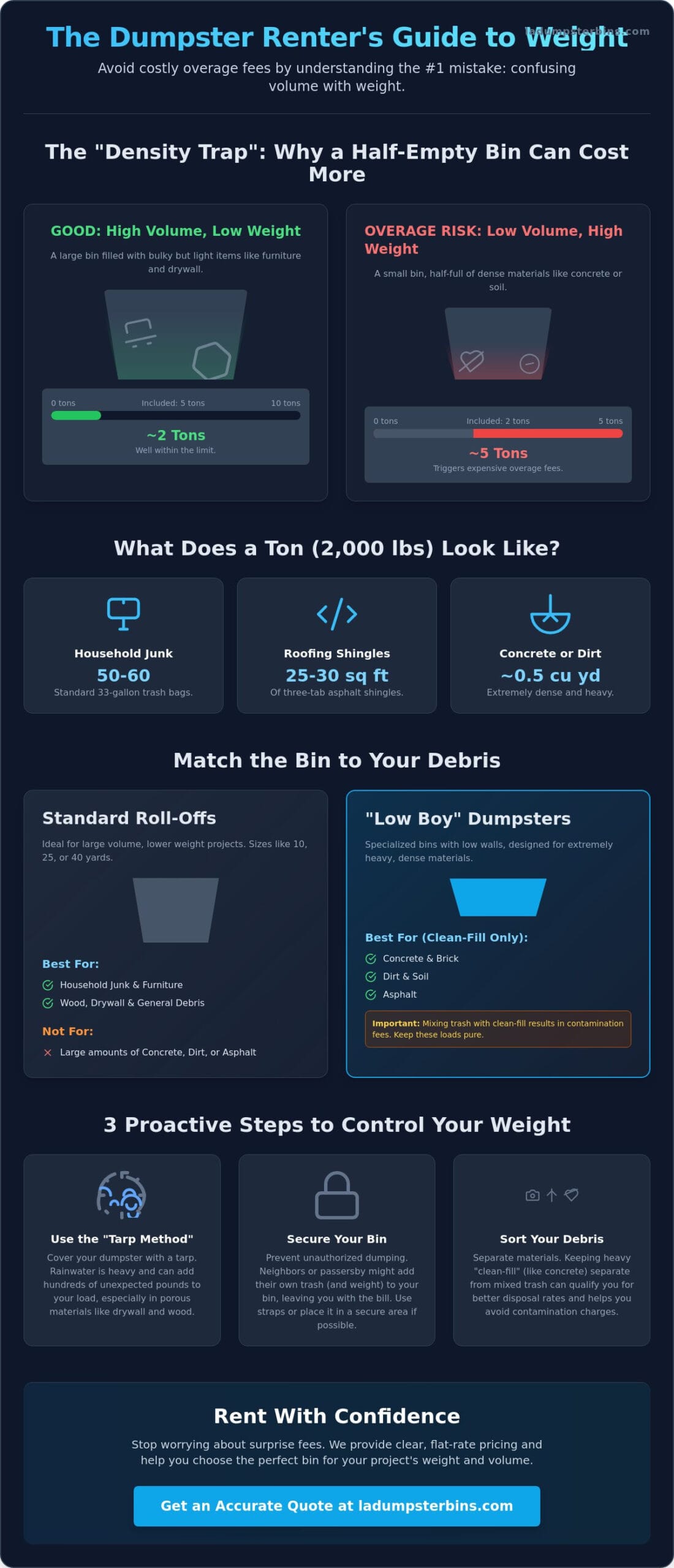
Typical weight limits vary significantly by bin size. A 10 yard dumpster usually includes 1 to 2 tons of weight. A 25 yards roll off dumpster might include 3 tons, while a 40 yard dumpster often allows for 5 to 6 tons. Don’t assume a bigger bin always means a higher limit. Some large bins are intended for bulky, light items like furniture. If you fill a 40 yard dumpster with heavy materials like roofing or dirt, you will almost certainly trigger an overage fee. In a residential context, tonnage is simply the weight of your household junk measured in increments of 2,000 pounds.
Visualizing Your Load: What Does a Ton Look Like?
It’s hard to look at a pile of trash and see a ton. For a helpful comparison, one ton of household waste is roughly equivalent to 50 to 60 standard 33-gallon trash bags. If you are doing a roofing project, about 25 to 30 square feet of three-tab asphalt shingles weigh one ton. A single mattress might only weigh 50 to 100 pounds, but it takes up significant space. Conversely, loose debris like tile or drywall is deceptive. It packs tightly and adds weight much faster than it fills the volume of the bin. Keeping these visuals in mind is essential for avoiding dumpster rental overage fees during a home renovation.
Choosing the Right Bin: Why Size Isn’t the Only Factor
Selecting a dumpster based solely on visual volume is a recipe for a high final bill. Most renters focus on whether their debris will fit inside the walls of the container. However, weight is the metric that determines your total cost. This is known as the “Density Trap.” A 40 yard dumpster filled with old mattresses and wooden furniture might only weigh a few tons. In contrast, a 10 yard dumpster filled halfway with wet soil or broken concrete can easily exceed five tons. If you want to succeed in avoiding dumpster rental overage fees, you must prioritize the density of your materials over the cubic yardage of the bin.
For small residential cleanouts involving household junk, a 10 yard dumpster is often sufficient. It provides enough space for light debris without the risk of hitting heavy weight limits. On larger commercial sites, managers often utilize 25 yards roll off dumpster or 40 yard dumpster options to handle massive volumes of light waste. These larger containers are efficient for wood, drywall, and general site trash. However, they are not designed for heavy, inert materials. Following federal waste collection guidelines regarding vehicle weight is essential for safety and regulatory compliance on every haul.
Standard Roll-Offs vs. Low Boy Dumpsters
A Low Boy dumpster is a specialized container designed specifically for heavy materials like concrete, dirt, asphalt, and brick. These bins have shorter walls to prevent users from loading more weight than a truck can legally carry. If you put concrete into a standard high-walled bin, it’s very easy to exceed the weight limit before the bin even looks full. This mistake creates a safety hazard for the driver and almost always leads to massive overage charges. Always use a Low Boy for “clean fill” projects to keep your costs predictable. If you are unsure which bin fits your specific debris, you can consult with our team for a tailored recommendation.
Estimating Your Project Volume
Calculating your debris volume requires more than just a guess. For renovation waste, multiply the length, width, and height of your debris pile in feet, then divide by 27 to find the cubic yardage. Once you have that number, apply the “10% rule.” Always rent a bin with a weight allowance that’s 10% higher than your highest estimate. This buffer protects you in avoiding dumpster rental overage fees if the materials are heavier than expected or if they become saturated with water. Speaking with a local expert in the San Fernando Valley can help you refine these numbers before you book.
The LA Debris Guide: Managing Concrete, Dirt, and Mixed Waste
Los Angeles waste management facilities operate under strict classification systems. These rules distinguish between mixed waste and clean-fill loads. Mixed waste typically includes general household junk, wood, and plastic. Clean-fill consists of inert materials like pure concrete, dirt, or brick. If you mix even a small amount of wood or trash into a Low Boy dumpster intended for concrete, the facility will reclassify the entire load as mixed waste. This reclassification results in significantly higher tipping fees at San Fernando Valley disposal sites. Understanding these regional sorting rules is a critical component of avoiding dumpster rental overage fees.
The cost to haul construction debris is generally higher than general residential junk. This reflects both the weight and the specialized processing required at the landfill. In the Valley, facilities have specific requirements for how loads must be presented. Failing to follow these local protocols can lead to rejected loads or automatic surcharges on your final bill. Always clarify the contents of your load before delivery to ensure you are matched with the correct disposal category.
Identifying “Heavy” Materials
Some materials carry hidden weight that surprises even experienced contractors. Wet yard waste and sod are prime examples. Soil and grass retain moisture, which can double the weight of the load after a rain event. Bathroom demolitions are another common source of weight issues. Tile and plaster are extremely dense; a small pile can weigh much more than it looks. In Los Angeles, asphalt and brick must often be handled separately from general construction waste. Mixing these heavy inert materials into a standard roll-off is a fast way to exceed your tonnage limit and face unexpected costs.
The Clean Load Advantage
Keeping your materials separated is the most effective way to save money on tonnage. A “clean” load of concrete means the bin contains only concrete with no trash, wood, or excessive rebar. When you maintain a clean load, you often benefit from lower disposal rates at specialized recycling facilities. Wood and drywall should never be mixed with heavy inert materials. These lighter materials belong in a standard 10 Yard Dumpster or a 25 yards roll off dumpster. By sorting your debris at the source, you ensure your project remains compliant with LA’s 65% waste diversion mandate while avoiding dumpster rental overage fees. This proactive management keeps your logistics moving efficiently and your costs under control.
5 Proactive Steps to Keep Your Dumpster Weight Under Control
Managing your waste project requires more than just tossing items into a bin. You need a strategy to stay within your tonnage limit. Avoiding dumpster rental overage fees is possible if you treat the process like a logistics operation. By controlling what goes in and how it sits, you maintain full authority over your final bill. Start by placing the heaviest items, like broken furniture or appliances, at the bottom. This creates a stable base and allows you to layer lighter debris on top; it ensures the weight is distributed evenly across the container floor.
Always respect the fill line. A bin loaded above the rim is considered an unsafe load. Haulers cannot legally transport a dumpster if debris is spilling over the sides. This leads to dry-run fees where the driver arrives but cannot pick up the bin. Additionally, a “level full” bin is easier to estimate for weight. If you have bulky items that can be donated, do that first. Every couch or desk you divert to a local charity is weight that doesn’t end up on the landfill scale. This simple step keeps your project lean and cost-effective.
Moisture Management
Water is surprisingly heavy. In a standard 10 Yard Dumpster with a surface area of roughly 96 square feet, just one inch of rainfall can add approximately 500 pounds of water weight to your load. Materials like old mattresses, drywall, and carpet act like sponges. They soak up moisture and hold it, potentially pushing a near-limit load into overage territory. Use a heavy-duty tarp to cover the bin during Los Angeles rain events. In high-wind areas like the San Fernando Valley, secure the tarp with bungee cords or weighted sandbags to prevent it from blowing away overnight.
Security and Unauthorized Dumping
Residential driveways in LA are often targets for “neighbor dumping.” You might wake up to find extra bags of trash or old tires that aren’t yours. This unauthorized waste adds tonnage you didn’t plan for. Spotting this is easy if you monitor the fill level daily. To deter this, park a vehicle in front of the bin or use a simple cable lock to keep the lid or tarp secure. Communicating your rental schedule with neighbors often prevents misunderstandings. If you want a partner who prioritizes transparency, book your next roll off dumpster with a team that understands local logistical challenges.
Rent with Confidence: The LA Dumpster Bins Approach
Transparency is the foundation of our service. We provide clear weight limits for every bin size before you sign a rental agreement. This upfront communication is the most effective tool for avoiding dumpster rental overage fees on your project. You shouldn’t have to guess about tonnage or tipping fees. Our team explains exactly how much weight is included with your specific rental. Whether you need a 10 Yard Dumpster for a garage cleanout or a 40 Yard Dumpster for a large construction site, we ensure you have the right capacity for the job.
Our fleet is designed to handle the diverse needs of Los Angeles. We offer a 25 yards roll off dumpster for mid-sized renovations and specialized Low Boy Dumpster units for heavy, inert materials. Using a Low Boy is essential when you are hauling concrete or dirt. It prevents you from accidentally loading too much weight into a standard high-walled bin. Our 24/7 availability means we are ready to respond to project changes or early pickup requests. If you finish your project ahead of schedule or realize you need an additional bin, we facilitate those adjustments quickly to keep your site running smoothly.
Why Local Knowledge Matters
Operating in Los Angeles and the San Fernando Valley requires deep local expertise. We understand the specific hauling routes that save time and fuel. Our team is also well-versed in the waste diversion mandates that govern local landfills. For managers overseeing a Commercial Roll Off Dumpster Rental, this knowledge is invaluable. We help you sort materials at the source to ensure you meet recycling requirements and avoid contamination charges. Our commitment to dependable, no-nonsense service means we show up on time and deliver exactly what we promised. We treat every project like a partnership, providing the logistical support you need to stay on budget.
Getting Your Free Estimate
Preparation is key to a successful rental. When you call for a quote, have a basic list of the materials you plan to discard. Tell us if you are dealing with heavy debris like tile or light waste like cardboard. This information allows us to recommend the perfect bin size and weight allowance. We help you evaluate your project volume to ensure you have a comfortable buffer. This proactive planning eliminates the stress of unexpected final charges. If you are ready to start your project with a reliable partner, Get a free dumpster rental quote today. We provide the equipment and the expertise you need for a hassle-free disposal experience.
Master Your Project Budget Today
A successful waste project depends on matching the right equipment to your specific debris density. By distinguishing between standard roll-offs and specialized Low Boy dumpsters, you eliminate the guesswork that leads to high final bills. Remember that moisture control and proper sorting are your best defenses when it comes to avoiding dumpster rental overage fees in Los Angeles. We have served Los Angeles and the San Fernando Valley since 2021 with a focus on dependability and clear communication. Our team provides 24/7 availability for rental support to ensure your project never stalls due to logistical changes.
You don’t have to face hidden costs or unclear weight limits alone. We offer specialized inventory for heavy materials and a no-nonsense approach to pricing that keeps you in control. Whether you are managing a residential renovation or a large-scale commercial site, we provide the tools to get the job done efficiently. Book Your Los Angeles Dumpster Rental with Transparent Pricing and move forward with total confidence. Your clean site is just a phone call away.
Frequently Asked Questions
How much is a typical dumpster overage fee per ton?
Overage fees generally range from $40 to $200 per additional ton depending on the facility and the type of material you are discarding. These charges reflect the extra tipping fees the rental company must pay at the landfill. It is best to ask for a full cost breakdown when you book so you can plan your budget for these potential contingencies.
Can I tell if my dumpster is overweight just by looking at it?
You cannot accurately judge weight by visual volume alone. Dense materials like tile, plaster, or wet dirt can exceed weight limits even if the bin looks half empty. This is the main reason avoiding dumpster rental overage fees requires understanding material density rather than just tracking how high the debris sits in the container.
Does rain really add that much weight to a dumpster load?
Rain significantly increases the weight of absorbent materials like carpet, drywall, and mattresses. A single storm can add hundreds of pounds to your load as these items soak up moisture. Always cover your bin with a heavy-duty tarp if the forecast shows rain in the San Fernando Valley to prevent water weight from triggering a tonnage fee.
What happens if I overfill my dumpster past the top rim?
Haulers cannot legally transport a dumpster that is filled past the top rim. This creates a safety hazard for other drivers and violates road safety regulations. If your bin is overfilled, the driver will likely refuse pickup, resulting in a dry-run fee. You will have to remove the excess debris before a second pickup attempt is made.
Is there a weight limit for a 10-yard dumpster used for concrete?
A 10 yard dumpster typically has a weight limit of 1 to 2 tons for standard loads. However, for heavy materials like concrete, you should use a Low Boy Dumpster. These specialized bins are designed to handle the high density of inert materials while staying within the legal hauling capacity of the truck.
How do I avoid other people putting trash in my rental bin?
Securing your bin is the best way to prevent unauthorized dumping. You can park a vehicle in front of the bin at night or use a cable lock to keep a tarp or the lid closed. Communicating with your neighbors about your project timeline also helps reduce the chance of surprise additions to your tonnage.
Do I get a refund if my dumpster is under the weight limit?
Most rental agreements are based on a flat-rate model that includes a set amount of tonnage. You don’t typically receive a refund if you stay under that limit. The price covers the delivery, pickup, and a pre-paid disposal allowance. Choosing the correct bin size from the start ensures you get the best value for your specific project needs.
What materials are most likely to cause an overage fee?
Heavy, dense materials like concrete, brick, dirt, and asphalt are the most common causes of overweight loads. Roofing shingles and wet yard waste also add weight quickly. If your project involves these items, avoiding dumpster rental overage fees is much easier if you use specialized equipment like a Low Boy or rent multiple smaller bins to distribute the weight.