Imagine waking up to a heavy roll-off truck trying to squeeze into your narrow Silver Lake driveway, only to hear the crunch of cracked concrete or find a citation from the Bureau of Street Services on your door. Most Los Angeles residents believe the delivery process is entirely out of their hands, but failing to plan ahead often results in “dry-run” fees and avoidable property damage. Properly preparing your site for a dumpster delivery is the only way to guarantee a smooth, professional experience on the first attempt.
We know the stress that comes with navigating tight neighborhood streets and strict city regulations. You want your project to start without a hitch, and you don’t want to pay for a permit you didn’t need or a driveway repair you could’ve prevented. This guide provides the exact steps you need to take to protect your asphalt and stay compliant with local laws. We’ll walk you through measuring your clearance, using protective barriers like plywood, and mastering the EPIC-LA online permit system so your property is ready for action.
Key Takeaways
- Avoid expensive “dry-run” fees by identifying common delivery obstacles before your scheduled rental arrives.
- Master the professional techniques for preparing your site for a dumpster delivery to prevent driveway cracks and surface damage.
- Understand Los Angeles permit requirements for street placement to avoid costly city fines and project delays.
- Learn the exact clearance measurements required for 10 to 40-yard bins to ensure the truck can navigate tight LA streets.
Why Site Preparation is Critical for a Successful Dumpster Rental
Site preparation isn’t just a suggestion; it’s a logistical requirement. In a city like Los Angeles, where narrow residential streets and tight alleyways are the norm, failing to plan ahead leads to wasted time and extra costs. Understanding what a roll-off dumpster is and how it’s transported will help you realize why the delivery zone must be perfectly clear. Proper planning ensures that the heavy machinery can operate without risking property damage or safety hazards. When you take the time to ready your property, you’re protecting your investment and your project timeline.
Avoiding Unnecessary “Dry-Run” Charges
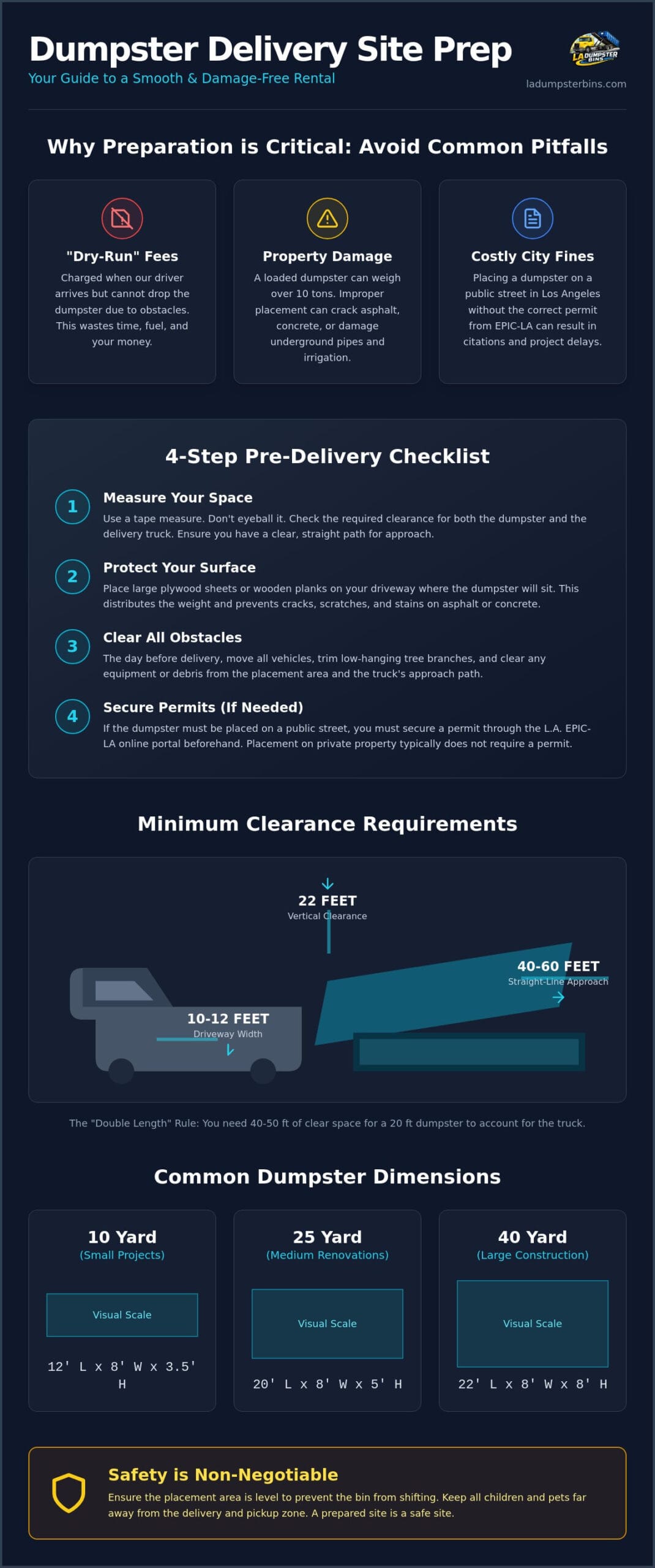
A dry-run occurs when our driver arrives at your location but cannot complete the drop-off due to an obstacle. You’ll still be charged for the attempt because the driver’s time and fuel are already spent. In the San Fernando Valley and surrounding areas, common culprits include parked vehicles, low-hanging power lines, or overgrown tree branches. If the driver determines the ground is too soft or the space is too tight for the truck’s stabilizers, they’ll have to leave without dropping the bin. Preparing your site for a dumpster delivery means clearing a path that’s at least 10 to 12 feet wide and ensuring there’s enough vertical clearance for the truck to hoist the bin into place. Clear communication with your dispatcher about these local obstacles prevents these expensive logistical bottlenecks.
Safety and Liability on the Job Site
Safety is the most important factor during any waste management project. A fully loaded 40-yard dumpster can exceed 10 tons in total weight, putting massive pressure on the ground below. If the site isn’t level, the bin can shift or slide during the rental period, which creates a significant liability for the property owner. Keep all children and pets far away from the delivery zone while the truck is in motion. A prepared site reduces the risk of the bin moving and ensures it stays exactly where you need it until the job is done. This stability is crucial for both the delivery driver and your own household.
Beyond surface-level safety, you must consider the structural integrity of your property. Preparing your site for a dumpster delivery involves checking for underground utilities. Heavy roll-off trucks can crush shallow irrigation systems or older clay sewer pipes if they drive over them. You also want to place the bin in a spot that streamlines your workflow. Choosing a location close to your exit point or debris pile saves your crew hours of labor. This efficiency keeps your project on schedule and prevents your team from getting exhausted by unnecessary walking. By focusing on these details, you protect your bottom line and your property simultaneously.
Measuring and Choosing the Ideal Placement Spot
Choosing a placement spot is a game of inches. You can’t just eyeball the area. You need a tape measure and a clear understanding of truck mechanics. Preparing your site for a dumpster delivery requires looking both down at the ground and up at the sky. If you aren’t sure which size fits your driveway, you can browse our residential roll off dumpster rental options to compare specific dimensions before you order.
The biggest mistake most people make is forgetting the truck. A roll-off truck is much larger than the bin it carries. You must follow the “Double Length” rule. If your 25 yards roll off dumpster is 20 feet long, you need at least 40 to 50 feet of clear, straight-line space to accommodate the truck’s body as it maneuvers. Without this extra room, the driver cannot physically drop the container where you want it.
Calculating Total Clearance Needs
Standard containers have fixed footprints. Use the dimensions below to map out your site with chalk or cones. Remember that the truck needs a 60-foot approach path to back into the spot and pull away safely.
- 10 Yard Dumpster: 12′ L x 8′ W x 3.5′ H
- 25 yards roll off dumpster: 20′ L x 8′ W x 5′ H
- 40 Yard Dumpster: 22′ L x 8′ W x 8′ H
Height is just as critical as length. Most roll-off trucks require 22 feet of vertical clearance to tilt the hoist and slide the bin off the rails. In older Los Angeles neighborhoods, low-hanging power lines or mature oak tree branches are common deal-breakers. Site safety isn’t just a best practice; it’s often a legal requirement under OSHA waste disposal regulations, which mandate specific debris handling procedures to protect workers and the public.
Evaluating Ground Stability for Heavy Loads
Surface integrity matters. A 40 Yard Dumpster filled with household debris is heavy, but a Low Boy Dumpster is a different beast entirely. Low Boys are designed for “clean” heavy materials like concrete, asphalt, and dirt. Because these materials are so dense, a loaded Low Boy exerts much higher pressure per square inch than a standard bin. You must place these containers on reinforced concrete or very firm “hard pack” dirt.
Avoid placing any bin on soft grass or over septic tanks, manhole covers, and underground utility vaults. The weight can cause the bin to sink or, worse, crush underground infrastructure. If your only option is a residential driveway, stick to the most level area possible to prevent the bin from shifting while you load it. This simple check saves you from expensive property repairs after the project ends.
Surface Protection and Navigating Los Angeles Street Permits
Once you’ve measured your space, you must focus on the physical surface. A standard driveway isn’t always built to handle the concentrated weight of a heavy steel bin. Preparing your site for a dumpster delivery involves more than just clearing a path. You must also establish a physical barrier to protect your property and ensure you’re following local municipal codes. In Los Angeles, the rules change depending on whether that bin sits on your private driveway or the public curb lane.
How to Prevent Driveway Cracking and Scuffing
The “Plywood Method” is the industry standard for protecting residential surfaces. We recommend purchasing two 4×8 sheets of 3/4-inch plywood. Place these sheets exactly where the bin’s metal rollers will land. This simple step distributes the weight across a larger surface area and prevents the steel from gouging your concrete. If your project involves a 40 Yard Dumpster, this protection is even more vital due to the increased pressure.
Asphalt is particularly vulnerable during hot Los Angeles summers. When temperatures spike in the San Fernando Valley, asphalt softens and becomes susceptible to “sinking” under heavy loads. Without plywood or 2×4 wooden planks, the heavy rollers can leave permanent indentations in your driveway. Our drivers at LA Dumpster Bins are experts at careful placement, but having your wood barriers ready ensures the highest level of protection for your property.
Navigating LA City Permit Requirements
If your driveway is too steep or too small, you might need to place the bin on the street. This triggers specific legal requirements from the Los Angeles Bureau of Street Services. You don’t need a permit if the bin is entirely on your private property. However, a “Street Use Permit” is legally required the moment any part of the container touches a public street, sidewalk, or alley. Failing to secure this can result in heavy city fines or the immediate removal of your bin.
The application process is now handled online through the EPIC-LA system. You should apply at least 5 days before your desired delivery date to allow for processing. A typical permit for street placement in Los Angeles costs between $75 and $150 for a 7 to 14-day period. Keep this checklist in mind before the truck arrives:
- Lead Time: Apply 5 to 7 days in advance.
- Clearance: The bin must be at least five feet from building openings and cannot block fire hydrants or driveways.
- Signage: You may be required to post “No Parking” signs 24 to 48 hours before delivery to ensure the curb lane is clear.
- Unincorporated Areas: If you’re in an unincorporated part of the county, you’ll need an Encroachment Permit from the County Department of Public Works instead.
By handling these administrative details early, you ensure a smooth delivery on the first attempt. Proper permitting prevents the stress of dealing with parking enforcement and keeps your project moving forward without legal interruptions.
Pre-Delivery Checklist: Clearing Obstacles and Ensuring Access
The permit is approved and your plywood is ready. Now comes the final phase of preparing your site for a dumpster delivery. Even a perfectly measured spot is useless if the driver can’t physically reach it. Roll-off trucks are massive machines that require a significant amount of “swing room” to back into position. In the tight residential corridors of Los Angeles, a single parked car across the street can prevent a delivery from happening. You must ensure the entire approach path is as clear as the drop zone itself.
The 24-Hour Obstacle Sweep
Perform a thorough walkthrough of the drop zone exactly one day before your scheduled arrival. Move all personal vehicles at least 50 feet away from the intended spot. This provides the driver with the clearance needed to angle the truck without risking a collision. Don’t forget the smaller items that often get overlooked. Move trash cans, portable basketball hoops, and lawn furniture out of the way. These objects are easy to miss from a truck cab but can cause significant delays if the driver has to wait for you to clear the area.
If your property is gated, verify that the opening is at least 10 to 12 feet wide. This is the standard minimum width required for a heavy-duty truck to pass through safely. Make sure all gates are unlocked and that you’ve provided any necessary security codes to our dispatch team. Look up one last time. Many older LA neighborhoods have telecommunications lines that sag over time. If a wire looks lower than 22 feet, notify us immediately so we can adjust the delivery plan. Preparing your site for a dumpster delivery means looking in every direction for potential hazards.
Load-Ready Preparation
Preparation doesn’t stop once the bin hits the ground. You need a strategy for what goes inside. It’s critical to remember that we provide the equipment, but we don’t offer full-service junk removal. You’re responsible for loading the bin yourself. Start with your heaviest, flattest items. Placing these directly on the bottom creates a stable base and prevents the bin from becoming top-heavy. This is especially important for our 40 Yard Dumpster models, which can hold a massive volume of material.
Verify that your debris is compliant with local regulations. We cannot accept hazardous waste, including wet paint, car batteries, chemicals, or asbestos. Loading these items will result in the bin being left on-site or significant environmental fees. If you’re managing a large-scale renovation, our commercial roll off dumpster rental services provide the capacity you need while ensuring you stay within city compliance. By following this final checklist, you guarantee that your project starts on time and stays on budget.
Partnering with LA Dumpster Bins for a Seamless Experience
Preparing your site for a dumpster delivery is half the battle. The other half is choosing a partner who understands the logistical maze of Los Angeles. Since our founding in 2021; LA Dumpster Bins has focused on providing reliable; no-nonsense service to homeowners and contractors across the region. We don’t just drop off a bin. We ensure the entire process respects your property and your project timeline. Our team is dedicated to the local community and understands the high stakes of your waste management needs.
The Local Advantage in Los Angeles
Street layouts in the San Fernando Valley and central LA vary wildly. You might have a wide commercial driveway or a narrow; winding hillside road. Our drivers are familiar with these unique zoning challenges and neighborhood-specific restrictions. We pride ourselves on being a hardworking local service provider that values transparency. When we give you a delivery window; we stick to it. This local expertise is why so many residents trust us for their waste management needs. We’re a community fixture dedicated to keeping our city clean and our customers’ projects on track.
Choosing the Right Equipment
We offer a versatile fleet to handle any project scale. Whether you’re cleaning out a garage or managing a major demolition; we have the right container for the job. Our inventory includes:
- 10 Yard Dumpster: Perfect for small residential cleanouts or minor landscaping tasks.
- 25 yards roll off dumpster: Our mid-sized workhorse for kitchen remodels and roofing projects.
- 40 Yard Dumpster: The top choice for large-scale construction and commercial site clearing.
- Low Boy Dumpster: Specialized for heavy materials like concrete, asphalt, and dirt.
Our Low Boy Dumpster is particularly valuable for construction crews. These bins are designed to handle the extreme density of inert materials without exceeding weight limits or damaging the truck’s hoist system. By selecting the right size; you avoid overage fees and ensure the bin fits perfectly in your prepared space.
Booking Your Rental Today
Ready to start? Getting a quote is simple and direct. You can call our local office or use our online portal to request assistance. We provide a complimentary price estimate for every project. This ensures you know exactly what to expect before the truck arrives. We’re available 24/7 to handle your immediate logistical needs; making us the most responsive partner in the LA area. Don’t let poor planning or an unreliable vendor stall your project. Follow our guide for preparing your site for a dumpster delivery and then let us handle the heavy lifting.
Get your complimentary dumpster rental estimate from LA Dumpster Bins
Start Your Project with Confidence
Successful waste management starts long before the truck arrives. By taking the time to measure your clearance; protect your driveway with plywood; and secure the necessary city permits; you avoid the frustration of project delays and “dry-run” fees. Preparing your site for a dumpster delivery is a straightforward process that guarantees a safe and efficient experience for everyone involved. You’ve done the research; now it’s time to put your plan into action.
Our team of local experts in Los Angeles and the San Fernando Valley is ready to assist you. Whether you need a standard roll-off or specialized Low Boy bins for heavy dirt and concrete; we provide the equipment and expertise you need. We are available 24/7 to answer your questions and coordinate your drop-off. Book Your Los Angeles Dumpster Rental Now and let our dependable crew handle the logistics while you focus on getting the job done. We look forward to helping you clear the way for your next big project.
Frequently Asked Questions
Do I need to be home when the dumpster is delivered?
You don’t need to be present for the delivery as long as the drop zone is fully accessible. Ensure that all gates are unlocked and cars are moved before the driver arrives. Providing a phone number where you’re reachable during the delivery window helps our team if they encounter any unexpected obstacles on your property.
Can I move the dumpster with my own truck after it is dropped off?
You should never attempt to move a roll-off container with your own vehicle. These bins are designed to be handled only by specialized hydraulic equipment. Attempting to drag or tow a bin can result in severe property damage or structural failure of the container itself. If you need the bin relocated, call our dispatch team to schedule a professional move.
What happens if the dumpster is too heavy for my driveway?
If a bin is too heavy for your driveway, it can cause the concrete or asphalt to crack or sink. This usually happens when a container is filled with heavy materials without adequate surface protection. Preparing your site for a dumpster delivery by using 3/4-inch plywood sheets is the best way to distribute the weight and prevent these structural issues.
How much space does the truck need to drop off a 40-yard bin?
A 40-yard bin requires at least 60 feet of straight-line space for the truck to back into position. You also need a minimum of 22 feet of vertical clearance to allow the hoist to lift and drop the container safely. Always check for low-hanging branches or power lines that might block the truck’s range of motion before the scheduled delivery time.
Is a permit required if the dumpster is on my own property in LA?
No permit is required in Los Angeles if the dumpster is placed entirely on your private property. This includes your driveway or a private parking lot. You only need to apply for a Street Use Permit through the Bureau of Street Services if any part of the bin touches a public street, sidewalk, or alleyway.
What items are strictly prohibited in an LA Dumpster Bins rental?
Strictly prohibited items include all forms of hazardous waste like wet paint, solvents, oils, and automotive batteries. We also cannot accept fuels, chemicals, or asbestos. Disposing of these items in a standard rental can lead to environmental fines and the refusal of pickup. Always verify your materials with our team before you begin loading the bin.
How do I protect my lawn if the dumpster must be placed on grass?
Place heavy plywood sheets or 2×4 wooden planks on the grass before the truck arrives to protect your lawn. This prevents the heavy steel rollers from sinking into the soil and tearing up your turf. Keep in mind that heavy bins left on grass for more than a few days will likely cause the grass underneath to turn brown due to a lack of sunlight.
What is the maximum weight limit for a Low Boy dumpster?
A Low Boy dumpster is specifically designed for heavy materials like concrete and dirt; which often reach weight limits quickly. While standard 40-yard bins typically have a limit of 5 to 6 tons; Low Boys are engineered for much denser loads. Exceeding the weight capacity can result in overage fees ranging from $40 to $200 per additional ton depending on the material.