What if a single logistical oversight on your property ended up costing you hundreds in city fines and repair bills? In Los Angeles, small errors often turn into expensive headaches for homeowners and contractors alike. You want your project to stay on schedule and under budget. Dealing with unexpected overage fees or a bin that’s too small for your debris is the last thing you need. It’s frustrating to face a project delay because of a permit violation or a damaged driveway.
This guide identifies the most common dumpster rental mistakes to avoid to ensure your cleanup or construction job runs smoothly. You’ll learn how to navigate StreetsLA permit requirements and choose the right equipment for your specific waste type. We’ll show you how to sidestep hidden costs like weight overages and rental extension fees. We cover everything from protecting your pavement to staying compliant with CALGreen recycling standards. Whether you need a 10 yard bin for a garage or a low boy for heavy concrete, getting the details right from the start ensures a stress-free experience.
Key Takeaways
- Select the right bin size by accounting for debris volume to avoid paying for multiple deliveries.
- Prevent weight overage fees by using specialized Low Boy Dumpsters for heavy materials like concrete or dirt.
- Navigate StreetsLA permit requirements and learn the most common dumpster rental mistakes to avoid when placing bins on public property.
- Load your bin level with the top rail to ensure safe transport and avoid prohibited material violations.
- Work with local Los Angeles providers to secure reliable delivery times and avoid the high costs of national brokers.
Choosing the Wrong Bin Size for Your Los Angeles Project
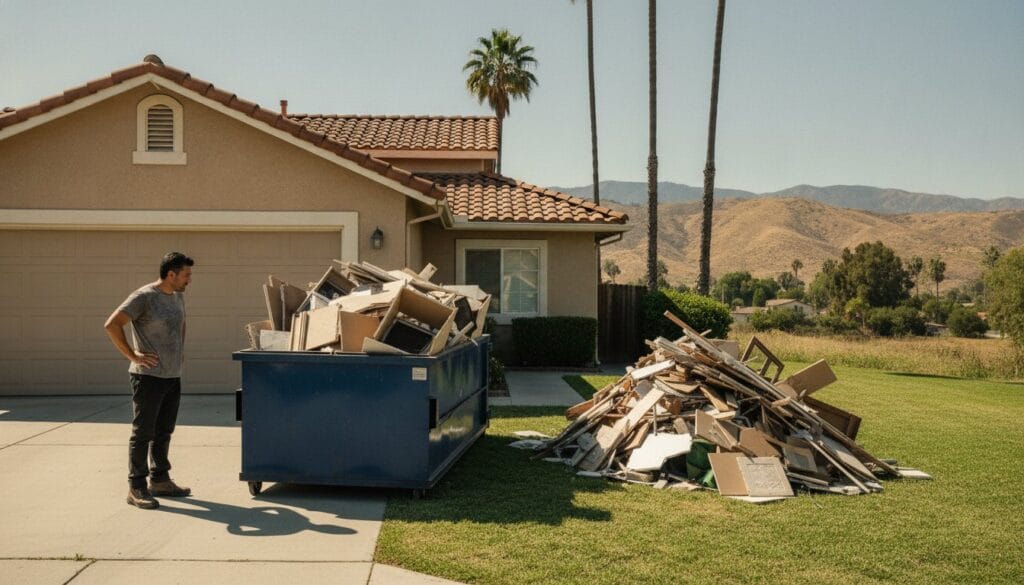
Most homeowners fall into the “visual deception” trap. You look at a pile of debris on your lawn and assume it will fit into a small container. Debris is rarely uniform. It stacks poorly and leaves air pockets that consume volume faster than you expect. This leads to one of the most common dumpster rental mistakes to avoid: underestimating your total waste volume. When you run out of space, your project stops. You are then forced to pay for a second haul, which can effectively double your disposal costs.
Starting with the right equipment is essential for understanding dumpster rental basics and keeping your budget intact. Choosing a bin that is slightly larger than you think you need is almost always the more cost-effective choice. It prevents the frustration of a half-finished cleanup and the logistical nightmare of ordering a replacement bin mid-project.
Matching Project Scale to Bin Capacity
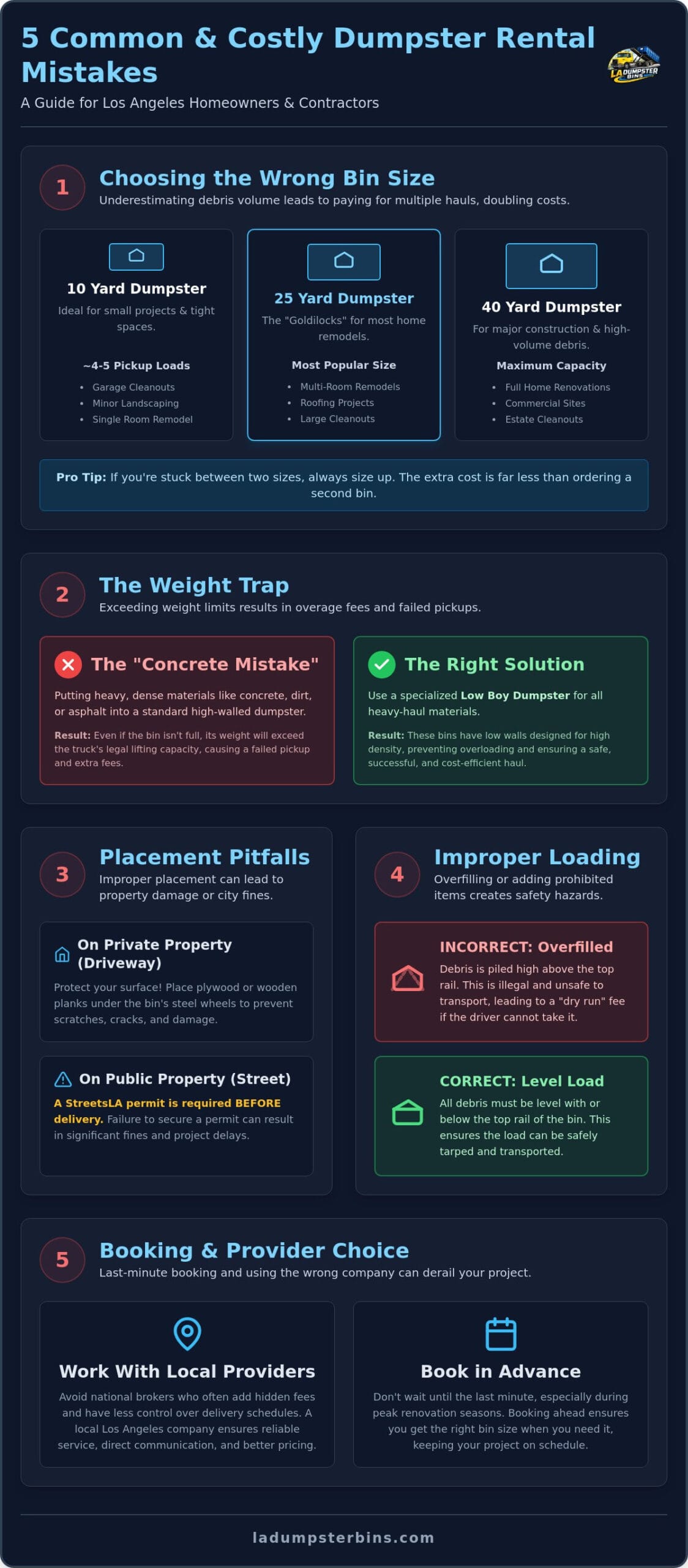
Different projects require specific capacities. A 10 Yard Dumpster is the standard for small residential cleanouts. These are ideal for garage clear-outs or minor landscaping in tight neighborhoods where space is limited. To visualize this, a 10-yard bin holds roughly four to five pickup truck loads of waste.
For larger tasks, the 25 yards roll off dumpster is often the “Goldilocks” size for San Fernando Valley home remodels. It provides enough room for kitchen cabinets, old flooring, and drywall without blocking your entire street. If you are managing a full home renovation or a commercial construction site, a 40 Yard Dumpster is essential. These high-capacity bins handle high-volume debris like wood, siding, and bulky furniture that would quickly overflow smaller containers.
The Cost of Sizing Errors
Sizing errors hit your wallet hard. If you rent a bin that is too small, you pay for the initial delivery, the pickup, and the landfill fees. Then you pay all those costs again for a second bin. This inefficiency can drain a renovation budget in a single afternoon. It is much cheaper to have extra space you don’t use than to lack space you desperately need.
Overfilling a bin to save money is another costly error. If debris rises above the top rail, the driver cannot safely transport the load on LA freeways. You will likely face a “dry run” fee if the driver arrives and cannot haul the bin. To find the efficiency sweet spot, use these guidelines:
- 10 Yard: Small basements, single-room flooring, or yard waste.
- 25 Yard: Multi-room remodels and roofing projects.
- 40 Yard: Estate cleanouts and major structural changes.
If you are stuck between two sizes, always size up one level. The slight increase in the initial rental price is significantly lower than the cost of a second haul and the associated project delays.
The Weight Trap: Misjudging Debris Density and Bin Limits
Weight capacity is the maximum tonnage allowed before safety risks and fees occur. It’s a critical factor that many renters overlook. You might assume that if the debris fits inside the walls, you’re safe. That isn’t how it works. One of the most common dumpster rental mistakes to avoid is treating every bin like it has an infinite weight limit. Modern roll-off trucks use hydraulic systems with specific lifting capacities. If you exceed these, the driver cannot legally or physically transport the load. This leads to failed pickups and immediate dry run fees.
The “Concrete Mistake” is the most frequent weight-related error. You should never put heavy masonry, such as brick or asphalt, into a 40 Yard Dumpster. While the volume is there, the sheer density of stone will exceed the truck’s lifting power long before the bin is full. Heavy materials like dirt and concrete require specialized equipment to stay within legal road limits and avoid damaging your property or the hauling vehicle. If you aren’t sure which bin handles your specific waste, you can view reliable dumpster rental options in Los Angeles to match your material type.
When to Use a Specialized Low Boy Dumpster
A Low Boy Dumpster is engineered specifically for high-density, heavy-haul materials. These bins have shorter walls, which prevents you from accidentally overloading the container beyond the truck’s capacity. Standard high-walled bins are dangerous when filled with dirt or concrete. They become top-heavy and unstable during transport. Using a Low Boy is the most cost-efficient way to handle heavy debris because it ensures a successful pickup every time without the risk of massive overage penalties. It’s the right tool for the job when clearing a driveway or digging out a pool area.
Estimating Debris Weight Before Booking
Household junk is light, but construction debris is deceptively heavy. Drywall, roofing shingles, and lumber add up fast. A standard 10-yard bin for heavy materials is typically restricted to a specific tonnage limit to ensure the roll-off truck can safely hoist the load. You also need to watch out for “Rain Weight.” If your bin sits open during a Los Angeles rainstorm, materials like old carpet, wood, and drywall will soak up water like a sponge. This added weight can easily push you over your limit. To avoid prohibited materials violations or weight surprises, keep your bin covered if the forecast looks wet. Research shows that weight overage fees usually range from $50 to $100+ per ton, making accuracy at the start of your project vital for your bottom line.
Placement Pitfalls and Los Angeles Permit Requirements
Choosing where to drop your bin is a decision that dictates your project’s legal compliance and physical safety. In Los Angeles, you generally have two choices: private property or the public right-of-way. Placing a Residential Roll Off Dumpster Rental on your driveway is the simplest route. It requires no city paperwork and keeps the bin close to your work site. However, if your driveway is too steep, too narrow, or too short, you must use the street. This is where common dumpster rental mistakes to avoid often start. Failing to account for the legal shift from private to public property can result in heavy fines before your project even begins.
“Blocked Access” is a frequent reason for failed deliveries and added costs. A roll-off truck needs significant room to maneuver. It isn’t just about the footprint of the bin itself. The truck needs a clear path to back in and enough vertical space to tilt the hoist during the drop-off. If cars are parked in the way or a gate is locked, the driver will leave. You will then deal with a dry run fee. Always ensure the drop zone is clear of vehicles and debris at least one hour before your scheduled delivery window.
Protecting your pavement is a non-negotiable step for any responsible renter. Dumpsters are heavy steel boxes. When they are dropped or picked up, the metal rollers can scrape or crack asphalt and concrete surfaces. Placing simple wood planks or plywood under the contact points is a professional standard. It distributes the weight and prevents permanent scarring on your property. This simple precaution saves you from expensive driveway repairs once the project is finished.
LA and San Fernando Valley Street Logistics
Navigating the narrow canyon roads of the Hollywood Hills or the tight residential blocks in the San Fernando Valley requires precision. You must check for low-hanging tree branches and power lines. A truck with a raised bin can stand over 20 feet tall. If the driver identifies a safety hazard like a sagging wire, they will refuse the drop. Be a good neighbor and inform those nearby of your delivery. This prevents complaints and ensures shared access points remain clear for daily traffic during your rental period.
Securing the Necessary Permits
If you place a bin on a public street, sidewalk, or alley, a “Street Use Permit” is mandatory. For the City of Los Angeles, these are issued by the Bureau of Street Services, also known as StreetsLA. You can apply through the EPIC-LA online system. Permit fees typically range from $20 to $150 depending on the duration and specific location. Most permits are valid for 7 days and require renewal for longer projects. Placing a bin without authorization often triggers fines that far exceed the cost of the permit itself. Verify your placement plan with your provider to ensure you meet all local ordinances before the truck arrives.
Improper Loading and Prohibited Materials Violations
Loading a bin seems simple, but improper technique is one of the most common dumpster rental mistakes to avoid. You might feel tempted to pile debris high into a “mound” to fit everything in one trip. This is a major safety violation. Los Angeles haulers must cover every load with a heavy-duty tarp for transport on busy local freeways. If debris sits higher than the top rail, the tarp cannot secure the load properly. This creates a lethal risk of flying debris hitting other vehicles. Drivers will refuse to pick up an overfilled bin. You will then face a dry run fee while you spend hours manually leveling the load.
The “Forbidden List” for Los Angeles landfills is extensive and strictly enforced. Hazardous waste is never allowed in a standard roll-off container. This includes everyday items like wet paint, motor oil, car batteries, and electronics. Landfills use sensors and spot checks to identify these materials. If prohibited items are found in your bin, the landfill will reject the entire load. You will be responsible for the cost of returning the bin to your site and the manual removal of the hazardous items. Avoid these delays by booking a Residential Roll Off Dumpster Rental and speaking with a specialist about your specific waste type.
Maximizing Bin Space Through Smart Loading
You can fit significantly more into your bin by loading it strategically. Always place heavy, flat items like plywood or old doors on the bottom. This creates a stable base and keeps the center of gravity low for the truck. Break down bulky furniture and cabinets to eliminate large air pockets that waste valuable volume. Distribute the weight evenly from front to back. An unbalanced load can cause the truck to tip or lose traction during the pickup process. By packing tightly and keeping the load level, you ensure a safe, successful haul on the first attempt.
Handling Prohibited Waste Responsibly
Hazardous waste disposal is a separate specialized service. It is not included in your standard dumpster rental. For items like tires, propane tanks, and fluorescent bulbs, you must use designated local resources. Los Angeles County provides free collection programs through S.A.F.E. (Solvents/Automotive/Flammables/Electronics) Centers. Never try to “hide” prohibited items in the middle of a load. Landfill operators are trained to spot these traps. The financial consequences of a violation include steep fines and environmental cleanup fees that can dwarf the original rental cost. Dispose of these items at a SAFE center before your bin arrives to keep your project compliant and on budget.
- Paint and Solvents: Must be dried or taken to a SAFE center.
- Electronics: Monitors and CPUs require e-waste recycling.
- Tires and Batteries: Prohibited due to fire risks and chemical leaks.
Booking Too Late and Choosing the Wrong Provider
Don’t wait until the day your project begins to secure your equipment. The “Same Day” myth is a frequent trap for many residential and commercial renters. In a high-demand market like Los Angeles, inventory for specific sizes like the 10 Yard Dumpster or the 25 yards roll off dumpster can vanish quickly. Booking at the last minute is one of the most common dumpster rental mistakes to avoid. It leaves you at the mercy of whatever is left in the yard, which might be too large for your driveway or too small for your debris. Aim to schedule your delivery at least 48 hours in advance to guarantee the right bin for your needs.
Choosing a national broker instead of a local provider is another costly error. Brokers are essentially middle-men with no trucks of their own. They take your order, add a service fee, and then scramble to find a local company to fulfill the request. This creates a dangerous disconnect. If the truck is late or the placement is wrong, you have to navigate a national call center rather than speaking directly to the team in Los Angeles. Working directly with a local company ensures you get clear, upfront pricing without hidden brokerage fees and a direct line of communication to the driver.
LA Dumpster Bins prioritizes readiness and reliability. We offer 24/7 availability to handle emergency cleanups and tight construction deadlines. This round-the-clock service sets us apart from standard vendors who close their doors at 5:00 PM. Whether you’re dealing with a sudden property restoration or a contractor who needs a 40 Yard Dumpster immediately, having a responsive partner makes the difference between a successful project and an expensive delay.
The Advantage of Local Los Angeles Expertise
Local expertise is vital for navigating the unique logistics of the San Fernando Valley and the greater LA area. We understand the specific traffic patterns on the 405 and 101 freeways. This allows us to provide more accurate delivery windows and avoid peak congestion times. We know the specific neighborhood challenges, from narrow canyon roads to tight residential alleys. Supporting a local business means you get a partner who’s accountable to the community and invested in providing dependable, consistent service every time.
Streamlining Your Rental Experience
A perfect rental experience requires careful planning. Use this checklist to ensure your project stays on track and under budget:
- Size: Match the bin capacity to your debris volume to avoid second hauls.
- Weight: Use a Low Boy Dumpster for dense materials like concrete or dirt.
- Placement: Secure a StreetsLA permit if the bin must sit on public property.
- Timing: Finalize your booking well before your crew arrives on site.
Efficiency and transparency are the hallmarks of a professional waste management provider. You deserve a straightforward transaction with no hidden costs or logistical surprises. Get a free estimate from LA Dumpster Bins today and ensure your next project is handled by local experts who are ready to work around the clock.
Secure Your Project Success Today
Success on a Los Angeles job site depends on precision and planning. You now know that choosing the right bin size and managing weight limits are essential for staying on budget. Navigating local permit requirements and avoiding prohibited materials ensures you stay compliant with city regulations. These are the most common dumpster rental mistakes to avoid if you want to prevent unexpected fines or project delays. A little preparation goes a long way in keeping your site clean and your neighbors happy.
Since 2021, we have served Los Angeles and the San Fernando Valley with a focus on reliability. We provide specialized Low Boy bins for heavy debris to keep your loads safe and legal. Our team is ready to help with 24/7 availability for all your rental needs. This ensures you never have to wait for answers or equipment when a deadline is looming. Ready to start your cleanup? Book Your Dependable LA Dumpster Rental Now to get your project moving without the stress. We are here to ensure your waste management is the easiest part of your entire project.
Frequently Asked Questions
Do I need a permit to rent a dumpster in Los Angeles?
You only need a permit if you place the bin on a public street, sidewalk, or alley. No permit is required for placement on private property like your driveway. For city streets, apply through the StreetsLA EPIC-LA system. These permits are typically valid for 7 days. Failing to secure one is one of the most common dumpster rental mistakes to avoid in the City of Los Angeles.
What happens if I overfill my dumpster above the top rail?
If debris rises above the top rail, the driver will refuse the pickup for safety reasons. California law requires all loads to be tarped during transport on local freeways to prevent flying debris. You will likely be charged a dry run fee. You must level the load yourself before a second pickup attempt can be scheduled. Always pack the bin tightly to keep the load level.
Can I put concrete and dirt in a standard 40-yard dumpster?
No, you should never put heavy materials like concrete or dirt in a 40 Yard Dumpster. These high-capacity bins are designed for bulky, lighter waste. Filling a large bin with masonry will exceed the roll-off truck’s hydraulic lifting capacity. For heavy-haul projects involving asphalt or soil, you must use a specialized Low Boy Dumpster to stay within legal weight limits and ensure a successful haul.
What items are strictly prohibited in an LA dumpster rental?
Hazardous waste is strictly prohibited in all rentals. This includes wet paint, solvents, car batteries, tires, and electronics like monitors or TVs. Appliances containing Freon, such as refrigerators, are also banned. Los Angeles landfills enforce these rules strictly. Residents should use local S.A.F.E. Centers for free disposal of these specific hazardous materials to avoid massive landfill rejection fees and environmental fines.
How much space does the truck need to deliver the bin?
The delivery truck needs at least 60 feet of straight-line approach and 23 feet of vertical clearance. This space ensures the driver can safely tilt the hoist and roll the bin off the trailer. Ensure there are no low-hanging tree branches, power lines, or parked cars blocking the path. If the site is too tight or obstructed, the driver may refuse the delivery, resulting in a fee.
Will a dumpster damage my driveway or sidewalk?
Heavy steel bins can scrape or crack asphalt and concrete surfaces during the drop-off and pickup process. You can prevent this damage by placing wood planks or sheets of plywood under the rollers. This simple precaution distributes the weight of the bin and protects your property from permanent scarring. Always clear the area of small rocks and debris before the truck arrives to ensure a smooth placement.
How long can I keep the dumpster on my property?
Most standard rentals are for a period of 7 to 14 days. If your project takes longer, you can usually extend the rental for a daily fee, which typically ranges from $10 to $50 depending on the provider. If the bin is on a public street, remember that your city permit must also be renewed. Contact your provider early to schedule a pickup or request an extension to avoid scheduling conflicts.
What is the difference between a roll-off bin and a Low Boy?
A standard roll-off bin has high walls and is used for general household junk or construction debris. A Low Boy Dumpster has short walls and is engineered specifically for heavy materials like dirt, concrete, and brick. Using a Low Boy prevents the bin from becoming too heavy for the truck to lift. It is a key tool to ensure you avoid common dumpster rental mistakes to avoid when handling dense masonry.