
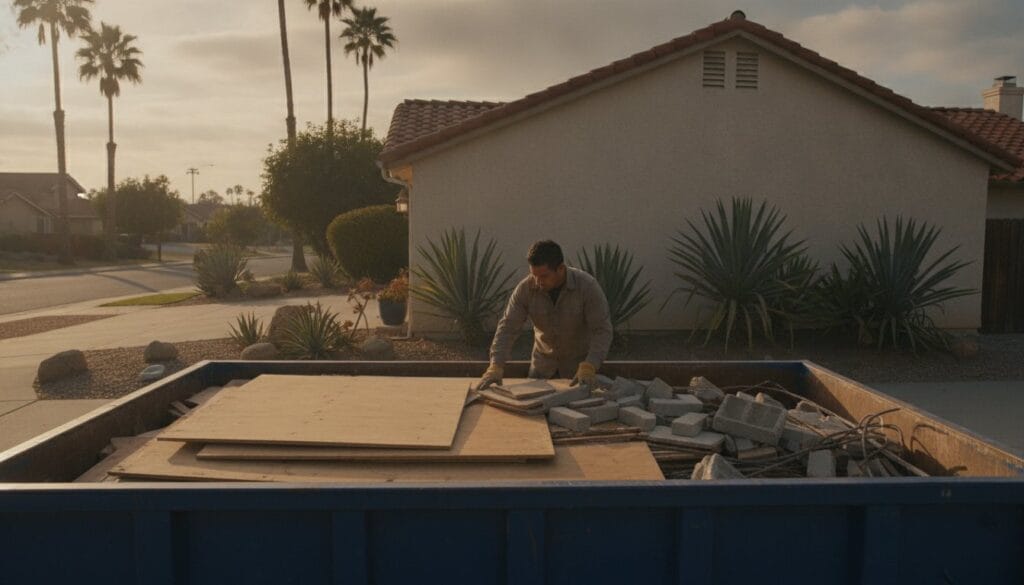
The difference between a successful project and a $150 overfill penalty is often just a few minutes of strategic planning. Most homeowners and contractors treat waste management like a chore, but it’s actually a logistical puzzle where the wrong move costs real money. If you want to maximize every cubic yard of your rental, you must know how to load a roll off dumpster efficiently. We know the frustration of seeing a half-empty bin reach its weight limit or watching a second rental fee eat into your project budget.
It’s a common struggle to balance heavy debris with bulky furniture without straining your back or risking a safety violation. This guide provides a professional strategy to pack your bin like a pro, ensuring you get the full value of your equipment. You’ll learn the layering technique, how to distribute weight to avoid $100 per ton overage fees, and the essential rules for separating organic waste under California’s SB 1383 regulations. We’ll show you how to pack a perfectly balanced load that’s ready for safe transport and a pickup without any surprise charges.
Key Takeaways
- Discover how to load a roll off dumpster efficiently by eliminating air pockets to maximize your 10, 25, or 40-yard capacity.
- Master the “Order of Operations” by walking heavy items through the rear swing door and layering flat materials like plywood on the bottom.
- Apply the “Jigsaw Puzzle Method” to break down bulky furniture and nest smaller debris inside larger items to save valuable space.
- Avoid expensive overfill penalties and safety hazards by following the “Water Level” rule and keeping all waste below the top rim.
- Protect your project budget by preventing the need for a second “swap-out” rental through strategic, high-density packing techniques.
Why Efficient Loading Saves You Money on Your LA Dumpster Rental
Efficient loading isn’t just about being tidy. It’s a financial strategy. When you rent a Roll-off (dumpster) for your Los Angeles project, you’re paying for a specific volume of space. If you fill that space with air instead of debris, you’re effectively throwing money away. Learning how to load a roll off dumpster efficiently ensures you stay within your budget and avoid the logistical headache of a “swap-out” rental.
A swap-out occurs when your bin is full but your driveway still has a pile of trash. You’ll have to pay for a second haul-away and a second rental period. By maximizing the density of your 10, 25, or 40-yard bin, you can often fit the entire project’s waste into a single container. This directly protects your bottom line and keeps your job site clear for the duration of your work.
The Problem with Air Pockets
An air pocket is the #1 enemy of dumpster efficiency. When you toss items into a bin haphazardly, they land at odd angles. This creates large, unusable voids underneath and between items. Loose loading can waste up to 30% of your total cubic yardage. Compact loading involves placing items deliberately to fill every gap. Instead of throwing a chair on top, you should break it down or place smaller debris around its legs. Every inch of space you reclaim is an inch you don’t have to pay for twice.
Understanding Weight vs. Volume
You must distinguish between how much space an item takes up and how much it weighs. A 40-yard bin is massive, but filling it to the brim with concrete or dirt is a recipe for an overage fee. These heavy materials quickly exceed tonnage limits even if the bin looks half empty. Conversely, light household junk takes up immense volume but rarely hits weight caps. You need to manage both to avoid extra costs.
Proper weight distribution is also a safety requirement. If all the heavy debris sits on one side, the bin becomes unstable. This can lead to dangerous tipping during the haul-away process. Balancing the load is essential for safe transport through San Fernando Valley traffic. It ensures the truck driver can safely navigate LA’s busy streets without the load shifting. Staying within your tonnage limits is the only way to avoid the $50 to $100+ per ton overage fees that are common in the industry.
The Order of Operations: How to Layer Your Debris Correctly
Loading a bin is like building a house. You need a solid foundation to keep the structure stable. Learning how to load a roll off dumpster efficiently starts with your first piece of debris. Don’t waste energy lifting heavy items over the high side walls. Every professional bin features a rear swing door. Open it wide and walk your heaviest items directly onto the floor of the container. This simple step saves your back and allows you to place items with precision rather than letting them land where they fall.
A successful load follows a strict vertical hierarchy:
- The Bottom Layer: Place flat, heavy materials here. Drywall sheets, plywood, old doors, and large tabletops should form a level “false floor.”
- The Middle Layer: This is for medium-sized items like furniture, cabinets, and boxed junk. Pack these tightly together to minimize any gaps.
- The Top Layer: Save this for loose, light debris. Items like carpet scraps, insulation, or small yard trimmings can be tossed on top and compressed downward by the weight of later additions.
Balance the weight from side to side. If you pile all the heavy appliances on the left, the truck may tilt or become unstable during the haul-away. A balanced load is a safe load. If you’re tackling a large home cleanout, our Residential Roll Off Dumpster Rental options provide the space you need to layer correctly.
The “Heavies First” Rule
Appliances, heavy wooden desks, and sofas must be your foundation. These items act as stabilizers for the rest of the load. When you walk these into the bin, push them all the way to the front wall (the end furthest from the door). By filling the front first and working your way back to the door, you ensure you don’t trap yourself or leave massive air pockets in the hardest-to-reach areas. This base layer prevents the load from shifting during transit through LA traffic.
Loading Low Boy Dumpsters for Concrete and Dirt
For landscaping or heavy demolition, you’ll likely use a Low Boy Dumpster. These 10-yard bins are designed specifically for high-density materials like concrete, brick, and soil. Because these materials are so heavy, you must follow the “level-fill” requirement. Never pile dirt or concrete higher than the top rim of the bin. If the load is “crowned” or overflowing, the driver will reject the pickup to avoid safety violations and overweight fines.
Keep these loads pure. Mixing household trash or wood with concrete often results in higher processing fees at the facility. Adhering to California’s C&D recycling regulations ensures your heavy materials are diverted from landfills and processed correctly. This focus on purity helps you stay within your project’s budget while meeting local environmental standards.

Space-Saving Hacks: The Jigsaw Puzzle Method
While layering provides the structural foundation for your load, the Jigsaw Puzzle Method focuses on density. Layering tells you where to put things; the jigsaw method tells you how to fit them together. Learning how to load a roll off dumpster efficiently requires a shift in mindset. You must stop viewing your debris as a pile of trash and start seeing it as interlocking pieces. Every gap in your bin is a cubic foot of air you’ve paid to transport. To get the most out of your 10, 25, or 40-yard bin, you need to eliminate those voids through active dismantling and nesting.
Strategic packing starts with preparation. Keep a box cutter, a sledgehammer, and a reciprocating saw near the bin. Use them to ensure everything enters the container in its smallest possible form. Flattening every cardboard box is a non-negotiable rule. An upright appliance box is 90% air; a flattened one takes up less than an inch of vertical space. Similarly, never toss long pieces of lumber or PVC piping into the bin at an angle. Cut these materials into shorter sections that can lay perfectly flat against the floor or side walls.
Breaking Down Bulky Debris
Bulky furniture is the primary cause of wasted space. The “flat-pack” philosophy is simple: if an item can be flat, it should be flat. To dismantle a sofa, remove the cushions, unscrew the legs, and use a saw or sledgehammer to break the wooden frame into manageable slats. For kitchen cabinets or wardrobes, remove the doors and kickplates, then collapse the main box. Breaking down just three large items like a sectional sofa, a wardrobe, and a dining table can reclaim several cubic yards of space. This often makes the difference between needing a second “swap-out” rental and finishing your project with a single 40 Yard Dumpster.
The Art of Nesting
Nesting is the process of using the “hidden” space inside your debris. Most appliances and hollow furniture pieces are essentially metal or wood shells surrounding empty air. Don’t let that space go to waste. If you’re disposing of a broken dryer, fill the drum with small scraps, bagged trash, or broken tiles before you move on to the next layer. Place smaller items inside larger ones, such as putting a toaster inside a microwave or stacking chairs tightly together. Nesting is the key to a 40-yard dumpster’s true capacity. By filling the gaps between large items with small scraps or bags of loose debris, you create a solid, high-density load that maximizes every dollar of your rental agreement.
Avoiding Overage Fees and Safety Hazards in Los Angeles
Mastering the jigsaw method is only half the battle. You also need to understand the legal and environmental rules that govern waste management in LA. Learning how to load a roll off dumpster efficiently means knowing exactly when to stop. If you ignore the limits, you’ll face overfilling fees ranging from $75 to $150. Worse, the driver may refuse to haul your bin until you’ve manually removed the excess debris. This leads to project delays and extra daily rental fees.
The “Water Level” Rule is your most important guideline. Never fill debris above the top rim of the dumpster. This isn’t just our preference; it’s a safety requirement for any vehicle traveling on LA freeways. Debris that sits above the rim can shift or fly out during transport, creating a hazard for other drivers. If your pile is looking high, take a moment to level it off. Shift items into the gaps you identified during the nesting phase or break down larger pieces to lower the overall profile.
The Dangers of Overfilling
Drivers face strict legal ramifications for hauling “high-boy” loads. California Highway Patrol (CHP) frequently inspects roll-off trucks for safety compliance. An overfilled bin is an un-tarpable bin. If the mesh cover cannot securely seal the load, the truck cannot move. If you find yourself over the limit, don’t try to hide it under a tarp. You’ll need to remove the top layer or rent a second 10 Yard Dumpster to handle the overflow. It’s always cheaper to pack tightly from the start than to pay for a rejected pickup.
LA Weather and Regulatory Factors
The San Fernando Valley heat and Santa Ana wind events present unique challenges. Light materials like plastic sheeting, foam, and paper can easily become airborne. Always bag these materials before placing them in the bin. This prevents “littering” fines and keeps your job site compliant with local ordinances. Another weight-related risk is rain. While LA is often dry, a single storm can add hundreds of pounds to absorbent materials like drywall or old carpeting. Since weight overage fees typically run $50 to $100+ per ton, keep a heavy-duty tarp on hand to cover the bin during wet weather.
Consider your placement carefully. If you can’t fit your rental on a private driveway, you’ll need a permit from the LA Bureau of Public Works. These street use permits range from $20 to $150 depending on the duration and location. Placing a bin on a public street without one is a fast way to get hit with a city citation. For a reliable and compliant experience, get a free quote on our Commercial Roll Off Dumpster Rental options today.
Certain materials are strictly prohibited. It’s illegal to dispose of tires, paint, solvents, or batteries in a standard roll-off. Los Angeles provides S.A.F.E. centers specifically for these flammables and electronics. Mixing these into your general waste will result in immediate fines and the potential rejection of the entire load at the transfer station. Following these rules ensures your project stays on schedule and your budget stays intact.
Maximize Your Project Efficiency with LA Dumpster Bins
Applying the right techniques is essential, but even the best strategy fails if you have the wrong equipment. Knowing how to load a roll off dumpster efficiently requires matching your project’s volume to the correct bin size. We provide a range of options to ensure you never pay for more space than you need. Our fleet includes 10 Yard, 25 yards, and 40 Yard Dumpsters to handle everything from small garage cleanouts to massive commercial renovations. By selecting the right container, you ensure your project stays organized and your job site remains safe.
Time is money on any Los Angeles job site. We offer 24/7 availability for urgent drop-offs and quick haul-aways because we know project timelines can shift. Whether you are working in the San Fernando Valley or downtown, our local team is ready to respond. We prioritize direct, no-nonsense pricing and provide complimentary estimates to keep your budget predictable. You won’t find hidden fees or complex contracts here; just reliable service that respects your bottom line.
Choosing the Right Size for Your Load
Matching your debris to the right container is the first step in cost control. For small residential projects like a bathroom remodel or a heavy yard cleanup, our 10 Yard Dumpster is often the most efficient choice. If you are managing a large-scale business cleanout or a multi-room demolition, the 40 Yard Dumpster is the industry gold standard. It provides the height and length needed to utilize the jigsaw packing methods discussed earlier. For those tackling landscaping or foundation work, our specialized Low Boy Dumpster is built specifically for heavy concrete and dirt hauls.
Our local expertise helps you avoid common logistical headaches. We understand LA’s unique parking challenges and permit requirements. We can advise you on the best placement for your rental to ensure easy access for your crew and our drivers. This localized knowledge prevents delays and ensures your project moves forward without city citations or access issues.
Ready to Start Your Project?
Booking your rental shouldn’t be the hardest part of your project. We’ve streamlined our process so you can secure your bin in under five minutes. Since 2021, we have remained committed to providing dependable, local service to our neighbors across Los Angeles. We are a hardworking, hands-on team that values transparency and reliability above all else. We are always available and ready to work when you are.
Don’t let waste management slow your progress or drain your budget. Use the packing techniques you’ve learned to get the most out of every cubic yard. When you’re ready for a partner that prioritizes your project’s success, we’re here to help. Call us today for a free estimate on your next roll-off rental!
Master Your Next Project with Strategic Loading
You’ve learned that mastering how to load a roll off dumpster efficiently is the best way to protect your project budget. By using the jigsaw puzzle method to break down bulky items and layering your foundation with flat, heavy materials, you can fit more debris into a single bin. Staying below the top rim and respecting tonnage limits ensures you avoid the surprise fees that often plague unorganized job sites. These small adjustments in your loading process save time, money, and physical strain.
Since 2021, we’ve helped residents and contractors across Los Angeles and the San Fernando Valley manage their waste with reliability and speed. Whether you need a specialized Low Boy dumpster for concrete or a massive 40-yard bin for a commercial cleanout, our team is ready to assist. We offer 24/7 availability to keep your project moving at all hours without any logistical delays. We are your local partner for consistent and transparent waste management.
Get a Free Dumpster Rental Estimate in Los Angeles
Take control of your job site today. With a perfectly packed bin and a dependable team behind you, your project is already halfway to success. We look forward to helping you get the job done right.
Frequently Asked Questions
How high can I legally fill my roll-off dumpster?
You can legally fill your dumpster up to the top rim of the container. This is known as the “water level” rule. Filling beyond this point creates a safety hazard for transport on Los Angeles freeways. If debris extends above the rim, the driver may refuse to haul the load until it’s leveled off to prevent items from falling out during transit.
What happens if my dumpster is too heavy for the truck to pick up?
If the load exceeds the weight capacity of the truck or legal road limits, the driver won’t be able to lift the bin. You’ll need to remove enough material to bring the weight back within acceptable limits. This often results in a “dry run” fee for the attempted pickup. Learning how to load a roll off dumpster efficiently helps you avoid these costly logistical delays and physical rework.
Can I put furniture in a roll-off dumpster?
Yes, furniture is accepted in most roll-off rentals. To maximize your space, you should dismantle large items like sofas, tables, and cabinets. Use a sledgehammer or saw to break frames into flat pieces. This prevents large air pockets from wasting the cubic yardage you’ve paid for and ensures you don’t need a second rental for a single room cleanout.
Do I need to bag my trash before putting it in the dumpster?
You don’t need to bag every item, but it’s highly recommended for light or dusty debris. Los Angeles wind events can easily blow loose plastic, foam, or insulation out of the bin. Bagging these materials helps you avoid local littering fines and keeps your job site compliant with city ordinances. Heavy or bulky items can be placed directly into the container without bags.
What is the best way to load heavy concrete or dirt?
Heavy materials like concrete, brick, and soil should be loaded into a Low Boy Dumpster. These bins are specifically designed for high-density loads that would quickly exceed the weight limits of larger containers. You must keep the material level and avoid “crowning” the center of the pile. Never mix heavy inert materials with general household trash, as this often leads to higher processing fees at the facility.
How can I prevent people from throwing their trash in my rented dumpster at night?
The most effective way to stop unauthorized dumping is to cover your bin with a heavy-duty tarp at night. Securing the tarp with bungee cords makes it much harder for passersby to toss in their junk. If possible, place the dumpster on your private driveway rather than the street. This location makes it less accessible to the public and reduces the risk of illegal use.
Will a 40-yard dumpster fit in a standard Los Angeles driveway?
A 40-yard dumpster typically measures 22 feet in length and 8 feet in width, which fits in many standard residential driveways. However, you must account for the truck’s delivery space. Our drivers need about 60 feet of straight-line clearance to drop and hook the bin safely. Always check for low-hanging branches or power lines that might obstruct the lifting mechanism before scheduling your delivery.
Is there anything I am strictly prohibited from loading into the bin?
You are strictly prohibited from loading hazardous materials into any bin. This includes wet paint, car batteries, tires, asbestos, and chemicals. Additionally, California Senate Bill 1383 requires businesses to separate organic waste from general debris. Understanding these local regulations is a key part of knowing how to load a roll off dumpster efficiently while avoiding immediate fines and environmental violations.