Did you know that as of March 2026, California has significantly increased enforcement authority against improper waste disposal? Tossing the wrong item into your rental can lead to heavy fines that far outweigh the cost of your project. You want your cleanup to be fast and budget-friendly, but the state’s complex environmental laws often make it hard to know which items are allowed. Understanding exactly what can you not put in a dumpster in California is the best way to protect your wallet and ensure a smooth, professional experience.
It’s frustrating to face unexpected fees or rejected loads because of confusing e-waste laws or new battery recycling mandates. We’re here to simplify the process. This guide provides the essential 2026 checklist for staying compliant with SB 54 plastic regulations and CalGreen construction requirements. You’ll learn which items are strictly banned from landfills and how to handle specialized waste properly. We’ll give you a clear path to a stress-free rental process so you can focus on getting the job done right.
Key Takeaways
- Identify the specific toxic materials targeted by California’s Landfill Ban to prevent groundwater contamination and legal penalties.
- Discover exactly what can you not put in a dumpster in California, including flammables like gasoline and solvent-based paints.
- Learn how to properly manage heavy debris like concrete and asphalt using a Low Boy dumpster to stay within legal weight limits.
- Understand why common household items like tires and appliances containing Freon require specialized disposal instead of a standard roll-off bin.
- Master safe loading practices and weight distribution techniques to ensure a smooth, professional pickup without extra fees.
Understanding California Waste Disposal Laws in 2026
California sets the national standard for waste regulation. It’s not just about keeping landfills tidy. The state’s “Landfill Ban” actively targets items that leak hazardous chemicals into the environment. If these toxins reach the groundwater, the damage is long-lasting. This is why enforcement is so aggressive. You might think a single paint can or old battery won’t matter, but the law says otherwise. Fines for improper disposal are steep. A single violation can cost you thousands of dollars. We’re legally bound to refuse any load that contains banned materials. It’s our job to keep your project compliant and safe.
Understanding what can you not put in a dumpster in California saves you from these financial headaches. If we find prohibited items during pickup, we can’t haul the container. This leaves you with a full dumpster and a stalled project. Being proactive is the only way to ensure a smooth experience. Our team works with you to identify potential issues before they become expensive problems.
The Role of CalRecycle in Waste Management
CalRecycle is the authority that defines “prohibited waste” across the state. They don’t just set the rules; they update them constantly. These updates often focus on the growing problem of Electronic waste in the United States. As technology changes, so do the disposal requirements. In the Los Angeles area, enforcement is particularly strict at the scale. Officials check loads for compliance before they’re allowed to dump. This local oversight ensures that every piece of waste is handled according to current environmental standards. If a load is flagged, the entire project can come to a halt until the issue is resolved.
Why Prohibited Items Matter for Your Rental
Safety is the biggest reason these rules exist. Certain prohibited items are highly volatile. Items like lithium-ion batteries or pressurized tanks can spark fires in the back of a truck during transport. This puts our drivers and the public at risk. Beyond safety, there’s the issue of “dig-out” fees. If a landfill operator discovers hazardous material in a dumped load, they’ll charge a premium to have it removed manually. The renter is always responsible for these costs. Avoiding banned items keeps your rental cost-effective and your timeline on track. It’s much cheaper to dispose of hazardous items through the proper channels than to pay for a landfill cleanup.
Hazardous Waste Checklist: What to Keep Out
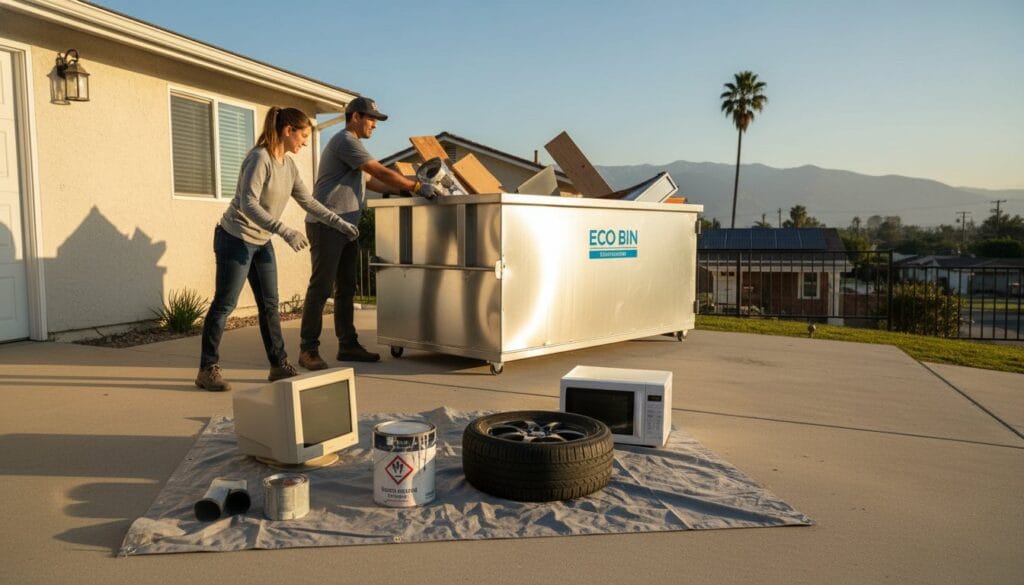
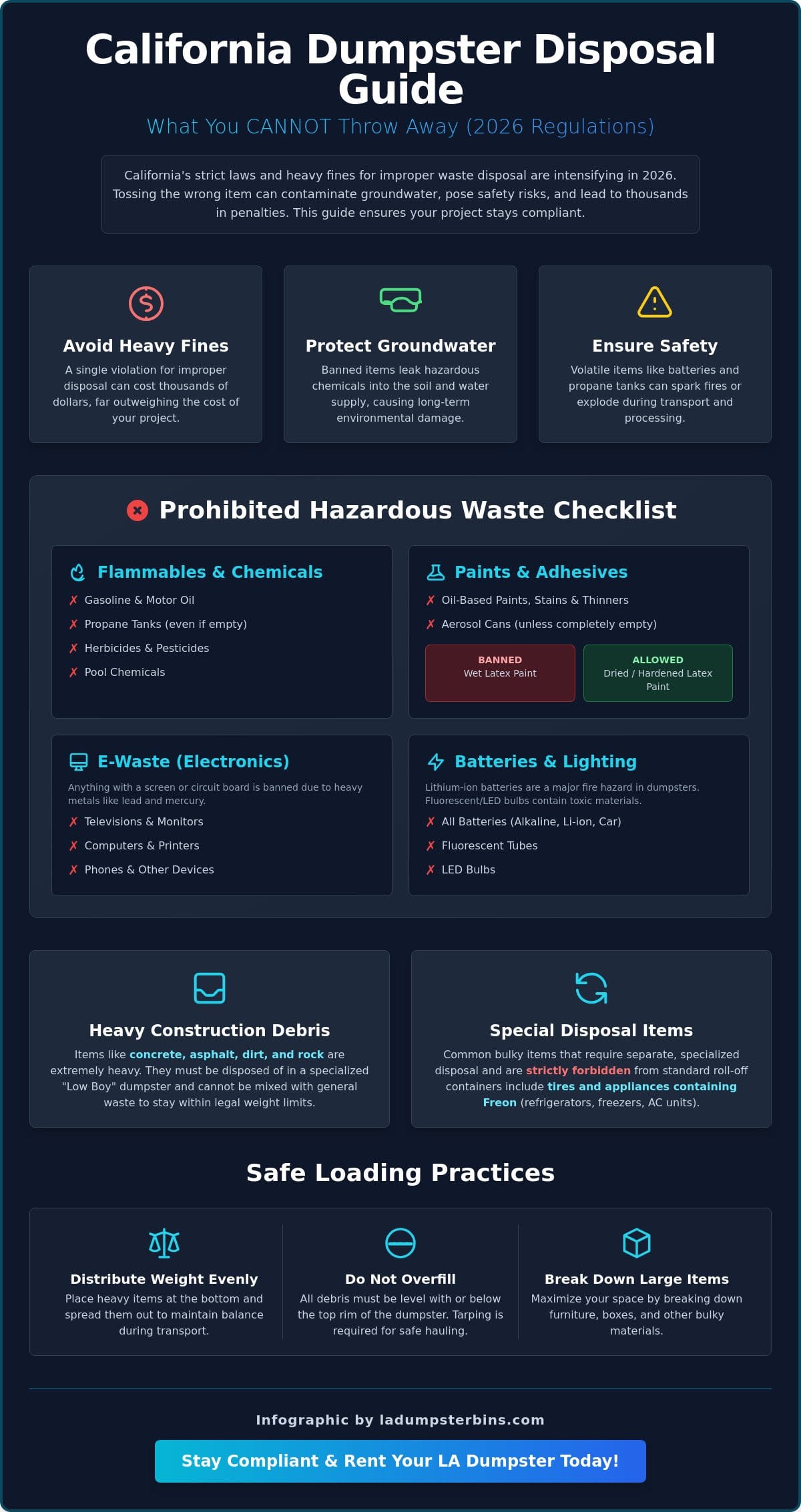
California’s California’s household hazardous waste laws are designed to prevent fires and chemical spills. If a substance is flammable, corrosive, or reactive, it’s prohibited. When planning your project, knowing what can you not put in a dumpster in California is essential for staying compliant. Items like gasoline, propane tanks, and solvent-based paints are strictly banned from all roll-off containers. These materials pose an immediate threat to our drivers and the processing facility staff. Even pool chemicals, pesticides, and herbicides require specialized handling at a dedicated facility. If you’re cleaning out a garage or workshop, keep these items separate from your general debris.
Electronics, or e-waste, also fall under this ban. Anything with a screen or a circuit board can’t go into a standard bin. This includes old monitors, printers, and televisions. These items contain heavy metals that contaminate soil if they end up in a landfill. If you’re unsure about a specific item, checking our available dumpster sizes can help you plan for a clean, compliant load. We focus on providing a dependable service that keeps your site running without legal delays.
Paints, Solvents, and Adhesives
Wet latex paint is a common cause of rejected loads. You must dry it out using sawdust or a commercial hardener before tossing it. Once it’s a solid block, it’s generally safe for the bin. Oil-based paints, stains, and thinners are different. They’re always considered hazardous waste. Aerosol cans are only allowed if they’re completely empty. If the can still hisses or contains liquid, it’s a pressurized hazard. Propane tanks are another major safety concern. Even if they feel empty, residual gas can cause an explosion during the compaction process at the landfill.
Batteries and Lighting
Lighting and batteries are high-priority items for inspectors. Fluorescent tubes and LED bulbs contain mercury and lead, which makes them illegal for landfill disposal. Lithium-ion batteries are particularly dangerous in a roll-off container. They can easily ignite if crushed by other debris. Effective January 1, 2026, a new 1.5% recycling fee applies to products with embedded batteries, signaling the state’s move toward stricter oversight. Even small button-cell batteries from watches or hearing aids are strictly banned from standard trash in 2026. All batteries, from AAA to heavy-duty car batteries, must be taken to a certified recycling center.
Construction Debris and Heavy Material Restrictions
Handling construction debris in California requires a strategic approach. Heavy materials like dirt, concrete, and asphalt have strict weight limits that differ from standard household waste. For example, a 10-yard dumpster typically has a 2-ton limit, while a larger 40-yard dumpster handles between 4 and 6 tons. Overloading these containers makes them “road-illegal,” meaning our trucks cannot safely transport them on Los Angeles streets. If a bin is too heavy, the driver must refuse the pick-up, leading to delays and extra fees for the renter. Knowing what can you not put in a dumpster in California includes understanding these physical capacity limits.
Beyond weight, certain construction materials are legally classified as hazardous. Asbestos-containing materials, often found in older roofing or siding, require a certified abatement team and cannot go into any standard roll-off bin. Similarly, treated wood like railroad ties or pressure-treated lumber is handled as hazardous waste under California’s official list of banned wastes. Placing these items in a standard container prevents the load from being accepted at local recycling centers. CalGreen standards in 2026 require at least 65% of construction debris to be recycled or reused, so keeping your load clean is a legal necessity.
When to Use a Low Boy Dumpster
A Low Boy dumpster is the specific tool for heavy, dense materials. These bins are shorter and designed to handle the massive weight of soil or masonry without exceeding legal road limits. They’re the ideal choice for Los Angeles driveway replacements or foundation work. Using the right equipment prevents failed pick-up attempts and keeps your project on schedule. It’s the most dependable way to manage heavy debris without the risk of an overweight load.
Managing Concrete, Dirt, and Asphalt
Never mix heavy debris with general household trash. Landfills and recycling centers treat these materials differently, and mixed loads often face higher processing fees. We recommend “clean-fill” loads whenever possible to keep costs down. A clean-fill load consists of debris that is entirely free of trash, organic matter, or other contaminants. This allows the material to be crushed and reused for new construction projects, helping you meet state recycling mandates while maintaining a clean job site.
Common Household Items That Need Special Disposal
Residents often find that cleaning out a garage or attic reveals items that simply don’t belong in a standard bin. When you’re determining what can you not put in a dumpster in California, you have to look beyond just industrial chemicals. Tires are a primary example. They are banned from landfills because they are difficult to compact and present a significant fire risk. They also trap gases and can “float” to the surface of a landfill over time, damaging the liner. Medical waste is another strict prohibition. Sharps, needles, and any biohazardous materials are never allowed in residential or commercial bins. While professional health settings like Dr. Sankeerth Reddy’s Clinic manage these materials through specialized medical waste streams, residents must use local hazardous waste drop-offs. Knowing what can you not put in a dumpster in California helps you avoid these logistical bottlenecks and keeps waste management workers safe from injury or infection.
Managing these items separately is the only way to maintain a compliant job site. If our drivers spot these materials during a routine pick-up, the entire load may be rejected. This causes unnecessary delays for your project and can lead to additional trip fees. It’s always better to have a plan for these specific items before your container arrives. Taking a few extra minutes to sort your debris ensures that your cleanup remains cost-effective and efficient.
The Mattress and Appliance Problem
Mattresses present a unique challenge in Los Angeles. State law now requires specific recycling processes for old mattresses and box springs. Because of this, many local dump sites will refuse a container if it has a mattress visible on top. Others might accept it but will tack on a heavy surcharge for the extra handling required. Appliances like refrigerators and air conditioners are equally problematic. They contain refrigerants like Freon, which are potent greenhouse gases. You must have these units professionally drained and tagged by a technician before they can be placed in a dumpster. If you’re working in the San Fernando Valley, the “Bye Bye Mattress” program offers several dedicated drop-off points that handle these items legally.
Where to Take Banned Items in Los Angeles
Los Angeles provides several S.A.F.E. Centers specifically for items that can’t go in a roll-off bin. These centers specialize in Solvents, Automotive fluids, Flammables, and Electronics. For residents near the Westside, the UCLA S.A.F.E. Center is a convenient option. Those closer to downtown can use the Washington Blvd location. These facilities are the best way to handle the “prohibited” list without risking fines. For tires, most local automotive shops will recycle them for a small fee. This keeps your project compliant and your job site clean. Once you’ve separated these specialized materials, you can order a residential roll off dumpster rental to quickly clear out the rest of your household debris.
Safe Loading Practices for Your LA Dumpster Rental
Loading your container correctly is just as important as knowing what can you not put in a dumpster in California. A poorly packed bin creates safety hazards during transport and leads to failed pick-up attempts. You must never fill the dumpster past the “Max Fill” or top rail line. This allows our drivers to safely secure a tarp over the load. If debris is poking out or piled too high, we cannot legally transport the container on Los Angeles freeways. It’s also vital to distribute weight evenly. Placing all heavy items on one side can cause the truck to tip or the container to shift during the pick-up process. Keep the weight centered to ensure a fast, professional experience.
Accessibility is a key factor for a successful rental. The roll-off truck needs plenty of space to back in and pull out the container. Ensure the area around the bin is clear of vehicles, equipment, or other obstructions before your scheduled pick-up time. If you run into a situation where you’re unsure about a specific item or how to pack it, don’t guess. Call our team for immediate assistance. We are a hands-on service provider ready to help you solve any logistical problem. Our goal is to make your cleanup as efficient as possible while staying compliant with all local regulations.
Avoiding Overfill and Overweight Fees
Overfilled bins are a major liability. Debris falling from a truck can cause serious accidents for other drivers on busy LA roads. If our driver determines that a load cannot be safely tarped, they will have to leave the bin on-site until it is corrected. This results in a “dry run” fee and delays your project timeline. To avoid being overweight, match your debris to the right container size. Use a 10 Yard Dumpster or a 25 yards roll off dumpster for heavy materials like dirt or tile. These sizes help you stay within legal weight limits while still providing enough capacity for your project needs. Knowing what can you not put in a dumpster in California helps you pick the right size from the start.
Proactive Planning for Your Project
Effective waste management starts before the container arrives on your property. Take the time to stage your debris. Identify any materials that might fall under the state’s prohibited list to prevent last-minute surprises. When you start loading, place the heaviest items on the bottom. This creates a stable base and makes it easier to fill the gaps with lighter materials. If you’re ready to start your next project, contact LA Dumpster Bins for a free estimate and expert guidance. We provide dependable, local service across the geographic service area to ensure you get the right bin at the right price.
Simplify Your Cleanup with Expert Support
Managing a project in Los Angeles or the San Fernando Valley requires more than just heavy lifting. Staying compliant with state environmental laws is the key to a successful, affordable cleanup. By following this 2026 checklist, you now know exactly what can you not put in a dumpster in California to avoid rejected loads and expensive fines. Remember to keep hazardous chemicals, electronics, and un-solidified paint out of your bin. Use specialized equipment like a Low Boy for heavy concrete and always load your debris below the top rail for a safe, legal haul.
We are the local experts you can trust for dependable service. Our team offers transparent pricing with no hidden surprises, so you can budget your project with confidence. We provide 24/7 availability to meet your specific schedule and ensure your job site stays clear and productive. Don’t let waste regulations slow you down. Rent a Dumpster in Los Angeles Today and experience a stress-free disposal process. We’re ready to help you finish your project on time and within budget.
Frequently Asked Questions
Can I put old paint in a dumpster if I let it dry out?
You can dispose of latex paint in a dumpster only if it is completely dried or hardened. Use sawdust, kitty litter, or a commercial hardener to turn the liquid into a solid block before tossing it. Oil-based paints, stains, and thinners are always considered hazardous waste. These flammable materials must be taken to a specialized facility and are never allowed in roll-off containers.
Where can I dispose of household batteries in Los Angeles?
Take household batteries to a Los Angeles S.A.F.E. Center or a participating retail drop-off location. As of 2026, all batteries are prohibited from California landfills because they contain toxic metals. This includes everything from small button-cell batteries to large automotive types. Proper disposal at a certified center is the only way to stay compliant with state environmental regulations and avoid fines.
Are tires allowed in a roll-off dumpster in California?
Tires are strictly prohibited from all roll-off dumpsters across the state. They are difficult to compact and create significant fire hazards at landfill sites. Most local tire shops in Los Angeles will recycle your old tires for a small fee. Choosing this route keeps your rental load clean and prevents the driver from refusing your pick-up due to prohibited items.
What happens if I accidentally put prohibited items in the bin?
If you include items on the list of what can you not put in a dumpster in California, we may be unable to pick up the load. You will likely face a “dry run” fee for the failed attempt. If the landfill discovers prohibited materials after dumping, you will be responsible for expensive “dig-out” fees. Always double-check your debris before the scheduled pick-up to avoid these extra costs.
Can I put a mattress in my rental dumpster?
Mattresses are generally not allowed in standard bins because California law requires them to be recycled separately. Many local dump sites will reject a load if they see a mattress or box spring. It is better to use the “Bye Bye Mattress” program, which provides free drop-off points throughout the San Fernando Valley. This ensures your project stays on track without facing rejected loads or surcharges.
Is treated wood considered hazardous waste in California?
Yes, treated wood is classified as hazardous waste and cannot go into a standard dumpster. This includes railroad ties, fence posts, and pressure-treated lumber used for decking. These materials contain chemical preservatives that are harmful to the environment. You must take treated wood to a facility specifically permitted to handle it. Keeping it out of your roll-off bin ensures a smooth and legal disposal process.
How do I dispose of old electronics like TVs or monitors?
Dispose of all electronics at a certified e-waste recycling facility or a local S.A.F.E. Center. Items with circuit boards or screens are a primary part of what can you not put in a dumpster in California. These devices contain lead, mercury, and other heavy metals. Proper recycling is mandatory under state law and protects the local Los Angeles environment from toxic contamination.
Can I put concrete and dirt in a standard 40-yard dumpster?
You cannot put heavy materials like concrete or dirt in a standard 40-yard dumpster. These materials are extremely dense and would exceed the legal road weight limits of a large bin. Instead, you must use a Low Boy dumpster designed specifically for masonry and soil. This specialized equipment ensures the truck can safely lift and transport the debris without violating safety regulations.