
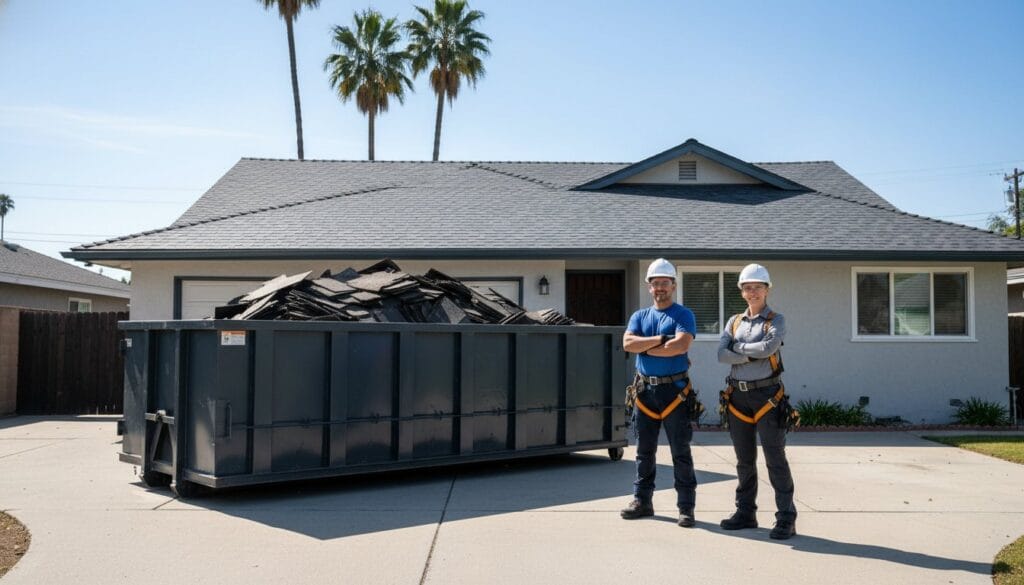
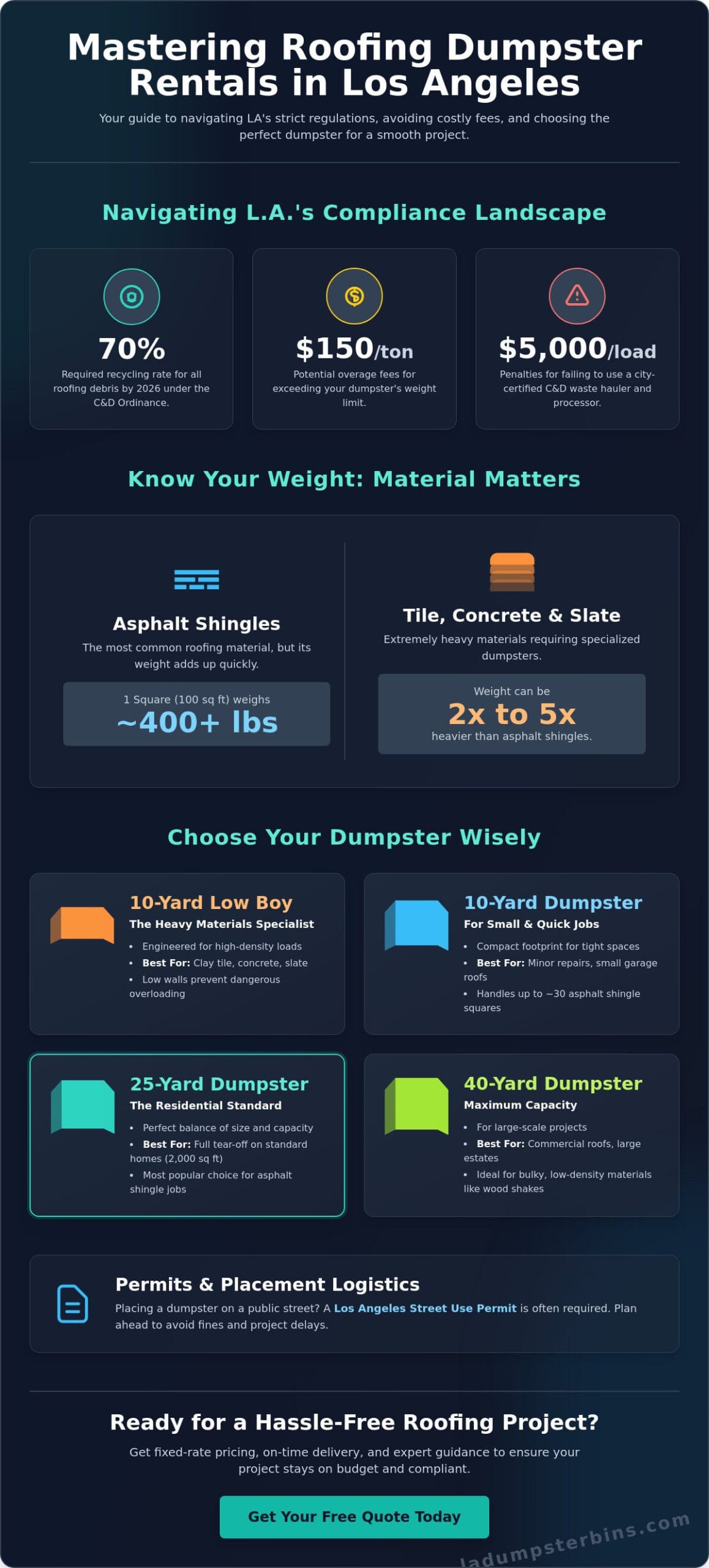
Did you know that a single square of asphalt shingles can weigh over 400 pounds? In a city with strict weight limits and complex street permits, securing a roofing dumpster rental Los Angeles is about more than just finding a metal bin. It is about avoiding heavy overage fees and staying compliant with the latest 70 percent recycling mandates. Miscalculating your load weight can lead to unexpected penalties of up to $150 per ton, turning a standard renovation into a logistical nightmare.
Dealing with hidden fees and the fear of driveway damage is a common headache for LA homeowners and contractors alike. You deserve a waste management plan that offers fixed-rate pricing and on-time delivery without the permit stress. This guide teaches you how to master LA roofing logistics to ensure a smooth project from start to finish. You will learn how to match the correct bin size to your specific roof square count and navigate the 2026 disposal regulations with confidence.
Key Takeaways
- Learn how to navigate the 2026 Los Angeles recycling mandates that require 70% of all roofing debris to be diverted from landfills.
- Identify the right bin for your specific project, whether you need a 10-yard unit for repairs or a 25-yard roofing dumpster rental Los Angeles for a full tear-off.
- Master shingle weight calculations using the “square” unit to ensure your load stays within weight limits and avoids expensive overage fees.
- Determine when a Los Angeles Street Use Permit is required for your dumpster placement to avoid city fines and project delays.
- Access specialized inventory options like Low Boy dumpsters designed specifically for heavy tile and concrete roofing materials.
Understanding Roofing Debris Requirements in Los Angeles
Roofing projects generate a massive amount of weight in a short period. Unlike standard household trash, roofing debris is dense, heavy, and subject to strict local disposal laws. In Los Angeles, managing this waste requires more than just a big box. You need a specialized plan for roll-off dumpsters that can handle the physical load while meeting the city’s environmental standards. As of 2026, the Construction and Demolition (C&D) Recycle Reuse Ordinance requires a 70 percent recycling rate for mixed debris. This means your choice of a roofing dumpster rental Los Angeles provider directly impacts your compliance with city inspectors.
Mixed roofing waste cannot go to a standard landfill. It must be hauled to a City-certified processor. Failure to use a permitted hauler or a certified facility can result in penalties reaching $5,000 per load. Because of these stakes, professional contractors prioritize logistics before the first shingle is pulled. We focus on providing the right equipment to keep your job site clean and your project within legal limits.
Asphalt Shingles vs. Tile Roofing
Weight is the primary differentiator between material types. Standard 3-tab asphalt shingles are lighter than architectural shingles, but both are significantly easier to manage than clay or concrete tiles. A single layer of shingles on an average home can easily exceed four tons. If you’re stripping a tile roof, the weight increases exponentially. This is why we provide specialized Low Boy dumpsters. These bins are designed for heavy, dense materials like tile and concrete, preventing the truck from becoming overweight during transport. Don’t forget the peripheral items like metal flashing and heavy rolls of underlayment, which add bulk and weight to the bin.
The “Tear-Off” Factor
The complexity of your project often depends on how many layers of old roofing are being removed. A “double tear-off” doubles your weight and volume instantly. You aren’t just disposing of shingles; you’re also clearing out thousands of nails, felt paper, and often sections of rotted plywood or OSB decking. While volume matters for bulky cedar shakes, weight is the true limiting factor for most roofing dumpster rental Los Angeles projects. Overloading a bin doesn’t just risk a fine; it can damage your driveway or make the dumpster impossible to pick up safely. Proper planning ensures you have the right capacity for the total debris count, not just the visible top layer.
Choosing the Right Dumpster Size for Your Roof
Selecting the correct bin for your roofing dumpster rental Los Angeles prevents costly mid-project swaps and ensures site safety. Most residential roofing projects fall into a specific range of sizes based on the material’s weight and volume. While a small repair might only require a 10-yard bin, a full residential tear-off usually demands significantly more capacity. You don’t want to find yourself with a pile of shingles on the lawn because the bin reached its limit halfway through the job.
In Los Angeles, space is a premium. You must balance the need for volume with the physical constraints of your property. A 10-yard dumpster is perfect for garage roof replacements or minor repairs. However, for a standard 2,000 square foot home with asphalt shingles, the 25-yard roll off dumpster is the industry standard. It handles the weight of the shingles and the bulk of the underlayment and flashing with room to spare. For commercial projects or massive estates, the 40-yard dumpster provides the maximum capacity allowed for a single haul.
The 10-Yard Low Boy Advantage
For heavy materials like clay tile, concrete, or slate, a standard high-walled bin is often the wrong tool. A Low Boy dumpster is specifically engineered for high-density loads. These bins typically feature lower side walls to prevent overfilling. This design keeps the center of gravity low, which is vital for preventing hydraulic failure on delivery trucks during the pickup process. If you fill a standard high-capacity bin with concrete tiles, the truck simply won’t be able to lift it safely. Following Los Angeles County C&D debris requirements means choosing specialized equipment that can safely transport these heavy loads to certified recycling processors.
Standard 25 and 40-Yard Options
Standard roll-off bins are better suited for lower-density materials like wood shakes or standard asphalt shingles. A 25-yard bin offers a manageable footprint for typical LA driveways and residential streets. When planning a roofing dumpster rental Los Angeles, always consider the weight limit over the physical volume to avoid overage fees. If your project involves wood shakes, which are much bulkier than shingles, you’ll need this extra volume to accommodate the irregular shapes of the debris.
Logistics in neighborhoods like the San Fernando Valley often involve narrow alleys and tight parking. You must ensure the delivery truck has enough overhead clearance and ground space to drop the bin without hitting power lines or blocking neighbors. Scaling up to a slightly larger bin at the start is usually more cost-effective than paying for a mid-project swap-out. If you’re ready to secure your bin, you can compare our dumpster dimensions to find the best fit for your specific roof square count.
Calculating Shingle Weight to Avoid Overage Fees
Don’t guess your load weight. In Los Angeles, miscalculating the weight of your debris is the fastest way to trigger overage penalties. Most rental contracts include a specific ton limit. If you exceed this, you’ll pay for every extra pound. Understanding the math behind your roofing dumpster rental Los Angeles keeps your budget on track and your project moving forward without surprise costs.
The “Square” is your primary unit of measurement. One square represents 100 square feet of roof area. For standard three-tab asphalt shingles, use the 250-pound rule per square. Architectural shingles are denser. They often weigh between 300 and 350 pounds per square. If your roof is 30 squares, you are looking at nearly four tons of waste for a single layer of shingles alone.
Water weight is a hidden budget killer. If it rains or if you soak the shingles to keep dust down, the weight can increase by 20 percent or more. Wet shingles act like a sponge. Always keep your bin covered with a tarp during rainy LA weather. This simple step prevents you from paying for the weight of the water rather than the weight of your debris.
The Shingle Math Formula
Calculate your total tonnage before you order. First, determine the total squares of your roofing project. You can find this on your contractor’s estimate. Second, multiply that number by the layer count. Many older LA homes have two or even three layers of shingles hidden under the top surface. Finally, convert the total pounds into tons by dividing by 2,000. If your math shows five tons of debris, don’t rent a bin with a four-ton limit.
Preventing Weight Penalties
Keep your load clean to avoid “heavy fill” rates. Some facilities charge higher rates if roofing material is mixed with dirt, sod, or concrete. These materials are much denser than shingles. If you’re removing a chimney or clearing a yard at the same time, keep those materials separate. Mixing items can lead to a reclassification of your entire load at the scales.
Communicate clearly with your driver during drop-off. Ask where the fill line is for your specific material. Overfilling a bin makes it illegal to haul on Los Angeles streets. If the driver has to remove debris to make the load safe, you’ll face additional labor charges. Be proactive. Monitor the bin levels daily to ensure you stay within the legal hauling weight for your roofing dumpster rental Los Angeles.
Los Angeles Permits and Placement Logistics
Placement logistics are often the most overlooked part of a roofing project. In Los Angeles, you cannot simply drop a bin on the curb without a plan. If you intend to place your roofing dumpster rental Los Angeles on a public street, you must secure a permit from the LA Department of Public Works. This is a non-negotiable requirement. Without it, you risk city fines and an immediate stop to your roofing project. If you have room on your private property, you can avoid these permit fees entirely.
Logistics in neighborhoods like the San Fernando Valley present unique challenges. Narrow alleys and tight residential parking mean the delivery truck needs a clear path. You should coordinate with neighbors to ensure street parking is clear on the day of delivery and pickup. If the driver cannot access the drop site because of blocked access, you will be charged a trip fee. Planning ahead saves money and keeps your project on schedule.
LA Department of Public Works Requirements
A temporary occupancy permit for street placement generally costs between $20 and $150. The final price depends on the duration of the rental and the specific zone of your property. Most contractors and homeowners manage these applications through the EPIC-LA online system. The city also mandates specific safety measures. You must use reflective tape or barricades to ensure the bin remains visible to traffic at night. Failing to follow these safety protocols can lead to penalties that far outweigh the initial permit cost.
Safe Driveway and Property Placement
Placing a bin on your driveway is often the most convenient option, but it requires property protection. A loaded 25-yard bin can weigh several tons. This concentrated pressure can crack standard residential concrete or leave ruts in asphalt. You should use thick wood planks or plywood sheets under the rollers to distribute the weight. This simple step protects your driveway from expensive structural damage.
Always check for overhead obstructions before the truck arrives. Low-hanging power lines, telephone wires, or palm trees can block the roll-off mechanism. The delivery truck needs at least 22 feet of vertical clearance to lift and drop the container safely. If you are ready to schedule your delivery and want to ensure a perfect fit, request a price estimate today and our team will help you evaluate your site requirements.
Why LA Dumpster Bins is the Top Choice for Roofing
Reliability is the foundation of a successful roofing project. When your crew is mid-tear-off, you can’t afford a delay in your roofing dumpster rental Los Angeles. A driveway full of old shingles stops progress and creates immediate safety hazards. Our service is built on direct communication and no-nonsense logistics. We prioritize getting your bin on-site and picked up exactly when you need it. By focusing on efficiency, we help you maintain a clean job site and keep your timeline on track.
We maintain a specialized inventory to handle every type of roofing project in the city. Whether you need a 10 yard dumpster for a small garage repair or a 40 yard dumpster for a large commercial warehouse, our fleet is ready. We also offer the 25 yards roll off dumpster, which remains the most popular choice for standard residential roofs. For heavy tile or concrete projects, our Low Boy dumpster options ensure you stay within legal weight limits for safe hauling across LA streets. This variety allows us to match the right equipment to your specific material density.
Our pricing is transparent and designed for the local market. You won’t find hidden “LA traffic” surcharges or surprise fuel fees added to your bill. We provide flat rates that include delivery, pickup, and specific weight allowances. This predictability is why local contractors trust us to keep their project budgets in check. We operate with a sense of readiness that matches the fast pace of professional roofing crews. We are here to solve your waste problems, not create new ones.
Local Expertise in the San Fernando Valley
Drivers who know the local terrain make a significant difference in delivery speed. From the narrow residential streets of Van Nuys to the commercial zones of Chatsworth, our team understands the specific layouts of the Valley. We know which alleys are too tight for a standard truck and where parking restrictions are most strictly enforced. This local knowledge allows for faster turnaround times and more precise bin placement. If you’re managing multiple roofing sites, we provide the pro-level support needed to coordinate swaps across different neighborhoods without missing a beat.
Ready to Start Your Roofing Project?
Booking your bin should be the easiest part of your renovation. Our process is simple and focused on getting you what you need immediately. You can call or text for a quick dispatch to your location. If you aren’t sure which size fits your shingle count, we offer expert advice based on years of local experience. We help you calculate the expected weight to avoid the penalties discussed in previous sections. Don’t let waste management slow down your timeline. Get a Free Roofing Dumpster Quote from LA Dumpster Bins today and ensure your job site stays clean and compliant.
Secure Your Roofing Waste Strategy for 2026
Managing a roof replacement in Los Angeles requires precise planning to avoid expensive weight penalties and city fines. You now understand how to accurately calculate shingle weight and why selecting a specialized Low Boy dumpster is essential for heavy tile loads. By securing the correct street permits and using protective planks for your driveway, you ensure your project stays on schedule and within budget. These small logistical steps prevent the common headaches that derail many LA renovations.
LA Dumpster Bins provides the local expertise you need to handle the unique street layouts of the San Fernando Valley. Our team is available 24/7 to match the fast pace of your roofing crew. We offer a dependable inventory, including 10, 25, and 40-yard bins, ensuring you have the right capacity for any project size. Don’t leave your waste management to chance. Rent Your Roofing Dumpster Today – Call LA Dumpster Bins Now for professional service and transparent, fixed-rate pricing. Your successful roofing dumpster rental Los Angeles is just one call away. Let’s get your project moving.
Frequently Asked Questions
How many squares of shingles fit in a 10-yard dumpster?
A 10-yard dumpster typically accommodates approximately 30 squares of single-layer asphalt shingles. If your roof has multiple layers, this capacity decreases significantly. This size is best for small residential repairs or garage roof replacements where the total volume of debris is manageable.
Do I need a permit to put a roofing dumpster on the street in Los Angeles?
Yes, any dumpster placed on a public street in Los Angeles requires a Street Use Permit. These permit fees generally range from $20 to $150 depending on the location and the duration of the placement. You can avoid these costs by placing the bin on your private driveway or property.
Can I put old roofing tiles in a standard 40-yard roll-off?
No, you should not use a standard 40-yard dumpster for heavy clay or concrete tiles. The weight of these materials will exceed the truck’s legal hauling capacity long before the bin is physically full. For dense materials, you must use a specialized bin designed for heavy loads to ensure a safe pickup.
What is a “Low Boy” dumpster and why is it used for roofing?
A Low Boy is a specialized roll-off container with shorter side walls designed for high-density materials like concrete, dirt, and heavy roofing tiles. It keeps the center of gravity low for the transport truck. Using a Low Boy for your roofing dumpster rental Los Angeles prevents the bin from becoming too heavy to lift safely.
How do I protect my driveway from a heavy roofing dumpster?
Place thick wood planks or plywood sheets under the dumpster’s rollers to distribute the weight across a larger surface area. This prevents the metal wheels from cracking your concrete or sinking into asphalt. Always ensure the drop-off site is level and free of loose debris before the truck arrives.
What happens if my roofing dumpster exceeds the weight limit?
Exceeding the weight limit results in overage fees that typically range from $50 to $75 per additional ton. Some providers may charge between $75 and $150 for an overloaded container. If the load is too heavy to haul legally, you will be required to remove excess debris before the driver can complete the pickup.
Can I mix other construction debris with my roofing shingles?
You can mix standard construction debris with shingles, but it may impact your recycling requirements and disposal rates. Los Angeles mandates a 70 percent recycling rate for construction and demolition waste. Keep heavy materials like concrete or dirt separate from shingles to avoid being reclassified into a more expensive “heavy fill” category.
Does LA Dumpster Bins offer same-day delivery in the San Fernando Valley?
We prioritize responsive service to meet the immediate needs of our local service area. While availability depends on current demand, our drivers are familiar with the specific layouts of the San Fernando Valley for efficient dispatch. You should contact our team directly to check the earliest available delivery window for your neighborhood.