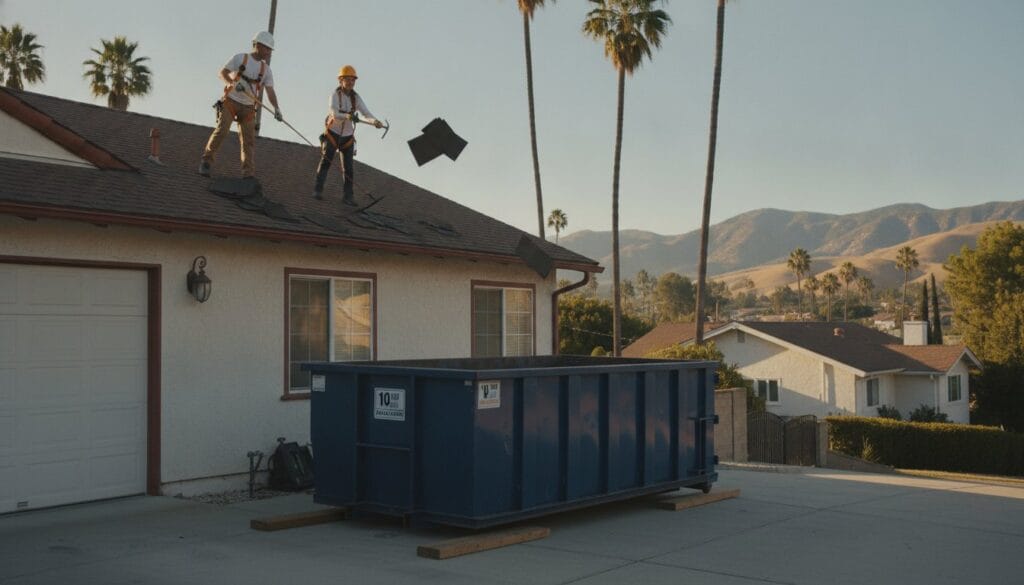
You might think a 40-yard bin is the safest bet for your roof tear-off, but for heavy asphalt shingles, the biggest container is often your quickest path to a cracked driveway and massive overage fees. Roofing debris is a weight game, not a volume game. If you choose the wrong equipment, you’re stuck with a bin that’s too heavy to haul or too tall for your crew to load efficiently.
We know that managing a job site in the San Fernando Valley is a logistical balancing act. You’re already dealing with tight residential streets and strict crew schedules. The last thing you need is a delivery delay that leaves shingles piled on a lawn or a surprise bill at the end of the project. This guide simplifies your roofing dumpster rental SFV process by providing the exact math you need for shingle disposal.
You’ll master how to calculate weight limits before the first shingle drops. We’ll explain why specialized 10-yard low boys are often better than standard bins for heavy materials like shingles and concrete. We’ll also cover local permit requirements and delivery strategies to keep your project moving. By the end, you’ll have a clear plan to handle debris without hidden costs or property damage.
Key Takeaways
- Learn how to use the “Square Rule” to accurately convert your roofing area into the correct dumpster size and avoid weight overage fees.
- Discover why specialized Low Boy dumpsters are the safest choice for heavy shingle loads and navigating narrow San Fernando Valley streets.
- Secure a reliable roofing dumpster rental SFV by choosing a provider with 24/7 availability that matches your crew’s work schedule.
- Protect your property from “heat sink” damage and driveway cracking by implementing professional bin placement strategies.
- Navigate local SFV permit requirements for street placement to ensure your project stays compliant with city regulations.
Understanding Roofing Dumpster Rental in the San Fernando Valley
A roofing dumpster is a reinforced roll-off container designed for high-density weight. Unlike a standard trash bin, these containers feature heavy-duty steel walls and floors to withstand the extreme pressure of discarded roofing materials. When you book a roofing dumpster rental SFV, you aren’t just getting a waste box. You’re getting a tool specifically built for the logistical demands of a tear-off project.
Standard bins often fail during roofing jobs because they exceed the Gross Vehicle Weight Rating (GVWR) of the hauling truck. If a bin is too heavy, the driver cannot legally or physically lift it. This leads to project delays and costly dry run fees. Sourcing your container locally in the San Fernando Valley ensures rapid delivery and pickup. This is vital when a crew is waiting to clear a driveway or move to the next job in neighborhoods like Van Nuys or Northridge.
Why Roofing Debris Requires Specialized Equipment
Roofing materials are incredibly dense. A single Asphalt shingle contains heavy granules and bitumen that add up quickly. While standard household junk is bulky but light, shingles are thin but heavy. Overloading a standard bin creates a safety hazard. It can damage the hydraulic systems of the delivery truck or cause the bin to buckle under the stress.
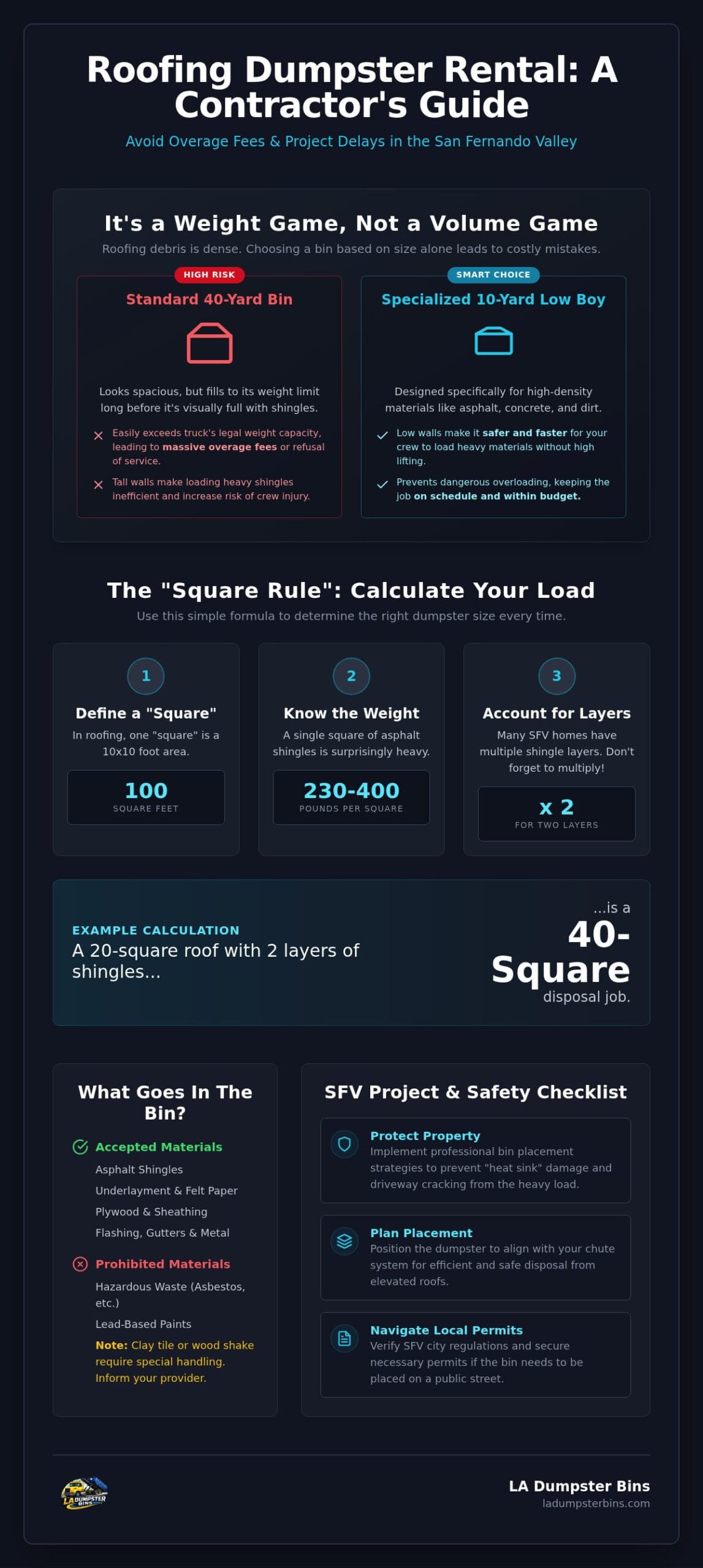
Specialized containers, like our Low Boy dumpsters, feature shorter walls. This design prevents you from overfilling the bin beyond its legal weight capacity. It also makes loading easier for your crew. They don’t have to heave heavy bundles over high side walls. This reduces fatigue and prevents site injuries during the hottest parts of the Valley summer.
Key Materials Allowed in Your SFV Roofing Bin
Knowing what you can toss is the best way to avoid contamination fees. Most residential roofing projects involve a mix of components. You can typically dispose of the following items together:
- Asphalt shingles: The most common material in Valley homes.
- Underlayment and felt paper: These are standard debris items.
- Plywood and sheathing: Old wood from roof repairs is allowed.
- Flashing and metal: Gutters and drip edges are fine.
Hazardous materials are strictly prohibited. You cannot put asbestos or lead-based paints into a standard roll-off. If your roof is an older wood shake or heavy clay tile design, tell your coordinator during the booking process. These materials have different weight profiles. They may require specific disposal strategies to stay within local SFV weight limits and avoid property damage during the haul-away.
Calculating Your Shingle Load: 10, 25, or 40 Yards?
Choosing the wrong size for your roofing dumpster rental SFV can derail your entire project. Roofing is unique because the debris is exceptionally heavy for its volume. You need to calculate your load based on “squares” rather than just looking at the footprint of the house. A single square represents 100 square feet of roofing material. Depending on the thickness and type, one square of asphalt shingles can weigh between 230 and 400 lbs.
The Math of Roofing Squares to Bin Size
To find your required capacity, start with the number of squares. Most standard bundles contain about 33 square feet of coverage. This means it takes three bundles to make one square. If you have a 20-square roof, you’re looking at 60 bundles of waste. SFV homes often have multiple layers of shingles from previous repairs. If your roof has two layers, you must double your weight calculation immediately. A 20-square roof with two layers effectively becomes a 40-square disposal job.
Safety is a priority during this phase. California’s regulations on the Disposal of Waste Material require specific handling to prevent site hazards. If you’re tossing material from a second story, ensure your dumpster placement aligns with your chute system. Overloading a bin doesn’t just risk a fine; it makes the container impossible to haul safely through narrow Valley streets. Heavy loads shift during transport, so keeping the weight centered and below the rim is essential.
Selecting the Right Bin for Your Specific Project
Matching the container to the job site is about efficiency and cost control. A bin that’s too small requires multiple hauls, which doubles your delivery fees. One that’s too large wastes money and precious driveway space.
- 10-Yard Dumpster: This is the go-to choice for small residential bungalows, detached garages, or ADU projects. It handles approximately 20 to 30 squares of single-layer shingles comfortably.
- 25-Yard Dumpster: We consider this the “sweet spot” for the average 3-bedroom home in the Valley. It accommodates 50 to 60 squares, providing enough room for underlayment and minor wood repair debris.
- 40-Yard Dumpster: Reserve these for massive commercial buildings in Burbank or large estates in Northridge. They are also necessary for wood shake tear-offs, which are much bulkier than asphalt.
If you’re unsure which size fits your specific tear-off, you can view our full range of roll-off options to compare dimensions. Getting the math right the first time prevents the frustration of a stalled crew and keeps your driveway clear for the next phase of the build. Always round up your estimate if you suspect a second layer of shingles is hidden beneath the surface.
The Low Boy Advantage for Heavy Roofing Materials
A standard roll-off bin is a volume tool, but a Low Boy is a weight tool. While both might hold 10 cubic yards of debris, their designs serve different purposes on a job site. A Low Boy features shorter walls, usually around two feet high, which are specifically engineered for high-density materials like asphalt shingles and concrete tiles. Choosing this specialized roofing dumpster rental SFV option ensures your project stays within legal weight limits while making the physical labor significantly easier for your crew.
Topography plays a massive role in dumpster safety within the San Fernando Valley. If you’re working on a hillside project in Porter Ranch or a narrow residential street in Sherman Oaks, the physical footprint of the bin matters. Low Boys have a lower center of gravity than standard containers. This makes them much more stable on inclines, reducing the risk of the bin shifting or tipping during the loading process or when the truck pulls away from a sloped driveway.
Loading ergonomics shouldn’t be overlooked during a multi-day tear-off. Standard 10-yard bins often have walls that are four to five feet high. Lifting heavy shingle bundles over those walls for eight hours leads to rapid crew fatigue and potential back injuries. Low Boys allow workers to toss debris over the side with minimal effort. This efficiency keeps the site cleaner and ensures the project stays on schedule.
Weight Distribution and Safety
Safety during transport is the primary reason professional contractors prefer Low Boys for roofing. When a truck hauls a heavy load over the Sepulveda Pass or through the Cahuenga Pass, the weight must be distributed evenly. Standard bins can become “tail-heavy” if shingles aren’t leveled out perfectly. This imbalance can actually lift the front wheels of a roll-off truck, making steering dangerous.
Compliance with California’s C&D recycling regulations means tracking the weight and type of debris you haul. Low Boys prevent you from accidentally overfilling the container. Because the walls are low, you’ll reach the weight limit long before the debris spills over the top. This keeps the load secure under the tarp and prevents DOT fines for overweight vehicles on Valley surface streets.
When to Choose a Low Boy Over a Standard 10-Yard Bin
Not every 10-yard job requires a Low Boy, but roofing almost always does. You should request this specific container if your project involves any of the following:
- Architectural Shingles: These are much heavier than standard 3-tab shingles and reach weight limits quickly.
- Concrete or Clay Tiles: Common in Encino and Northridge, these materials are extremely dense and require the reinforced floor of a Low Boy.
- Mixed Masonry: If you’re replacing a chimney or adding gravel to the roof, a Low Boy is the only safe way to transport the combined weight.
By selecting the right equipment for the material density, you protect your property, your crew, and your budget from the hidden costs of logistical errors.
SFV Logistical Planning: Driveways, Permits, and Timing
Navigating a roofing dumpster rental SFV requires more than just picking a size. You have to account for the physical environment of the San Fernando Valley. Our region presents unique challenges, from blistering summer heat that softens residential asphalt to the winding, narrow corridors of south-valley neighborhoods. Proper planning prevents property damage and ensures your roofing crew doesn’t lose a single hour of productivity.
Driveway Protection Strategies
San Fernando Valley summers frequently push temperatures past 100°F. This creates a “heat sink” effect where asphalt driveways become pliable. When you place a bin filled with several tons of shingles on hot asphalt, the metal rollers can leave permanent indentations. Even concrete driveways can crack under the concentrated pressure of a roofing load. We recommend laying down two sheets of thick plywood or several 2×4 pressure-treated boards to distribute the weight across a larger surface area.
Clear communication with your driver is essential. Mark your desired drop-off spot with chalk or traffic cones before the truck arrives. If your property has low-hanging tree branches or power lines, common in older parts of Van Nuys, ensure there is at least 22 feet of vertical clearance for the bin to be safely rolled off the hoist. This prevents accidental damage to your home’s eaves or local utility lines.
Permits and Street Placement
If your driveway is too steep or too short, you might need to place the container on the street. In the City of Los Angeles, this requires a “Right-of-Way” permit from StreetsLA. You can apply for these through the EPIC-LA online system. Permits typically cost between $20 and $150 and are usually valid for seven days. You should submit your application at least one week before your scheduled delivery to avoid delays.
Rules vary if you are working in Burbank or Glendale, which have their own municipal requirements. In residential areas like Sherman Oaks and Studio City, street width is a major concern. You must ensure the bin doesn’t block fire hydrants or prevent emergency vehicles and trash collection trucks from passing. If the street is too narrow, the city may deny a permit, making driveway placement your only legal option. Always check local signage for street sweeping days to avoid additional municipal fines during your rental period.
Timing is the final piece of the puzzle. Most contractors want the bin delivered the afternoon before “tear-off day.” This allows the crew to start throwing shingles the moment they arrive at 7:00 AM. If the delivery is late, labor costs can skyrocket while the crew waits. To ensure your project stays on track, book your roll-off container at least 48 hours in advance to secure your preferred time slot.
Why Contractors Trust LA Dumpster Bins for SFV Roofing
Local contractors need more than just a bin; they need a partner who understands the high-stakes nature of a roof tear-off. LA Dumpster Bins has built a reputation as the go-to provider for roofing dumpster rental SFV by focusing on responsiveness and specialized equipment. We don’t use corporate call centers. When you call us, you speak with local experts who know the difference between a residential driveway in Woodland Hills and a commercial site in Chatsworth.
Our 24/7 availability is a cornerstone of our service. Roofing crews often work outside standard business hours to avoid the midday Valley heat or to finish a job before a forecasted rain event. We match that intensity. Whether you need an emergency bin for a storm-damaged roof or a scheduled delivery at dawn, we’re ready to dispatch. This reliability keeps your labor costs down and your project on schedule.
We maintain a specialized fleet of 10, 25, and 40-yard containers, along with our reinforced Low Boy dumpsters. This variety ensures you never pay for more space than you need or struggle with a bin that’s too large for a tight residential street. Our pricing is transparent. We provide straightforward quotes that include weight limits and rental durations. You won’t face hidden Valley surcharges or unexpected fees at the end of your project.
The Benefits of a Local SFV Partner
Choosing a partner located in the heart of the San Fernando Valley offers distinct advantages. Our drivers know the local shortcuts to avoid gridlock on the 405 or the 101. This leads to faster turnaround times, which is critical when you need a “swap-out” in the middle of a large project. We also understand the specific street restrictions in different Valley municipalities. This local knowledge ensures your bin placement is legal and safe from the moment it hits the ground.
Supporting a local business means you get accountability. We aren’t a national broker; we’re a hardworking team that values transparency and reliability. If a logistical issue arises on your job site, we solve it immediately. This hands-on approach has made us a trusted community fixture for both private homeowners and professional roofing contractors across the Valley.
Ready to Rent? Simple Next Steps
Securing your container is a streamlined process designed for busy professionals. Start by providing your project details to get an immediate price estimate via phone or our web portal. Once you’ve selected your size, prepare your site by clearing any vehicles and laying down protective boards. We’ll handle the rest, from precision delivery to prompt haul-away once the job is complete.
Call LA Dumpster Bins now for a free roofing dumpster quote!
Streamline Your Next San Fernando Valley Roofing Project
Successful shingle disposal in the Valley requires a shift in strategy. You now understand that roofing debris is a weight game. This makes specialized Low Boy dumpsters far more effective than standard, oversized bins. By calculating your roofing squares accurately and protecting your driveway from the intense SFV summer heat, you eliminate the risk of property damage and hidden overage fees. Coordinating your delivery with a local partner ensures your crew never stands idle while waiting for a container.
Our local SFV service area presence means we understand the logistical hurdles of your specific neighborhood. With 24/7 availability and a fleet featuring specialized Low Boy dumpsters, we provide the consistency your roofing project demands. Don’t let logistical delays or weight surprises stall your progress. We prioritize transparency and efficiency so you can focus on the build.
Get a Free Roofing Dumpster Quote for Your SFV Project
Your roofing dumpster rental SFV should be the easiest part of your project. We’re ready to get to work when you are.
Frequently Asked Questions
What is the best dumpster size for a standard 2,000 sq. ft. roof in SFV?
A 10-yard Low Boy is the most efficient choice for a standard 2,000 square foot roof with a single layer of shingles. This size handles approximately 20 squares of debris without exceeding weight limits. If your roof has multiple layers or significant wood rot requiring new sheathing, you might consider a 25-yard bin instead. Always round up your estimate to ensure your roofing dumpster rental SFV accommodates the extra weight of underlayment and nails.
Do I need a permit to put a roofing dumpster on the street in Van Nuys?
Yes, you need a Right-of-Way permit to place any container on a public street in Van Nuys. Since Van Nuys is within the City of Los Angeles, you must apply through the Bureau of Street Services (StreetsLA) using the EPIC-LA system. Permits are usually valid for seven days and require an application at least one week before delivery. If you place the bin on your private driveway, no city permit is required.
Can I put old shingles and plywood in the same dumpster?
You can safely mix asphalt shingles and plywood sheathing in the same roll-off container. Most roofing projects generate a combination of shingles, felt paper, underlayment, and old wood. These materials are processed together at local C&D recycling facilities. However, you must ensure the plywood is not contaminated with hazardous substances. Keeping your debris limited to standard roofing components prevents contamination fees and simplifies the haul-away process for your crew.
How much weight can a 10-yard low boy dumpster hold?
A 10-yard Low Boy dumpster is engineered to hold up to 10 tons of high-density material. This specialized container is reinforced to handle the extreme weight of asphalt shingles or concrete tiles that would buckle a standard bin. While the volume is limited to 10 cubic yards, the weight capacity is the primary advantage. Always confirm the specific weight limit for your neighborhood during booking to stay compliant with local DOT regulations.
How do I prevent the dumpster from damaging my driveway in the summer heat?
The best way to protect your driveway is to place thick plywood sheets or 2×4 pressure-treated boards under the bin’s rollers. In the San Fernando Valley, summer temperatures often exceed 100°F, which softens asphalt surfaces. Distributing the weight of several tons prevents the heavy steel from sinking or cracking the pavement. Marking a clear, level spot for the driver also ensures the bin sits securely without shifting during the loading process.
What happens if my roofing dumpster is over the weight limit?
If your container exceeds the legal weight limit, the driver may be unable to haul it away. This results in a dry run fee and requires you to remove enough material to make the load safe for transport. Overweight bins pose a significant risk to the truck’s hydraulic system and violate California road safety laws. To avoid this, use a Low Boy for heavy shingles and never fill the bin past the top rim.
How quickly can I get a dumpster delivered for an emergency roof leak repair?
We offer 24/7 availability to handle emergency roof leak repairs across the San Fernando Valley. Because we are locally owned and operated, we can quickly dispatch a container to support your repair crew. This rapid response is vital for preventing further water damage to your home’s interior. Simply contact our local dispatch team to check current roofing dumpster rental SFV availability and schedule an immediate drop-off at your job site.
Are there items I am not allowed to put in a roofing dumpster?
You are strictly prohibited from placing hazardous waste, such as asbestos, lead-based paints, or chemicals, into any roofing dumpster. Other banned items include tires, batteries, and electronic waste. Our service focuses on construction and demolition debris, so household trash or liquids are not allowed. If your project involves an older home with suspected hazardous materials, you must consult a specialized abatement professional before beginning your tear-off to ensure safe disposal.