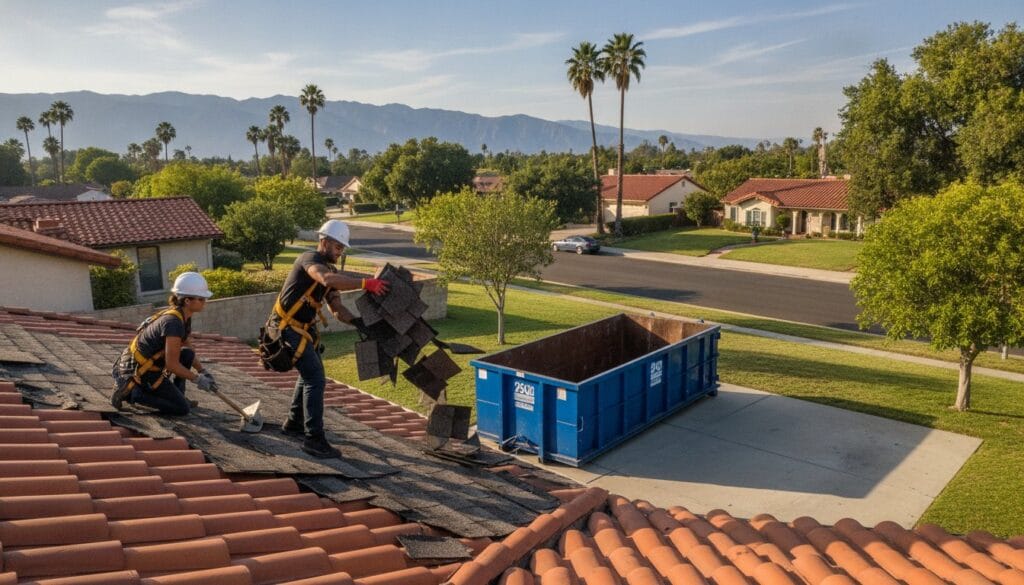
Did you know that a standard 10-yard bin can easily exceed its weight limit with just 15 squares of asphalt shingles? Most homeowners and contractors focus on volume, but in the world of roofing, weight is the real budget-killer. You’re already dealing with a crew on the clock and a torn-off roof. The last thing you need is a surprise overage fee or a delivery truck that can’t fit into your tight LA driveway.
This guide ensures your next roofing dumpster rental Los Angeles goes exactly as planned. You’ll learn how to match your shingle count to the perfect bin size and navigate the 2026 permit requirements from the Bureau of Street Services. We’ll break down shingle-to-yardage ratios, explain why the 25-yard bin is the residential sweet spot, and show you how to avoid the $5,000 penalties associated with improper C&D waste disposal. From specialized Low Boy dumpsters for heavy clay tile to 40-yard bins for commercial tear-offs, we provide the local expertise you need to stay compliant and on budget.
Key Takeaways
- Master the shingle-to-yardage ratio to ensure your debris fits perfectly without requiring a second haul.
- Navigate 2026 LA Bureau of Street Services permit requirements to prevent costly delays and street placement fines.
- Avoid unexpected weight overage fees by choosing the right roofing dumpster rental Los Angeles for your specific material type.
- Identify when a specialized Low Boy dumpster is required for heavy clay or concrete tile projects to protect your driveway.
- Discover why the 25-yard roll-off bin is the industry-standard “sweet spot” for most residential roofing tear-offs.
Why Roofing Debris Requires a Specialized Dumpster Strategy in LA
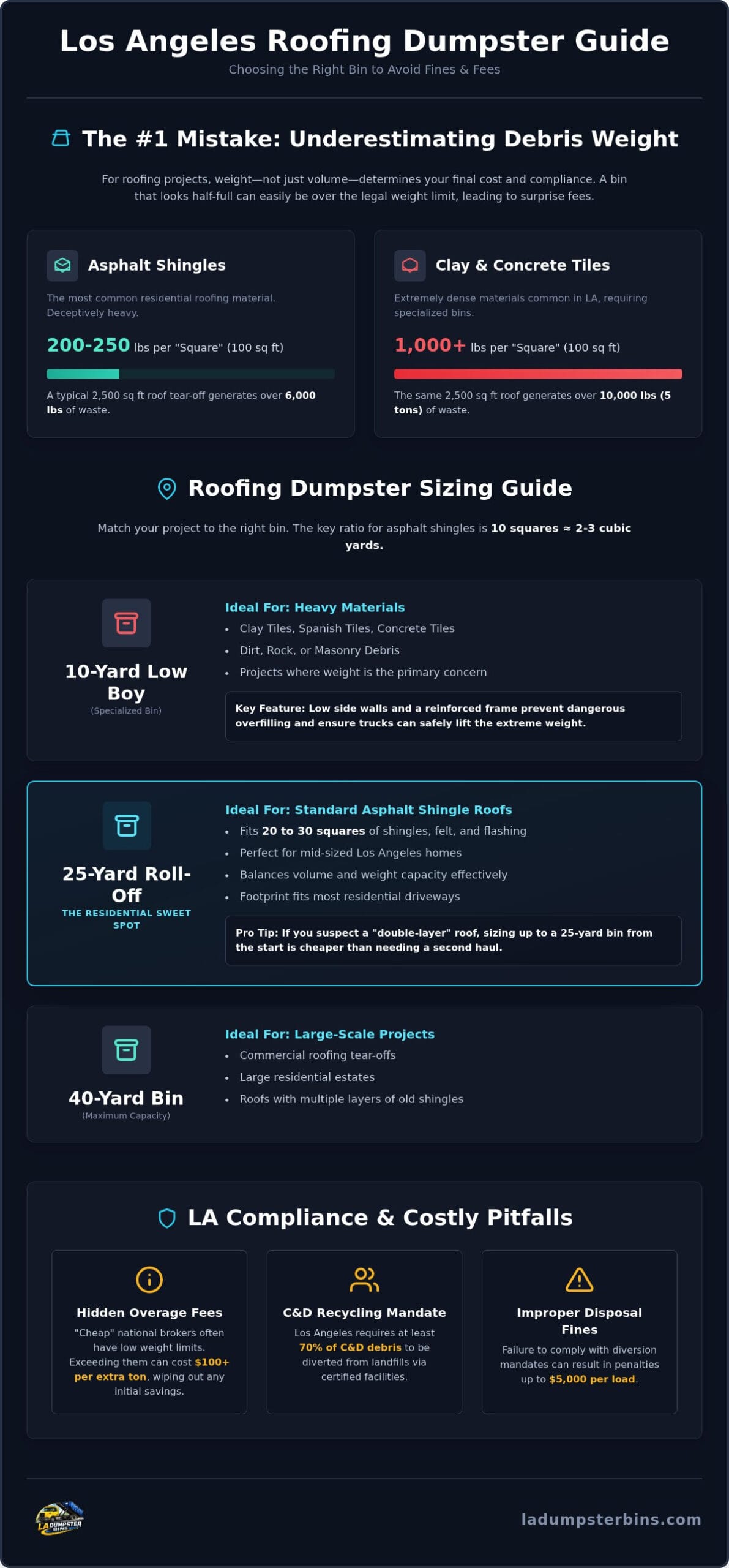
Roofing projects create a massive volume of Construction and demolition waste. This material isn’t like standard household junk. It’s dense, heavy, and strictly regulated by local ordinances. In 2026, Los Angeles waste diversion requirements are more stringent than ever. The city mandates that at least 70% of mixed C&D debris must be diverted from landfills. If your hauler doesn’t use a certified processing facility, you could face penalties reaching $5,000 per load. Choosing a specialized strategy isn’t just about convenience; it’s about legal compliance and budget protection.
Contractors calculate roofing waste using “squares.” One square represents 100 square feet of roof surface. While 10 squares of shingles might only take up about 2 to 3 cubic yards of space, the weight is what catches people off guard. Most homeowners overfill their bins based on visible volume and forget that the weight limit is the real boundary. Exceeding these limits leads to safety risks and expensive logistical delays.
The Weight Problem: Asphalt vs. Tile
A standard 3-tab asphalt shingle square weighs roughly 200 to 250 pounds. A typical 2,500-square-foot roof tear-off results in over 6,000 pounds of waste. Spanish clay tiles, a staple across the San Fernando Valley and Metro LA, are much more demanding. These tiles can weigh up to 1,000 pounds per square. That’s five tons for the same sized roof. This extreme weight directly affects the safety of the roll-off mechanism. If a bin is too heavy, the truck can’t safely pull it onto the bed without risking equipment failure or damaging your driveway. We often recommend a specialized Low Boy Dumpster for these heavy-duty tile projects to keep the load manageable and safe.
Why ‘Cheap’ Bins Often Cost More in Roofing
National brokers often lure customers with low base prices for a roofing dumpster rental Los Angeles. It’s a common trap. These “cheap” rentals usually come with tiny weight allowances. Because roofing materials are so heavy, you’ll almost certainly trigger high per-ton overage fees that can exceed $100 per ton. You might also end up with a bin that’s too small, forcing you to pay for a second delivery and pickup fee. Local expertise prevents these “bait and switch” models. We position our 25 yards roll off dumpster as the residential sweet spot because it balances volume and weight capacity perfectly. Getting the size right the first time saves you from double-billing and ensures your crew stays on schedule.
Calculating Your Roofing Waste: Sizing the Right Bin for Shingles
Accurate sizing is the difference between a smooth project and a logistical nightmare. For asphalt shingles, the industry standard ratio is simple: 10 squares of shingles occupy roughly 2 to 3 cubic yards of dumpster space. However, this only accounts for volume. Weight is the primary constraint for a roofing dumpster rental Los Angeles. While the debris might physically fit in a smaller bin, the dense nature of roofing materials often hits weight limits long before the bin is full.
Unexpected volume spikes often occur during the “double-layer” scenario. Many older homes in the San Fernando Valley have a second layer of shingles hidden beneath the visible roof. This discovery instantly doubles your waste volume and total weight. When this happens, you must account for the LA County C&D recycling ordinance requirements. Proper documentation of this increased weight is essential for meeting the 70% diversion mandate. If you suspect a second layer, choosing a larger bin size from the start prevents the need for an emergency second haul.
The 10-Yard Low Boy for Heavy Tile Roofs
Clay and concrete tiles require a specialized approach. These materials are too heavy for high-walled bins. A standard 25-yard bin filled with Spanish tile would be impossible for a truck to lift safely. The Low Boy Dumpster is designed specifically for these high-density materials. It features reinforced steel and lower side walls to prevent overfilling. In the City of Los Angeles, weight limits for street-placed bins are strictly enforced. Using a Low Boy ensures the load remains balanced and manageable for the roll-off hoist during pickup.
The 25-Yard and 40-Yard Bin Breakdown
The 25 yards roll off dumpster is the most popular choice for mid-sized Los Angeles homes. It perfectly accommodates 20 to 30 squares of shingles including the felt and flashing. It offers a footprint that fits comfortably in most residential driveways without blocking sidewalk access. This size provides a safety buffer for the weight of the shingles while leaving room for bulky ridge vents or damaged plywood sheets.
Commercial projects or large residential estates with multi-layer tear-offs require the 40 Yard Dumpster. This bin is approximately 22 feet long. Before ordering, verify your driveway length and overhead clearance. The delivery truck needs significant vertical space to tilt the bin into place. For tight Metro LA properties, the 40-yarder may require a street permit if the driveway cannot accommodate its length. Always prioritize the 25-yard bin for standard residential work to ensure easier placement and predictable weight management.
Los Angeles Logistics: Navigating Permits and Narrow Streets
Logistics in Los Angeles can stall a roofing project faster than a rainstorm. Successful delivery depends on local knowledge of “Right of Way” rules and neighborhood-specific geography. While the San Fernando Valley often provides wider streets and spacious driveways, Metro LA and the Hollywood Hills present significant obstacles. A standard roofing dumpster rental Los Angeles requires at least 22 feet of linear space and 14 feet of vertical clearance. Before your bin arrives, use this checklist to ensure a seamless drop-off:
- Move all vehicles at least 50 feet away from the drop zone.
- Check for low-hanging power lines or tree branches.
- Ensure the surface is level and clear of debris.
- Coordinate with neighbors if the truck needs extra turning radius.
Driveway Protection and Street Access
A loaded bin can weigh over 10 tons. This pressure can crack aged asphalt or decorative concrete. We recommend placing two 4×8 sheets of 3/4-inch plywood on the driveway surface. This buffer distributes the weight and prevents the roll-off rails from gouging the ground. In tight neighborhoods like Silver Lake or the Hills, precision is mandatory. Our drivers are trained to navigate these narrow corridors, but we need you to confirm that the delivery path is clear of parked cars on both sides of the street. If the truck can’t safely reach the spot, the resulting dry-run fee can inflate your budget.
Permit Requirements for 2026
You don’t need a permit if the dumpster stays on your private property. However, if the bin must sit on a public street, alley, or sidewalk, the City of Los Angeles requires a Street Use Permit. In 2026, the Los Angeles Bureau of Street Services manages these applications. Current data shows permit fees typically range from $20 to $40 per day. You should apply at least one week before your project starts to allow for processing. Failure to display a valid permit can result in immediate fines and the removal of the bin. We assist our customers by providing the necessary hauler information and AB 939 Compliance Permit details required for your application. This ensures your project stays compliant with local regulations from day one.
Avoiding Hidden Costs: Weight Limits and Prohibited Materials
Budgeting for a roofing project in Southern California requires more than just checking the initial rental fee. Most providers use two primary pricing models: flat rate and tonnage. A flat rate includes a specific weight limit, while tonnage models charge based on the actual weight recorded at the scale. Because shingles are exceptionally dense, it’s easy to exceed a standard weight allowance. If your load is heavier than the agreed limit, you’ll face per-ton overage fees that can significantly inflate your final invoice. Choosing the right roofing dumpster rental Los Angeles involves matching your estimated debris weight to the bin’s capacity from the start.
Loading habits also impact your costs. An “unbalanced load” occurs when heavy materials are concentrated on one side of the bin. This makes the haul-away process dangerous for the driver and can lead to additional handling fees. Always distribute your roofing waste evenly across the floor of the dumpster. Keep the load level with the top of the bin; “mountain-topping” or overfilling past the rim is a safety violation that often results in the driver refusing the pickup until the excess is removed.
The ‘Rain Weight’ Factor in LA
While Los Angeles is known for sunshine, winter roofing projects must account for the rare but heavy rain events. Asphalt shingles and roofing felt are porous. They act like sponges during a downpour. A soaked load of roofing debris can weigh 20% to 30% more than a dry one. This “water weight” is a common cause of unexpected overage charges. If rain is in the forecast, cover your bin with a heavy-duty tarp. Secure the edges with bungee cords to prevent water from pooling inside. Planning your tear-off around the local forecast isn’t just about keeping the house dry; it’s about keeping your disposal costs predictable.
Prohibited Roofing Materials
California environmental laws are among the strictest in the nation. You cannot mix hazardous waste into a standard roll-off bin. For roofing contractors, the biggest concern is old asbestos-containing materials (ACM). Many older homes in neighborhoods like East LA or the San Fernando Valley still have layers of silver-coated asphalt or transite shingles that contain asbestos. If these are detected at the processing facility, the entire load will be rejected. You’ll be responsible for the cost of specialized hazardous waste remediation, which can reach thousands of dollars. Always test suspicious older materials before the tear-off begins. To avoid these logistical headaches, request a predictable price estimate that accounts for your specific material type and project scale.
Why LA Dumpster Bins is the Top Choice for Roofing Contractors
Choosing a roofing dumpster rental Los Angeles means finding a partner that understands the high-stakes timeline of a tear-off. We provide 24/7 availability because we know roofing schedules don’t always follow a standard nine-to-five. If your crew finishes a project early or needs an immediate swap-out to keep the job moving, we’re ready to respond. Our local presence in the San Fernando Valley allows us to provide faster turnarounds than national brokers who don’t understand the nuances of local traffic patterns or neighborhood-specific regulations.
Our fleet is built for the specific demands of Southern California architecture. We offer the 10 Yard Dumpster for small repairs, the 25 yards roll off dumpster for standard residential tear-offs, and the 40 Yard Dumpster for large-scale commercial roofing projects. For heavy clay or concrete tile roofs, our specialized Low Boy Dumpster is the essential choice. It handles the extreme weight of masonry materials while keeping the load safe for transport. This range of equipment ensures you never pay for more space than you need or risk an overweight violation with the wrong container.
Direct Communication and Local Expertise
When you call us, you speak directly to a local dispatcher. We don’t use offshore call centers or automated systems that don’t know the area. Our team knows the difference between a delivery in the narrow, winding streets of the Hollywood Hills and a spacious driveway in Northridge. We provide reliable delivery windows so your roofing crew isn’t sitting idle waiting for a bin to arrive. Our drivers are experts at precision placement. They understand how to protect your property and navigate tight clearances that would frustrate less experienced haulers.
Ready to Start Your Roofing Project?
Success in roofing waste management comes down to three factors: accurate sizing, weight management, and site preparation. Using the 25-yard bin as your residential sweet spot prevents most overage issues for standard shingle roofs. Before the truck arrives, ensure you’ve checked your permit status for street placement and laid down plywood to protect your driveway surface. If you’ve calculated your squares and checked the local forecast, you’re ready to proceed with confidence.
Click here to Get a free quote for your roofing dumpster in LA and secure your delivery slot today.
Secure Your Roofing Project Success in 2026
Managing a roof tear-off in Southern California requires a strategy that accounts for the extreme weight of shingles and strict waste diversion mandates. By matching your square count to the right bin and preparing your driveway with plywood, you prevent the delays and hidden fees that stall most projects. Whether you’re working on a tight Metro LA street or a San Fernando Valley property, having a partner who knows the local logistics is your best defense against unexpected costs.
Our team provides the local expertise you need for a seamless roofing dumpster rental Los Angeles. We offer 24/7 service readiness to keep your crew moving and specialized Low Boy bins for heavy tile projects. As local LA and SFV experts, we understand the specific neighborhood challenges and permit requirements that affect your bottom line. Don’t let logistical hurdles or overage surprises derail your schedule. We’re ready to help you get the job done right.
Book Your Roofing Dumpster Rental in Los Angeles Now and ensure your project stays on track and under budget.
Frequently Asked Questions
What size dumpster do I need for a 2,000 sq. ft. roof?
A 2,000 square foot roof equals 20 roofing squares. For this project size, our 25 yards roll off dumpster is the most reliable choice. It provides enough volume for the shingles, felt, and underlayment without exceeding weight limits. While a smaller bin might physically hold the volume, the density of asphalt often causes smaller containers to become overweight. Choosing the 25-yard bin ensures a safe, single-haul solution for your home.
How much weight in shingles can a 25-yard dumpster hold?
A 25-yard bin typically holds between 20 and 30 squares of standard asphalt shingles. This volume results in a total weight of approximately 5,000 to 7,500 pounds. When planning your roofing dumpster rental Los Angeles, always account for the weight of secondary materials like flashing and ridge vents. If you have a double-layer roof, your weight will double, making accurate calculation essential to avoid unexpected overage fees at the scale.
Do I need a permit to put a roofing dumpster on the street in Los Angeles?
You must obtain a Street Use Permit if the bin sits on any public right-of-way, including streets or sidewalks. As of 2026, the Los Angeles Bureau of Street Services manages these applications. Expect to pay between $20 and $40 per day for the permit. No permit is required if the dumpster stays entirely on your private driveway. We recommend applying at least one week in advance to ensure your project stays on schedule.
Can I put cedar shakes and asphalt shingles in the same bin?
You can mix cedar shakes and asphalt shingles in the same roll-off bin. However, keep in mind that Los Angeles requires 70% of construction waste to be diverted from landfills. Mixing different materials can sometimes complicate the recycling process at certified processing facilities. If your project generates a massive amount of one material, separating them can help ensure compliance with local ordinances. Always verify your disposal plan with our local dispatcher.
How do I protect my driveway from a heavy roofing dumpster?
The best way to protect your driveway is by using a plywood buffer. Lay down two 4×8 sheets of 3/4-inch plywood where the dumpster rails will land. This simple step distributes the weight of the heavy roofing load and prevents the steel wheels from cracking your asphalt or concrete. Also, ensure the delivery area is clear of any small debris or rocks that could be pressed into the surface by the truck.
What happens if my roofing dumpster is over the weight limit?
If your bin exceeds the weight limit, you will be charged per-ton overage fees. These costs are calculated at the certified processing facility scale. In some cases, a significantly overloaded bin is unsafe to lift. If the driver determines the load is a safety risk, you’ll need to remove the excess material before we can complete the pickup. This results in additional trip fees and project delays for your crew.
Does LA Dumpster Bins offer same-day delivery in the San Fernando Valley?
We maintain 24/7 readiness to handle urgent project needs across the San Fernando Valley. While we recommend booking at least 24 hours in advance to guarantee a specific time slot, our local fleet often accommodates fast turnarounds. Contact our team directly to check current bin availability in your neighborhood. Our local expertise in the Valley ensures we can navigate traffic and deliver your bin quickly to keep your project moving.
Can I rent a Low Boy dumpster for clay tile roofing?
Yes, we strongly recommend a Low Boy Dumpster for clay or concrete tile roofing. These materials are significantly heavier than asphalt shingles and can quickly exceed the weight capacity of standard high-walled bins. The Low Boy design is reinforced for high-density waste, ensuring the truck can safely lift and transport the load. Using the correct equipment for tile tear-offs protects your property and prevents expensive equipment failure during the hauling process.