Most contractors ordering dumpster rental for demolition projects in Los Angeles choose a bin based on volume alone, and that single mistake can turn a straightforward job into a costly overage nightmare. Concrete, asphalt, and brick are dense. A bin that looks half-empty can already be over its weight limit, and the fees that follow are anything but small.
You already know LA demolition projects come with enough moving parts. Tight schedules, unpredictable debris volumes, and a city permitting process that doesn’t forgive shortcuts. Picking the wrong equipment or skipping the street permit paperwork just adds more friction to an already demanding job.
This guide cuts through the confusion. You’ll learn exactly which bin sizes handle heavy demolition debris without triggering overage fees, why specialized Low Boy dumpsters are the right call for concrete and asphalt, and how to stay compliant with Los Angeles street permit requirements before your project breaks ground. Whether you’re a general contractor running a full structural demo or a homeowner tearing out a driveway, the right setup makes the difference between a job that runs on time and one that stalls at the curb.
Key Takeaways
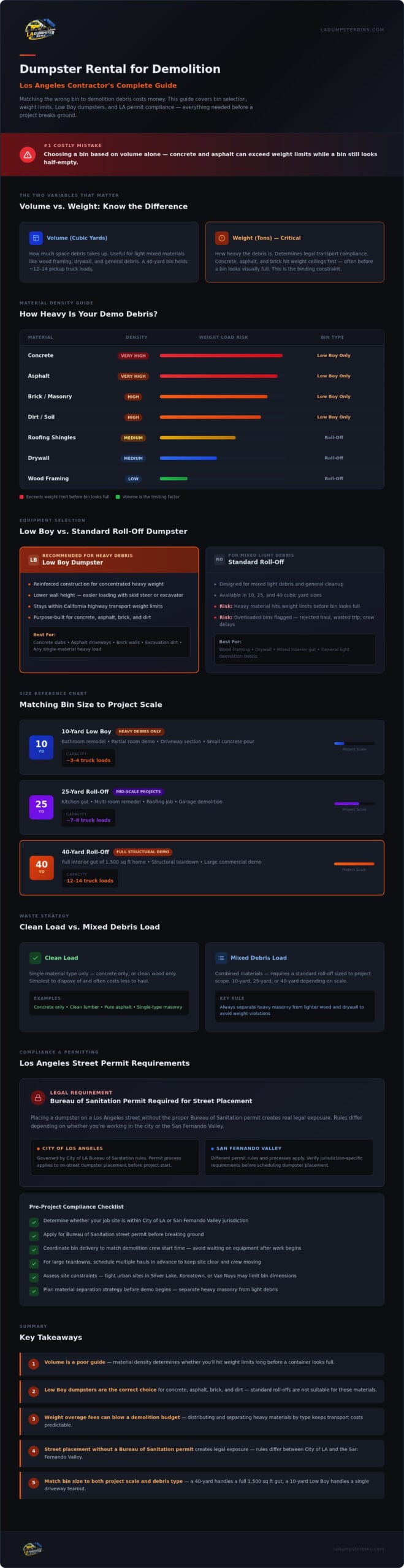
- Volume alone is a poor guide for demolition bin selection — material density determines whether you’ll hit weight limits long before a container looks full.
- Choosing the right dumpster rental for demolition projects in Los Angeles means matching bin size to both project scale and debris type, with Low Boy dumpsters being the correct choice for concrete, asphalt, and dirt.
- Weight overage fees can quietly blow a demolition budget — understanding how to load and distribute heavy materials keeps transport costs predictable.
- Placing a dumpster on a Los Angeles street without the proper Bureau of Sanitation permit creates real legal exposure, and the rules differ depending on whether you’re working in the city or the San Fernando Valley.
- Working with a local LA provider that stocks the right equipment and offers complimentary price estimates removes guesswork from one of the most logistically demanding parts of any demolition job.
Choosing the Right Dumpster for Demolition in Los Angeles
Demolition debris isn’t like household junk. A single day of structural teardown can generate thousands of pounds of concrete, roofing shingles, drywall, and dimensional lumber. Each material behaves differently in a bin. Drywall and roofing shingles are surprisingly heavy for their volume. Wood framing is bulky but comparatively light. Concrete is the most punishing of all. Treating these materials the same way leads to overloaded containers, rejected hauls, and project delays you can’t afford.
Los Angeles adds another layer of complexity. Urban job sites in neighborhoods like Silver Lake, Koreatown, or Van Nuys often have limited staging space. A bin that works fine on a suburban lot in the Valley might be impossible to position on a narrow East Side street. That spatial reality forces contractors to think carefully about bin dimensions, not just capacity.
Why Standard Bins Aren’t Enough for Demo
Standard roll-off bins are designed with general cleanup in mind. They handle mixed light debris reasonably well. But structural demolition generates high-density waste that can push a container past its legal weight limit long before it looks full. Haulers are required to comply with California highway weight regulations, and a bin that’s been overloaded with concrete or tile will be flagged before it ever leaves your job site. That means a safety rejection, a wasted trip, and a crew standing around waiting.
Professional contractors working on dumpster rental for demolition projects Los Angeles typically stage their waste by material type from the start. Heavy masonry and concrete get separated from lighter wood and drywall. This isn’t just good practice; it’s the difference between a haul that goes smoothly and one that stalls mid-project.
For heavy materials specifically, a Low Boy dumpster is the correct equipment choice. Low Boys are built with reinforced construction and lower clearance, designed to handle the concentrated weight of concrete, asphalt, and dirt without exceeding transport limits.
Planning Your Demolition Waste Strategy
A smart waste strategy starts before the first wall comes down. Identify your load types early:
- Clean loads contain a single material type, such as concrete only or clean wood. These are simpler to dispose of and often cost less.
- Mixed debris loads combine materials and typically require standard roll-off bins sized to the project scope, whether that’s a 10-yard, 25-yard, or 40-yard container.
For large-scale teardowns, scheduling multiple hauls in advance keeps your site clear and your crew moving. Coordinate bin delivery to align with your demolition crew’s start time so the container is on-site and ready when debris starts flowing. Waiting on equipment after work has already begun is a common and avoidable bottleneck.
Choosing the right setup for dumpster rental for demolition projects in Los Angeles means thinking through your material mix, your site constraints, and your haul schedule before you commit to a bin size. Get that foundation right, and the rest of the job runs cleaner.
Matching Bin Sizes to Your Demolition Scale
Volume estimates get contractors into trouble. A bin that looks right on paper can be completely wrong once you factor in what’s going into it. The material type determines the weight ceiling, and the weight ceiling determines which container actually works for your job. Size and capacity are two different things, and confusing them is one of the most common mistakes on demolition sites across Los Angeles.
Here’s a practical reference point: a standard 40-yard roll-off holds roughly 12 to 14 pickup truck loads of debris. That gives you a useful mental benchmark when estimating how much your teardown will generate. A full interior gut of a 1,500-square-foot home typically fills a 40-yard container. A bathroom remodel or partial room demo usually fits within a 10-yard bin. The gap between those two scenarios is significant, and choosing the wrong size in either direction costs you time and money.
The 10-Yard Low Boy for Heavy Debris
When the job involves concrete, asphalt, brick, or dirt, a standard 10-yard roll-off isn’t the right call. A Low Boy dumpster is. Low Boys are purpose-built for dense, heavy materials. Their lower wall height makes loading with a skid steer or excavator faster and safer. More importantly, they’re engineered to handle the concentrated weight of masonry without pushing your haul into overage territory.
In Los Angeles, this container is the industry standard for driveway removals, foundation demolitions, and concrete slab tearouts. A driveway replacement in Encino or a foundation pour in Burbank generates material that would overload a standard bin well before it looked full. The Low Boy solves that problem at the equipment level, before it becomes a job site problem.
25 And 40-Yard Containers for Large-Scale Demo
Whole-house gutting, large roofing tearoffs, and commercial interior demolitions call for the 25-yard or 40-yard roll-off. These jobs generate high volumes of light but bulky material: insulation batts, wood framing, drywall sheets, siding panels. The debris takes up space fast without necessarily hitting weight limits quickly.
Placement is a real constraint worth planning for. A 40-yard container runs approximately 22 feet long. On a narrow residential street in Silver Lake or a tight commercial alley in Downtown LA, that footprint requires advance coordination. Confirm your staging area before you book the bin.
- 10-yard Low Boy: Concrete, asphalt, dirt, brick, and masonry
- 25-yard roll-off: Mid-scale mixed demo, roofing projects, partial structural teardowns
- 40-yard roll-off: Full gut renovations, large commercial interiors, whole-house demolition debris
Getting the bin match right from the start is what separates a project that runs clean from one that stalls waiting on a swap-out. For contractors and homeowners planning dumpster rental for demolition projects Los Angeles, request a complimentary price estimate before your project breaks ground so the right equipment is confirmed and ready when your crew arrives.
Managing Heavy Materials: Concrete, Asphalt, and Dirt
Weight overages are where demolition budgets quietly fall apart. The debris looks manageable in the bin, the crew keeps loading, and then the truck arrives and the haul gets flagged. What follows is a rejected trip, rescheduling fees, and a project timeline that’s suddenly two days behind. The financial hit isn’t just the overage charge itself; it’s everything that stops moving while you sort it out.
Weight Limits and Overage Prevention
Concrete is the heaviest material most demolition crews handle. A single cubic yard of cured concrete weighs approximately 4,000 pounds. A standard roll-off dumpster has a maximum weight capacity that typically falls between 10,000 and 14,000 pounds depending on the container and hauler. Do that math before you load, not after. Three cubic yards of concrete can put you at or past the limit before the bin looks even half-full.
Watch for these signs that a bin is approaching its weight ceiling:
- The container sits noticeably lower on its frame after loading
- The debris pile is dense and compact rather than loose and airy
- You’ve loaded primarily masonry, tile, or concrete with little mixed material
- The bin shows visible stress at the base corners or frame welds
If any of these apply, stop loading and call your hauler before the truck dispatches. Catching the problem early is far cheaper than a rejected haul.
Mixed Debris vs. Clean Loads
Clean inert debris, which includes concrete, asphalt, brick, and dirt with no contamination, is accepted at inert recycling facilities across Los Angeles at significantly lower tipping fees than mixed loads. For materials that fall outside of inert categories, such as scrap metals often salvaged during demolition, OC Recycling provides specialized processing to ensure these resources are recycled responsibly.
Clean green loads, by contrast, contain organic material like untreated wood, yard waste, or clean lumber. These go to a different category of facility. The moment concrete gets mixed with wood framing, drywall, or general trash, the entire load gets reclassified as mixed demolition debris, and the disposal rate jumps accordingly.
Practical site organization makes the difference:
- Stage a dedicated Low Boy for concrete, asphalt, and masonry from day one
- Keep a separate roll-off for wood, drywall, and light mixed debris
- Brief the demo crew before work starts, not after contamination has already happened
For contractors managing dumpster rental for demolition projects Los Angeles, keeping heavy materials in their own container isn’t just good practice; it’s the most direct way to control disposal costs across a full project. The bin setup decision made before the first wall comes down determines what you pay at the landfill gate. Get a complimentary price estimate from LA Dumpster Bins to confirm the right container mix before your crew starts loading.
Navigating Los Angeles Permits and Site Logistics
Skipping the permit step is the fastest way to turn a smooth demolition into an expensive headache. Los Angeles parking enforcement doesn’t give contractors a grace period, and a bin sitting on a public street without the right paperwork is an immediate citation target. Getting compliant before delivery isn’t bureaucratic overhead; it’s basic project protection.
Street Permits in LA and San Fernando Valley
Any dumpster placed on a public street or within the public right-of-way in the City of Los Angeles requires a Temporary Use of Right-of-Way permit through the Los Angeles Bureau of Sanitation. The application process runs through the city’s online permitting portal, and you’ll need to specify the container dimensions, the placement address, and your anticipated rental duration before submitting.
Turnaround times vary by district. Projects in central LA neighborhoods like Echo Park or Mid-City can take several business days for approval, particularly during peak construction season. The San Fernando Valley falls under the same Bureau of Sanitation jurisdiction for incorporated areas like Van Nuys and North Hollywood, but unincorporated pockets of the Valley managed by LA County operate under a separate permit structure through the county’s Department of Public Works. Confirm which authority governs your specific address before you apply. Submitting to the wrong agency costs you time you likely don’t have.
Keep the permit visible and on-site once approved. Building inspectors and parking enforcement officers do check, and a missing permit document creates the same exposure as no permit at all.
Safe Placement for High-Traffic Demolition Sites
Permit compliance is only part of the logistics equation. Physical placement decisions matter just as much, especially on the kinds of tight, sloped, or utility-heavy sites that define a lot of LA demolition work.
- Driveway protection: Place sheets of plywood under the bin’s contact points before delivery. Roll-off containers concentrate significant weight on a small footprint, and concrete driveways, especially older ones, crack under that load without a buffer layer.
- Overhead clearance: The roll-off truck’s lift arm requires vertical clearance to set and retrieve the container. Low-hanging utility lines, mature street trees, and second-story overhangs are all common obstructions in hillside neighborhoods like Laurel Canyon or Eagle Rock. Measure before you book.
- Street-side neighbor coordination: In residential zones, a bin placed at the curb can block a neighbor’s driveway access or sightlines. A brief conversation before delivery prevents complaints that escalate to enforcement calls.
- Safety marking: Street-placed bins require reflective cones and reflectors at both ends, particularly for overnight placement. This isn’t optional in LA; it’s a condition of the right-of-way permit itself.
For contractors managing dumpster rental for demolition projects Los Angeles, site logistics and permit compliance aren’t afterthoughts. They’re pre-construction tasks that belong on the same checklist as crew scheduling and material staging. Get the placement details confirmed early so delivery day runs without friction. Request a complimentary price estimate from LA Dumpster Bins and get local guidance on bin sizing and placement before your project breaks ground.
Reliable 24/7 Dumpster Rentals for LA Contractors
Demolition schedules don’t run on banker’s hours. A crew that starts at 6 a.m. needs equipment confirmed the night before. A project that runs long needs a swap-out call answered at 7 p.m., not routed through a national call center that puts you on hold while your site sits full. For contractors managing dumpster rental for demolition projects Los Angeles, the difference between a local provider and a nationwide portal isn’t a minor convenience. It’s the difference between a job that keeps moving and one that stalls waiting on someone who doesn’t know your street.
National platforms offer account perks and dashboard features. What they can’t offer is a local dispatcher who knows that the 405 through the Valley is a parking lot before 9 a.m., or that a particular transfer station in Sylmar has specific requirements for inert loads. That ground-level knowledge only comes from a provider that’s actually operating in Los Angeles every day.
Why Local Matters: San Fernando Valley Expertise
LA Dumpster Bins operates across Los Angeles and the San Fernando Valley with direct knowledge of local traffic patterns, delivery windows, and transfer station requirements. Deliveries get routed around known bottlenecks so your bin arrives when your crew does, not an hour after they’ve already started. Local familiarity with inert recycling facilities and mixed debris acceptance rules also means fewer surprises at the gate when your haul arrives.
There’s a practical upside to keeping dollars local, too. A San Fernando Valley-based provider has a direct stake in the LA construction market. They understand the permit landscape, the job site constraints in neighborhoods from Chatsworth to Culver City, and the logistical realities that a national dispatch center simply can’t account for.
Get a Complimentary Price Estimate Today
Pricing surprises are avoidable. LA Dumpster Bins offers transparent quotes with no hidden fuel surcharges layered in after the fact. To get the most accurate estimate for your demolition haul, have these details ready when you reach out:
- Project type: Full structural demo, interior gut, driveway removal, or mixed teardown
- Primary material: Concrete, asphalt, mixed debris, or clean wood and drywall
- Bin placement: Private driveway or public street, and whether a permit is already in progress
- Timeline: Delivery date, estimated rental duration, and whether multiple hauls are needed
The more specific you are upfront, the tighter and more reliable your quote will be. No guesswork, no callbacks asking for details you should have been asked for the first time.
Get your free demolition dumpster quote from LA Dumpster Bins today and confirm the right container before your crew shows up on day one.
Your Next Demolition Project Starts With the Right Equipment
Getting dumpster rental for demolition projects Los Angeles right comes down to three decisions made before your crew shows up: matching your bin to your material type, keeping heavy debris in a dedicated Low Boy to avoid overage fees, and securing your street permit before delivery day.
LA Dumpster Bins has been serving Los Angeles and the San Fernando Valley since 2021 with specialized Low Boy bins built for concrete, asphalt, and dirt, plus 10, 25, and 40-yard roll-offs for every scale of demolition work. Local knowledge, 24/7 availability, and transparent pricing mean your project doesn’t stall waiting on equipment or answers.
You've got the information. Now lock in the right container before your start date fills up.
Rent your demolition dumpster now with LA Dumpster Bins and get a complimentary price estimate today. The right bin is ready when you are.
Frequently Asked Questions About Demolition Dumpster Rental in Los Angeles
How much concrete can I put in a 10-yard Low Boy dumpster?
A 10-yard Low Boy has a weight capacity that typically falls between 10,000 and 14,000 pounds depending on the hauler. Since cured concrete weighs roughly 4,000 pounds per cubic yard, you’re looking at approximately two to three cubic yards before you approach the limit. That’s less than the bin’s full volume, which is exactly why Low Boys exist: they’re engineered to stop you from overloading before the truck ever arrives.
The practical rule is to stop loading when the bin looks about one-third full of solid concrete. If you’re mixing in brick or asphalt alongside concrete, adjust that estimate downward. When in doubt, call your hauler before the truck dispatches rather than after.
Do I need a permit to put a demolition dumpster on the street in Los Angeles?
Yes. Any dumpster placed on a public street or within the public right-of-way in the City of Los Angeles requires a Temporary Use of Right-of-Way permit through the Los Angeles Bureau of Sanitation. You’ll need to submit the container dimensions, placement address, and rental duration before delivery. Private driveway placements on your own property don’t require this permit, which is why many contractors prefer that option when the site allows it.
If your project is in an unincorporated area of the San Fernando Valley, the permitting authority shifts to the LA County Department of Public Works rather than the city’s Bureau of Sanitation. Confirm which jurisdiction covers your specific address before you apply. Submitting to the wrong agency costs time you likely don’t have.
What happens if my demolition dumpster is over the weight limit?
The hauler’s truck driver will flag the load before leaving your site. California highway weight regulations are enforced at the point of transport, not at the landfill gate. A rejected haul means a wasted trip fee, rescheduling delays, and your crew standing around while the problem gets sorted. Overage charges are then applied on top of your original quote, typically calculated per ton over the limit.
The cleanest fix is prevention. Separate heavy masonry into a dedicated Low Boy from day one, monitor how dense your load is getting, and contact your hauler early if you think you’re approaching the ceiling. Catching it before dispatch is always cheaper than dealing with a rejection on-site.
Can I mix dirt and concrete in the same Low Boy bin?
Yes, dirt and concrete can go in the same Low Boy. Both are classified as clean inert materials, meaning they’re accepted at inert recycling facilities at lower tipping fees than mixed demolition debris. The key is keeping the load free of contamination: no wood scraps, drywall, roofing material, or general trash mixed in. The moment organic or non-inert material enters the bin, the entire load gets reclassified and disposal costs climb.
Watch your weight closely when combining materials. Dirt and concrete together add up fast. A Low Boy that’s half dirt and half broken concrete can hit its weight ceiling well before it looks full.
How quickly can LA Dumpster Bins deliver to the San Fernando Valley?
LA Dumpster Bins operates locally across Los Angeles and the San Fernando Valley, which means delivery logistics are handled by a team that knows the area’s traffic patterns and routing realities. For the most accurate delivery timeline on your specific project, contact LA Dumpster Bins directly and confirm availability for your start date. Booking in advance is always the safer move on demolition jobs where crew schedules are set and equipment needs to be on-site before work begins.
What materials are prohibited in a demolition dumpster rental?
Hazardous materials are never permitted in a standard roll-off or Low Boy dumpster. That includes asbestos-containing materials, lead paint debris, chemicals, solvents, paint cans, motor oil, batteries, and any materials classified as hazardous waste under California law. These require specialized disposal through licensed hazardous waste handlers, which is a separate process entirely.
On demolition sites specifically, watch for older structures that may contain asbestos in floor tile, pipe insulation, or ceiling texture. If your project involves a pre-1980s building, get a hazardous materials assessment done before demo begins. Loading prohibited materials into a standard dumpster creates serious legal exposure and can result in the entire load being rejected at the disposal facility.
Is there a difference between a roll-off and a Low Boy for demo work?
Yes, and the difference matters on heavy material jobs. A standard roll-off is a general-purpose container designed for mixed debris: wood, drywall, light roofing material, and bulky waste. It has higher walls and a larger overall volume. A Low Boy has lower, reinforced walls and is purpose-built for dense, heavy materials like concrete, asphalt, and dirt. Its lower clearance also makes loading with a skid steer or excavator faster and safer.
For dumpster rental for demolition projects in Los Angeles, the choice between the two comes down to what you’re hauling. Heavy masonry and inert materials belong in a Low Boy. Bulky light debris from a gut renovation or roofing tearoff belongs in a 25-yard or 40-yard roll-off. Using the wrong container for the material type is the most common source of overage fees on LA demo sites.
How long can I keep the dumpster on my demolition site?
Rental periods vary by provider and project scope. Standard rental terms typically run from a few days to two weeks, with extended rental options available for longer projects. If your demolition is phased across multiple weeks, coordinate your haul and swap-out schedule in advance so you’re not paying for idle bin time between phases.
Street-permitted placements add another variable. Los Angeles right-of-way permits are issued for a defined duration, and keeping a bin on a public street past the permit’s expiration date creates citation exposure. Confirm your permit end date and align it with your project timeline before delivery. If the project runs long, renew the permit before it lapses rather than after.