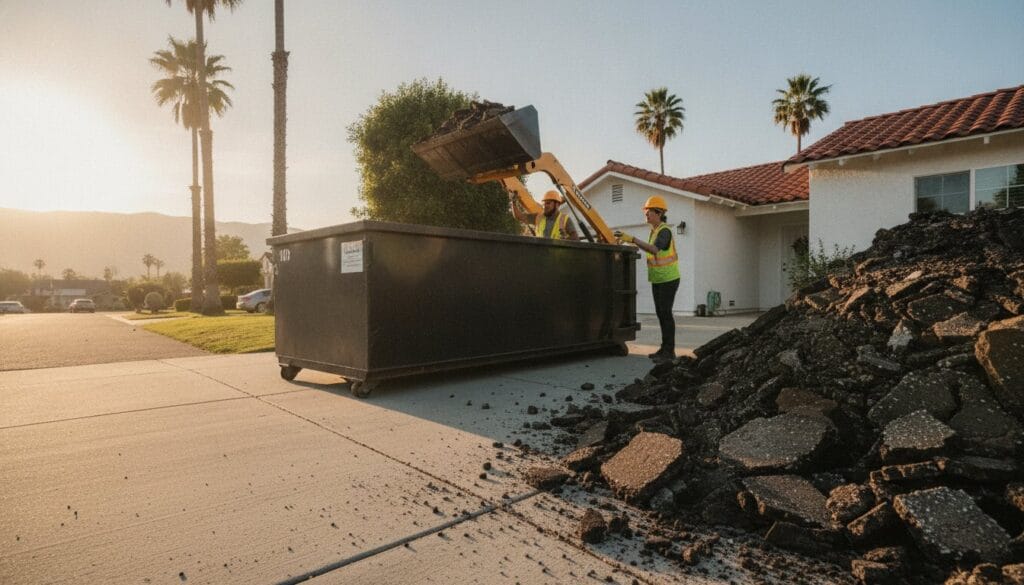
Why Asphalt Disposal Requires the Right Dumpster in San Fernando Valley
When you’re tearing up a driveway or a small parking lot in the San Fernando Valley, the resulting pile of broken asphalt might look like any other construction debris. However, it’s critically different. Asphalt is classified as ‘inert waste,’ a category of materials that are non-reactive but incredibly dense and heavy. This single characteristic changes everything about how it must be collected and hauled, making the choice of dumpster one of the most important decisions for your project’s budget and timeline.
- Asphalt’s Extreme Density: Unlike general household junk or construction debris, asphalt is significantly heavier. This means a standard 40-yard dumpster, often used for large cleanouts, becomes dangerously overweight and illegal to transport long before it’s visually full.
- Legal Road Weight Limits: California imposes strict weight limits on commercial trucks to protect public roads and bridges. A standard roll-off truck can only legally haul a certain tonnage. Filling a large bin with asphalt will almost certainly exceed this limit, resulting in a ‘rejected haul’ and costly delays.
- Specialized Equipment is Necessary: The right equipment isn’t just about the bin; it’s about the entire system. Hauling heavy materials requires a truck with a powerful hydraulic hoist and a container built with reinforced steel to handle the weight and impact, preventing damage to the truck, your property, and the dumpster itself.
- SFV Recycling Mandates: The San Fernando Valley is serviced by specific recycling centers that process clean asphalt. This material is a valuable resource, often crushed and reused as road base. Using the correct bin ensures your asphalt waste is properly sorted and can be recycled efficiently, avoiding higher landfill fees.
Understanding Asphalt Density and Weight
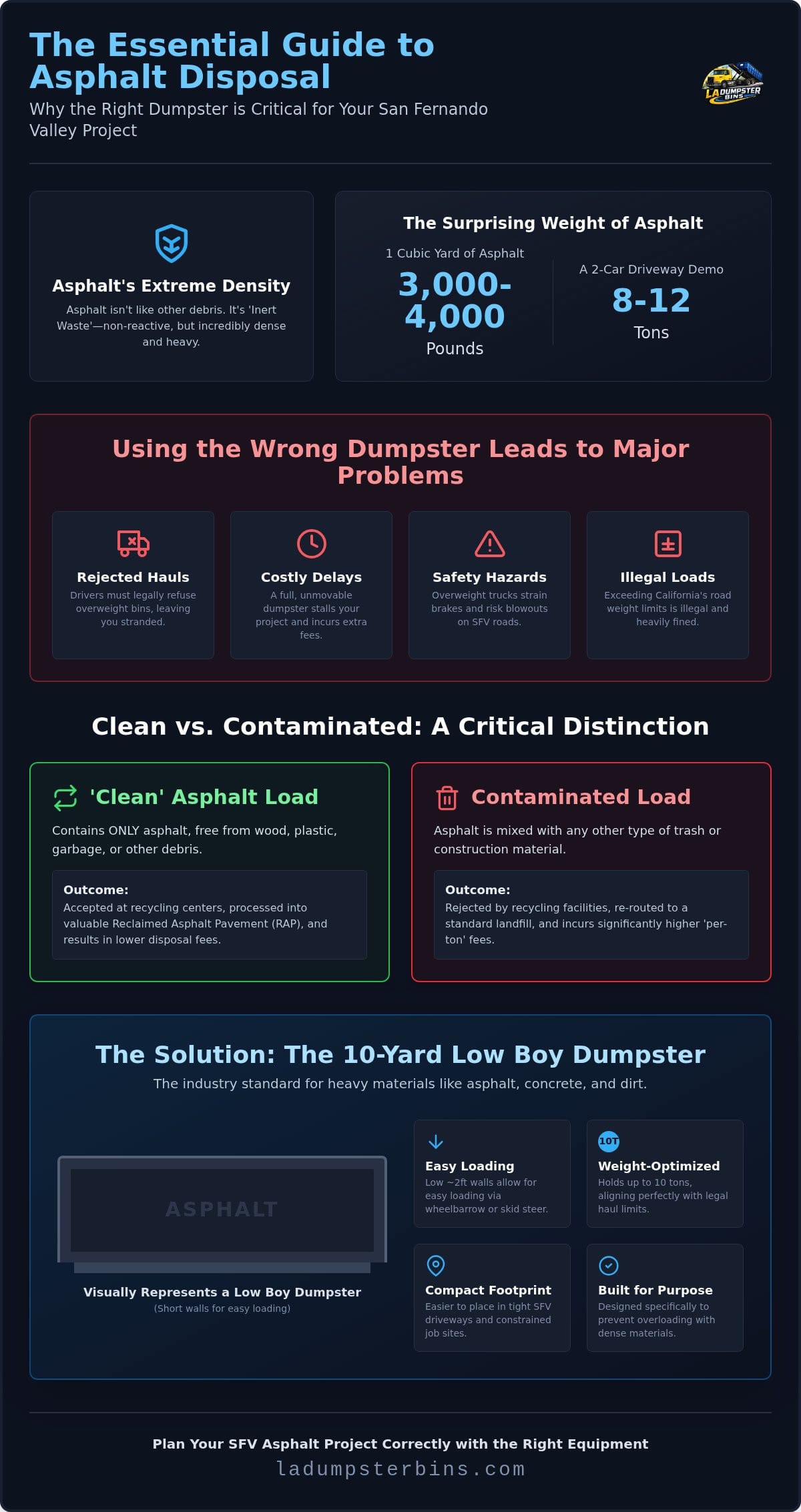
The core challenge of asphalt disposal is its surprising weight. To put it in perspective, a single cubic yard of broken asphalt can weigh between 3,000 and 4,000 pounds (up to two tons). A standard two-car driveway demolition can easily generate 8 to 12 tons of debris. If you were to put that much weight into a tall-walled 25- or 40-yard dumpster, the truck’s hydraulic system would likely fail to lift it.
- The ‘Rejected Haul’ Risk: A driver who arrives to find an overloaded bin is required by law and safety protocols to refuse the pickup. This leaves you with a full, unmovable dumpster on your property, causing significant project delays and potential extra fees for a wasted trip.
- Safety on SFV Streets: An overweight roll-off container poses a serious safety hazard on the road. It can strain the truck’s braking system, increase the risk of a tire blowout, and become unstable during transport on local streets in Van Nuys or on the 101 freeway. For a deeper dive into these regulations, see our guide on understanding dumpster weight limits in Los Angeles.
The Difference Between Inert Waste and Municipal Solid Waste
To keep disposal costs down and comply with local regulations, it’s crucial to understand the difference between ‘inert’ waste like asphalt and general trash, also known as Municipal Solid Waste (MSW).
- What is ‘Clean’ Asphalt?: For recycling facilities, ‘clean’ asphalt means it is free from contaminants. It should not be mixed with wood, plastic, paper, household garbage, or other debris. Keeping your asphalt load clean is the single best way to ensure it can be recycled properly.
- The Cost of Contamination: Mixing general trash with your asphalt load contaminates it. When the truck arrives at the inert-only recycling facility, the load will be rejected and re-routed to a standard landfill. Landfills charge significantly higher ‘per-ton’ fees for mixed debris, and these costs will be passed directly on to you.
- How SFV Recycling Centers Work: Facilities in the San Fernando Valley and greater Los Angeles area use powerful crushers to break down old asphalt into a product called reclaimed asphalt pavement (RAP). This material is then used as a sustainable aggregate in the creation of new hot-mix asphalt or as a base layer for new roads, reducing the need for virgin materials.
The Low Boy Advantage: The Industry Standard for Asphalt Projects
A common question we get is, “Do you have a special asphalt dumpster?” The user feedback is correct: there isn’t a dumpster built exclusively for asphalt. Instead, the industry relies on a specific type of container perfect for the job: the 10-yard low boy dumpster. While it’s a common size, its unique design makes it the safest and most efficient choice for any heavy material, including asphalt, concrete, and dirt.
- What is a ‘Low Boy’ Dumpster?: A low boy is a roll-off container with very short walls, typically around two feet high. This low-profile design is its key advantage, making it easy to load heavy materials without having to lift them over a high-sided wall.
- Designed for Heavy Materials: The 10-yard low boy is the go-to container for dense waste. Its limited volume is a deliberate feature, designed to ensure that even when filled to the brim with asphalt or concrete, it remains within the legal weight limit for the hauling truck.
- Weight Capacity in Los Angeles County: A 10-yard low boy is typically rated for up to 10 tons of material. This capacity perfectly aligns with the amount of debris from common projects like a residential driveway removal, ensuring a safe and legal haul.
- Easy Loading Profile: The low walls are a game-changer for labor. You can easily use a wheelbarrow to dump asphalt chunks directly into the bin or use a small skid steer to load it efficiently, saving time and reducing physical strain on your crew.
10-Yard Low Boy vs. Standard 25-Yard Bins
Choosing between a 10-yard low boy and a larger, standard-height bin might seem counterintuitive, but for asphalt, smaller is smarter. The choice is dictated by weight, not volume.
- Footprint and Placement: A 10-yard low boy has a smaller footprint than a 25- or 40-yard bin, making it easier to place in tight San Fernando Valley driveways or on constrained job sites in neighborhoods like Sherman Oaks.
- A Legal Necessity: The 10-yard limit for heavy materials isn’t just a suggestion; it’s a practical enforcement of California’s highway weight laws. It’s a built-in safety measure to prevent overloading before the truck even attempts a lift.
- When to Use a 25-Yard Bin: A larger bin like a 25-yard dumpster should only be considered if your project involves a mix of very light debris (like wood framing or drywall) and a very small amount of asphalt. Even then, the asphalt must be loaded first and kept to a strict, pre-approved tonnage limit. For pure asphalt jobs, the low boy is always the correct choice. For a detailed breakdown of this specific container, check out our heavy material dumpster rental guide for the SFV.
Equipment Features for Heavy Hauling
Our low boy dumpsters are engineered specifically for the demands of heavy, abrasive materials like asphalt.
- Rear-Opening Access Door: Every low boy features a large, hinged rear door. This allows you to walk or wheel heavy materials directly into the container at ground level, which is far safer and more efficient than trying to throw heavy chunks over the side.
- Reinforced Steel Construction: These bins are built with thicker gauge steel floors and walls to withstand the impact of thousands of pounds of broken asphalt and concrete being dropped in. This robust construction prevents punctures and warping.
- Driveway Protection Rollers: All our roll-off containers, including low boys, are equipped with heavy-duty steel rollers on the back. These wheels allow the dumpster to be gently rolled into place, minimizing the risk of scraping or gouging your driveway surface during delivery and pickup.
Local Logistics: SFV Neighborhoods and Street Permits
Successfully managing an asphalt dumpster rental in the San Fernando Valley involves more than just ordering a bin; it requires navigating local logistics, from tight residential streets to city permits. Whether your project is in a dense area like Northridge or a hilly neighborhood like Woodland Hills, proper planning is key.
- Navigating SFV Streets: Our experienced drivers are skilled at maneuvering large trucks through the often-narrow residential streets of the Valley. We assess access points, turning radius, and potential obstacles before delivery to ensure a smooth placement.
- When a Street Permit is Required: If the dumpster cannot fit on your private property (like a driveway or yard) and must be placed on a public street, you will need a permit. In Los Angeles, these are typically issued by the Bureau of Street Services.
- Public Property Placement Rules: Placing a dumpster on the street in any SFV neighborhood comes with specific rules, including requirements for safety markings, maintaining clearance for traffic, and not blocking fire hydrants or driveways.
- How We Help with Logistics: At LA Dumpster Bins, we handle these logistics daily. We can advise you on the best placement location for your property and guide you through the permit process if street placement is your only option. For tips on getting your site ready, review our guide on preparing for a dumpster delivery.
Securing Your San Fernando Valley Street Permit
The distinction between placing a dumpster on your property versus the street is the most important factor in determining if you need a permit.
- Private vs. Public Property: If the dumpster sits entirely within your property lines—on your driveway, for example—no permit is typically needed from the city. If any part of the bin touches the sidewalk, street, or public alley, a permit is mandatory.
- Permit Lead Times: Obtaining a street use permit from the City of Los Angeles can take several business days. It’s crucial to apply well in advance of your project’s start date to avoid delays.
- Safety Requirements: For any street-placed dumpster, the city requires proper safety measures. This often includes applying reflective tape to all four corners of the bin and sometimes placing cones or barricades around it to ensure it is highly visible to traffic, especially at night.
Neighborhood-Specific Delivery Tips
Every corner of the San Fernando Valley has its own unique challenges, and our team has the local experience to handle them.
- High-Traffic Area Coordination: For projects in busy commercial zones or dense residential areas like Van Nuys, we schedule deliveries for off-peak hours to minimize disruption to traffic and ensure our truck has safe access.
- Overhead Clearance: The roll-off truck’s hoist needs significant vertical clearance (typically 20-25 feet) to raise and place the dumpster. We always check for low-hanging tree branches, especially from the Valley’s beautiful oak trees, and power lines before confirming a placement spot.
- Seamless Paving Crew Swap-Outs: For professional contractors, time is money. We specialize in coordinating “swap-outs,” where we pick up a full dumpster and drop off an empty one in a single trip. This keeps your paving or demolition crew working without interruption.
Estimating Asphalt Debris: Avoiding Weight Overage Fees
The most common reason for unexpected costs on an asphalt removal project is underestimating the weight of the debris. A few extra inches of asphalt thickness across an entire driveway can add tons to the final weight. Taking a few minutes to calculate an estimate can save you hundreds of dollars in overage fees.
- The #1 Cause of Extra Fees: Overage fees are charged when the weight of the material in the dumpster exceeds the included tonnage allowance for the rental. With asphalt, it’s incredibly easy to go over the limit if you don’t plan ahead.
- Step-by-Step Estimation: You can create a surprisingly accurate estimate with a simple formula. This empowers you to order the right number of dumpsters and understand your total disposal costs upfront.
- The ‘Fluff Factor’: When solid asphalt is broken up, it creates air pockets between the chunks. This increases the volume the debris takes up (the “fluff”), but it doesn’t change the weight. Don’t be fooled by a bin that doesn’t look full; the weight is what matters.
- Communicating with Our Team: When you call for a quote, provide us with the dimensions (length, width, and average thickness) of the asphalt you’re removing. Our experts can run the calculations for you and recommend the right service.
The Asphalt Weight Formula
Follow these simple steps to estimate the weight of your asphalt debris. You’ll need a tape measure to get the dimensions of the area you’re demolishing.
- Calculate the Volume in Cubic Feet: Measure the length, width, and average depth (thickness) of the asphalt in feet. Multiply these three numbers together.
Example: A driveway is 40 feet long, 18 feet wide, and 4 inches (or 0.33 feet) thick.
40 ft x 18 ft x 0.33 ft = 237.6 cubic feet. - Convert Cubic Feet to Cubic Yards: There are 27 cubic feet in one cubic yard. Divide your total from Step 1 by 27.
Example: 237.6 / 27 = 8.8 cubic yards. - Calculate the Total Weight in Tons: On average, one cubic yard of broken asphalt weighs about 1.5 to 2.0 tons. Multiply your cubic yardage from Step 2 by this average weight.
Example: 8.8 cubic yards x 1.8 tons/yard = 15.84 tons.
In this example, the project will generate nearly 16 tons of debris. Since a 10-yard low boy typically has a 10-ton limit, you would know in advance that you need to schedule two separate dumpsters or hauls for this job, avoiding any surprise overage fees.
Pro-Tips to Keep Costs Down
Beyond accurate estimation, here are a few more ways to control your budget when renting a dumpster for asphalt.
- Keep the Load ‘Clean’: Do not mix any other type of waste with your asphalt. A ‘clean’ load of inert material is sent to a recycling facility with lower tipping fees. A ‘contaminated’ load goes to a more expensive landfill, and the cost difference is significant.
- Adhere to the ‘Level Full’ Rule: Never fill the dumpster past the top rim. Debris must be level with the walls for safe transport. Our drivers are legally required to ensure the load is securely contained and may have to remove material or refuse the haul if the bin is overfilled.
- Ask About Pricing Models: Some companies offer ‘flat-rate’ pricing for inert bins, which includes a set tonnage for one price. Others use a ‘per-ton’ model. Understand which model you’re being quoted to accurately compare prices and avoid surprises.
Reliable Asphalt Dumpster Rental with LA Dumpster Bins
When you have a heavy material project in the San Fernando Valley, you need a partner who understands the stakes. LA Dumpster Bins provides direct, no-nonsense service for contractors and residents who demand reliability and expertise. We deliver the right equipment on time, every time, so your project can move forward without a hitch.
- Direct Service for the SFV: We are a local company focused on serving the San Fernando Valley. We know the neighborhoods, the regulations, and the best routes to get your dumpster to you quickly.
- 24/7 Availability: Paving and demolition projects don’t always run from 9-to-5. We offer around-the-clock service to accommodate emergency road repairs, tight construction schedules, and weekend projects.
- Low Boy Rental Experts: We specialize in heavy material management. Our inventory of 10-yard low boy dumpsters is ready for your asphalt, concrete, or dirt removal project.
- Transparent Pricing: We provide clear, upfront quotes with no hidden fees or surprise ‘Valley’ surcharges. You’ll know your total cost before we deliver the bin.
Why Contractors Choose LA Dumpster Bins
Professional contractors across the SFV rely on us because we understand the demands of their business. A delayed dumpster can bring an entire crew to a standstill, costing thousands in lost labor. We prioritize dependability above all else.
- On-Call Reliability: Our dispatch is responsive and flexible. We can schedule rapid swap-outs and accommodate last-minute changes to keep your job site productive.
- Local Facility Knowledge: We have deep expertise in the network of local SFV recycling centers and dump sites, ensuring your materials are disposed of in the most cost-effective and environmentally compliant manner.
- Professional Drivers: Our drivers aren’t just drivers; they are logistics professionals. They understand how to safely place a heavy bin on a residential driveway, protect your property, and communicate clearly on-site.
Booking Your Asphalt Bin Today
Getting the right dumpster for your asphalt project is simple and fast. We’ve streamlined our process to eliminate online forms and long waits. Just one phone call is all it takes to get a quote and schedule your delivery.
- Simple Phone-Based Booking: Call our team directly to speak with a local expert who can assess your needs and schedule your rental in minutes.
- Flexible Rental Periods: We know projects can face delays due to weather or inspections. We offer flexible rental terms to accommodate your real-world schedule.
- CTA: Ready to get started? Get a free asphalt dumpster estimate for your San Fernando Valley project and experience the difference of working with a true local professional.