What if filling your dumpster to the top actually costs you double in hidden fees? Many Los Angeles homeowners and contractors assume that if the debris fits inside the bin, they’re good to go. However, understanding dumpster weight limits is about more than just volume. It’s the difference between a successful project and a logistics nightmare. You’ve likely felt the frustration of trying to guess if your old shingles or concrete patio will exceed the limit. It’s stressful to worry about overweight charges or a bin that’s too heavy for your driveway.
We agree that waste disposal should be straightforward and transparent, not a guessing game. This guide helps you master the rules of dumpster weight limits to ensure safe, legal, and cost-effective waste disposal for your LA project. We’ll provide a clear framework for estimating debris weight and explain why specialized bins like a Low Boy are essential for heavy materials. You’ll learn how to choose the right bin size and avoid the legal headaches of overloaded trucks on Southern California roads.
Key Takeaways
- Master the difference between volume and tonnage to prevent unexpected overage fees. Understanding dumpster weight limits is the first step toward a safe and legal disposal process.
- Understand how California DOT regulations and steep local terrain in areas like the San Fernando Valley dictate your maximum safe load.
- Identify heavy materials like concrete, dirt, and brick that require specialized Low Boy dumpsters instead of standard high-volume bins.
- Learn why choosing a 40-yard bin for heavy debris can lead to dangerous truck overloads, blown tires, or hydraulic failure.
- Use expert dispatcher insights to select the right 10, 25, or 40-yard bin for your specific waste type and project scale.
What is a Dumpster Weight Limit and How Does it Work?
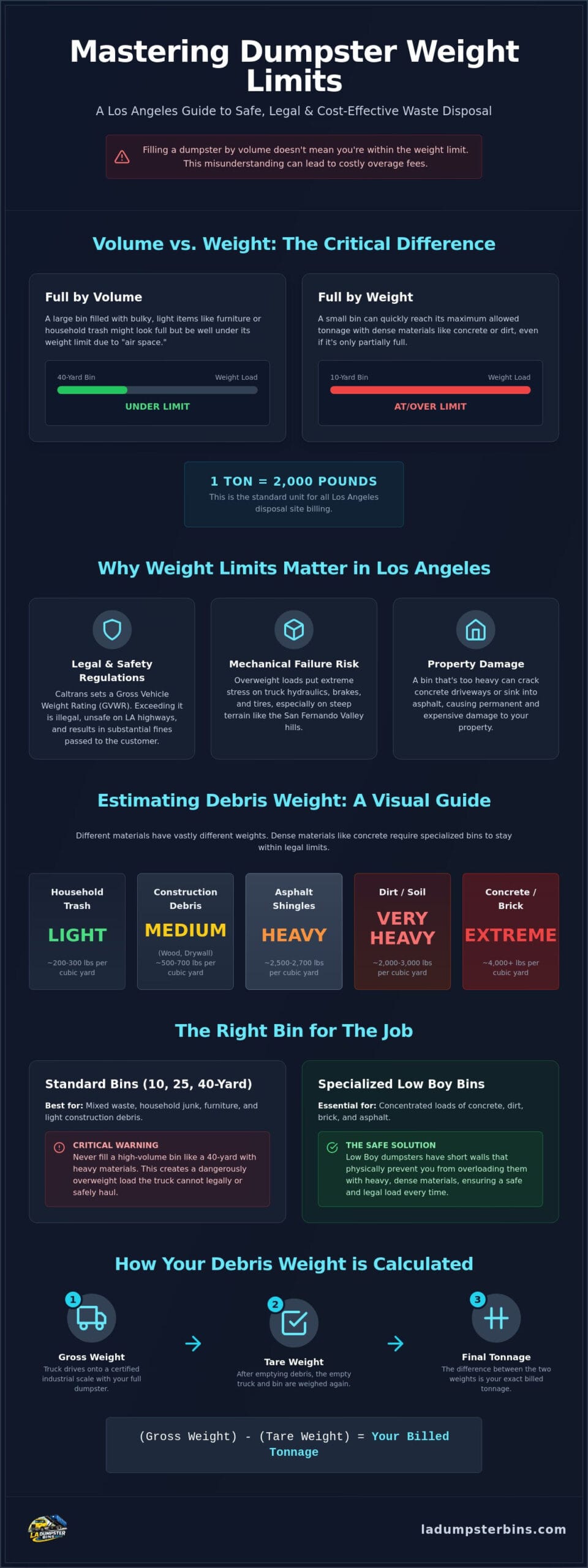
A dumpster weight limit is the maximum tonnage allowed by both the hauling truck and local landfill regulations. It isn’t just a number on a contract; it’s a safety and legal requirement. Understanding dumpster weight limits helps you avoid the common mistake of thinking that if debris fits inside the bin, it’s safe to haul. Every bin has a specific capacity designed to keep the truck’s hydraulic systems functioning and the vehicle stable on the road. In the waste industry, we measure this capacity in tons. One ton equals exactly 2,000 pounds. This is the critical unit used for billing at every Los Angeles disposal site. If you exceed this tonnage, the truck might not be able to lift the bin off your property safely.
Volume vs. Weight: Why They Are Not the Same
Physical size and weight capacity are two very different metrics. Volume refers to cubic yards, which is the physical space inside the container. A 40-yard bin has a massive amount of space, but that doesn’t mean it can hold 40 tons of debris. For example, a large bin full of light household trash or old pillows might be well under its weight limit. Conversely, a small 10-yard bin filled with concrete or wet soil will likely hit its maximum tonnage very quickly. This happens because of “air space.” Bulky items like furniture leave gaps, while dense materials pack tightly together. Tonnage is the primary metric used by Los Angeles disposal facilities to determine final tipping fees.
How Weight is Measured at the Landfill
Accuracy is vital for your project budget. Every Los Angeles landfill uses industrial scales to track debris weight with precision. When our driver arrives with your Roll-off (dumpster), they drive the entire vehicle onto a scale. This provides the “gross weight.” It includes the truck, the bin, and all your discarded materials. After the debris is emptied, the truck is weighed again. This second number is the “tare weight.” The scale system subtracts the tare from the gross to find your exact debris tonnage. These scales are certified by the state for accuracy. This ensures you only pay for the weight you actually disposed of during your rental period. It’s a transparent process that leaves no room for guesswork.
Why Weight Limits Matter for Los Angeles Projects
Los Angeles roads aren’t just crowded; they’re strictly regulated. When you rent a bin, you aren’t just paying for a box. You’re entering into a legal agreement governed by the Caltrans Weight Limitation guidelines. These rules establish the Gross Vehicle Weight Rating (GVWR). This metric represents the absolute maximum weight a truck can legally carry on California highways. If a truck exceeds this limit, it becomes a safety hazard to every driver on the 405 or the 101. Law enforcement and DOT officers frequently monitor heavy vehicles to ensure compliance with these standards.
Operating in areas like the San Fernando Valley adds another layer of mechanical risk. Steep hills and narrow canyons put extreme stress on a truck’s braking and hydraulic systems. An overweight bin can lead to blown tires or total hydraulic failure during the loading process. These mechanical risks are exactly why understanding dumpster weight limits is vital for project safety. If a hauler is caught with an overweight load, the legal fines are substantial. Most haulers must pass these costs directly to the customer to remain operational.
Legal and Safety Risks of Overloading
Safety starts with physics. An overweight bin significantly increases the braking distance of the hauling truck. This makes sudden stops in unpredictable LA traffic nearly impossible. There is also the tarping rule to consider. Every load must be level with the top of the bin so it can be safely covered for transport. If debris is piled too high or weighs too much, our drivers may legally refuse to pick up the bin. This results in a dry run fee and a delay for your project. If you’re unsure about your specific load, consulting with a local expert can prevent these costly errors.
Beyond the road, your property is at risk. A standard residential driveway isn’t designed to support ten tons of concentrated weight. Overloaded bins can crack concrete or cause the steel feet of the dumpster to sink deep into soft asphalt on a hot Los Angeles afternoon. Keeping your load within the specified limits protects your home or job site from permanent damage.
Landfill Fees and Tipping Costs in LA
Landfills in Southern California operate on a tipping fee model. They charge haulers a specific rate per ton to drop off debris. When you rent a dumpster, your initial price includes a set amount of these pre-paid landfill costs. If your project generates more tonnage than expected, the landfill charges us more. Overage fees aren’t hidden profit; they are a direct pass-through of the additional costs charged by the disposal facility. Staying within your limit ensures your budget remains predictable from start to finish.
Estimating Debris Weight: A Guide for Common Materials
Visualizing your project’s total tonnage is the hardest part of the rental process. Most people struggle with the math because debris looks different in a pile than it does on a scale. To simplify the process, imagine a compact car. That vehicle weighs roughly one ton, or 2,000 pounds. If you’re tossing out enough material to equal the mass of three small cars, you need a bin that accommodates at least three tons. Understanding dumpster weight limits requires looking at the density of your materials rather than just the volume they occupy in the bin.
- Drywall: A single 4×8 sheet of half-inch drywall weighs about 50 pounds. A stack of 40 sheets equals one ton.
- Wood Debris: Standard framing lumber and plywood are relatively light. You can expect about 300 to 500 pounds per cubic yard.
- Roofing Shingles: These are measured in “squares,” which cover 100 square feet. One square of standard three-tab shingles weighs approximately 230 to 250 pounds.
Materials like concrete, dirt, brick, and sand are the “heavy hitters” of the waste world. These substances are incredibly dense and leave very little air space. A single cubic yard of concrete can weigh up to 4,000 pounds. That’s two full tons in a space only three feet wide, three feet long, and three feet high. If your project involves digging or demolition, your weight will climb much faster than a standard home cleanout. You must track these materials closely to avoid exceeding your truck’s capacity.
Construction vs. Household Weight Profiles
Household cleanouts and construction remodels have very different weight signatures. A standard 10-yard bin filled with old furniture, clothes, and cardboard boxes from a garage might only weigh one or two tons. However, that same 10-yard bin used for a bathroom remodel will be much heavier. Porcelain tubs, ceramic floor tiles, and thick plaster walls add weight quickly. Tile is particularly deceptive; a small pile of broken ceramic can easily weigh several hundred pounds. Always account for these dense materials when choosing your bin size to keep your project on track.
The Impact of Water and Weather
Weather is a major factor in Los Angeles, especially during seasonal rain events in the San Fernando Valley. Porous materials like soil, old carpeting, and untreated wood act like sponges. Wet debris can weigh two to three times more than the same material when dry. Landfills don’t give credit for “water weight” because they must process the total mass regardless of its source. We recommend using a simple plastic tarp to cover your dumpster if rain is in the forecast. This small step prevents your budget from being washed away by unexpected overage fees at the scale.
How to Avoid Overage Fees: Specialized Bin Solutions
Avoiding overage fees starts with choosing the right equipment for your specific debris. Many customers assume a larger bin is always the safer bet. Choosing the wrong bin is a dangerous mistake. If you fill a 40 Yard Dumpster with heavy materials like concrete or dirt, the total weight will exceed the lifting capacity of any standard roll-off truck. Failed pick-ups and safety risks are the result. For these heavy-duty projects, a Low Boy Dumpster is the industry standard in Los Angeles. Understanding dumpster weight limits for specialized loads ensures you pick the right tool for the job. These containers are specifically engineered to handle high-density waste without compromising vehicle safety or road regulations.
When to Rent a Low Boy Dumpster
A Low Boy Dumpster is a specialized container designed for the heaviest materials. You should choose this option for projects involving dirt, concrete, asphalt, brick, or sod. These materials are incredibly dense. Strategic filling ensures the truck can safely lift the bin and stay within legal tonnage limits. You must stop filling once the material reaches the designated fill line. This line is usually about halfway up the side of the container. Local projects like driveway removals, pool fill-ins, or large-scale landscaping require this specific solution. Using a standard bin for these materials is a recipe for budget-breaking overages.
Loading Strategies for Weight Management
How you load your bin is just as important as the size you choose. Always place the heaviest items at the bottom and toward the front of the bin. The front is the side closest to the truck’s cab. Smart weight distribution keeps the load centered over the truck’s rear axles during transport. It prevents the vehicle from becoming unstable on the road. Never pile debris above the rim of the dumpster. This practice, known as “mountain topping,” leads to immediate refusal by drivers. They cannot safely tarp a load that isn’t level. If you have large, bulky items, break them down. This maximizes your available space without adding unnecessary tonnage to your final bill.
Clear communication with your provider is the best way to avoid surprises. Tell our dispatchers exactly what you plan to throw away. We can help you determine if a Low Boy or a standard Residential Roll Off Dumpster Rental is the better fit. Understanding dumpster weight limits is easier when you have a local partner to guide you. If you’re ready to start your project, order your Low Boy dumpster today to ensure a smooth, fee-free experience.
Rent the Right Size with LA Dumpster Bins
You now have the tools for understanding dumpster weight limits and avoiding costly mistakes. The final step is partnering with a provider that offers the right equipment for your specific job. We maintain a versatile inventory to handle any project scale. Whether you need a compact 10 Yard Dumpster for a small bathroom tear-out or a 40 Yard Dumpster for a major commercial demolition, we have you covered. We also offer a 25 yards roll off dumpster for those mid-sized renovations that fall right in the middle. Our fleet is ready to serve your needs across the city with reliable, heavy-duty equipment.
Choosing a bin size is about more than just volume. It’s about precision. Our local dispatchers are experts in helping Los Angeles customers estimate their tonnage before the bin ever leaves our yard. We don’t just drop off a box; we provide a logistical solution. We’ll ask about your materials to ensure you aren’t putting concrete in a bin that’s too large to lift. This level of service eliminates the guesswork that leads to overage fees. We believe in transparent pricing. You won’t find any hidden “fluff” fees or administrative surcharges on your final bill. What we quote is what you pay.
Urgent projects require a responsive partner. We offer 24/7 availability to meet the immediate needs of contractors and homeowners in the San Fernando Valley. If a project hits a snag or you need an extra bin in the middle of the night, we’re ready to work. Our team understands the fast-paced nature of Southern California construction. We prioritize efficiency and reliability to keep your job site moving forward without delays. You can count on us to be there when the work gets demanding.
Local Expertise for Los Angeles Projects
Operating a waste business in Los Angeles requires deep knowledge of local landfill rules and road restrictions. We understand the specific requirements of disposal facilities throughout the region. Our drivers know how to handle the tight streets and steep grades of the San Fernando Valley safely. This local expertise protects you from the legal headaches of non-compliance. We invite you to call us for a complimentary weight estimate. Tell us what you’re tossing, and we’ll help you pick the perfect Residential Roll Off Dumpster Rental or commercial container for your site.
Ready to Start Your Project?
Don’t let the fear of weight limits slow down your progress. We have the 10, 25, or 40-yard options you need to get the job done right. If you’re tackling a heavy demolition project, ask about our Low Boy Dumpster specialized for concrete and dirt. Our team is standing by to help you choose the most cost-effective and safe solution for your waste disposal needs. Click the link below to get started with a partner who values transparency and dependability as much as you do.
Get a Free Estimate on Your LA Dumpster Rental
Streamline Your Waste Disposal Today
Mastering the logistics of a project means mastering the details. Understanding dumpster weight limits is the most effective way to protect your budget and your property. You now know that volume doesn’t equal weight and that dense materials like concrete require a specialized Low Boy Dumpster to stay within legal hauling limits. By choosing the right bin and loading it strategically, you avoid the safety risks and legal fines associated with overloaded trucks on Los Angeles roads. It’s the smartest way to keep your job site efficient and your costs predictable.
Since 2021, we’ve helped homeowners and contractors across Los Angeles and the San Fernando Valley manage their debris with transparency and speed. We offer 24/7 availability for all rental sizes to ensure your project never stops. Whether you need a 10-yard bin for a garage cleanout or a heavy-duty Low Boy for a driveway tear-out, we provide the local expertise you can depend on. Your project doesn’t have to be complicated when you have the right team behind you.
Book Your Los Angeles Dumpster Rental Today and get started with a partner dedicated to your success. Your next big build or cleanout is in good hands.
Frequently Asked Questions
What happens if my dumpster is over the weight limit?
If your bin exceeds the safety limit, the driver may refuse to pick it up. This results in a dry run fee because the truck cannot safely lift or transport the load. If the bin is hauled but found overweight at the landfill, you’ll be charged an overage fee for every ton above your allowance.
How much is the overage fee for a dumpster in Los Angeles?
Overage fees in the Los Angeles area typically range from $50 to $100 for every ton over your specified limit. These charges are a direct pass-through of the additional tipping fees landfills charge for heavier loads. Always review your rental agreement to confirm the exact tonnage rate for your specific bin size.
Can I fill a 40-yard dumpster with concrete?
No, you cannot use a 40-yard bin for concrete, dirt, or brick. These materials are too dense and would make the bin impossible for a truck to lift safely. For heavy debris, you must rent a specialized Low Boy Dumpster designed to handle the extreme weight of masonry and soil.
How do I know if my dumpster is too heavy before it is picked up?
You can estimate your tonnage by tracking the types of materials you toss. For example, a cubic yard of concrete weighs about 4,000 pounds. Understanding dumpster weight limits is simpler if you visualize your debris in relation to the weight of a compact car, which is roughly one ton. When in doubt, call our dispatchers for an estimate.
Does the weight of the dumpster itself count toward my limit?
The weight of the steel container is not part of your debris allowance. Landfills use a scale system to find the “tare weight” of the empty truck and bin. They subtract this from the “gross weight” of the full vehicle. You are only billed for the actual weight of the waste inside the container.
What is the maximum weight a roll-off truck can carry in California?
Most roll-off trucks in California can safely haul a maximum of 10 to 12 tons of debris. This depends on the truck’s Gross Vehicle Weight Rating (GVWR) and local road restrictions. Exceeding these limits creates safety hazards and can lead to heavy DOT fines for the hauler.
Is there a weight limit for a 10-yard dumpster rental?
Yes, a 10-yard dumpster typically includes a 2-ton weight limit. This capacity is ideal for household cleanouts or small renovation projects. If you fill this bin with heavy items like ceramic tile or plaster, you’ll likely exceed the 4,000-pound limit before the bin is physically full.
How can I prevent rain from adding weight to my dumpster?
Cover your bin with a heavy-duty plastic tarp during rain events in the San Fernando Valley. Porous items like old carpet, wood, and soil soak up water and can double in weight. Landfills don’t offer discounts for water weight, so keeping your debris dry is a vital cost-saving measure.
Pingback: Asphalt Dumpster Rental in San Fernando Valley: Reliable Low Boy Services