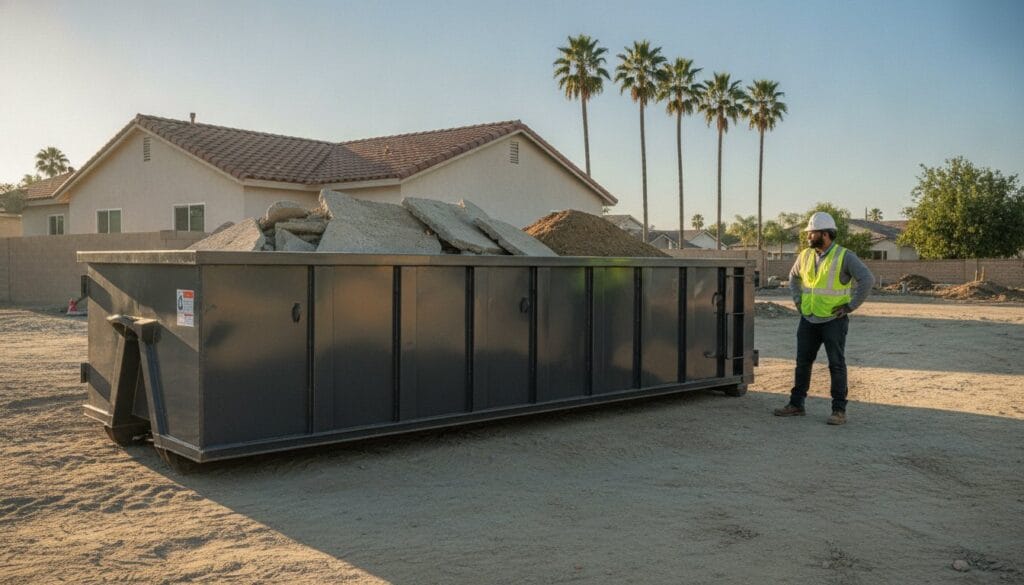
Filling a standard roll-off with wet dirt is the fastest way to face a massive overweight fee or a truck that simply cannot lift the load. When it comes to concrete and dirt dumpster rental LA projects, the weight-class game is won or lost before the bin even touches your driveway. You likely already know that heavy debris is a different beast than standard construction waste, requiring specialized equipment and precise planning to avoid logistical nightmares.
It’s frustrating to worry about hidden costs or whether your bin is legal for street placement in tight neighborhoods. This guide helps you master the logistics of heavy debris disposal with expert advice on Low Boy rentals and weight limits. We’ll walk through exactly how to secure flat-rate pricing and navigate Los Angeles permit requirements so your job site keeps moving. You’ll learn the difference between standard bins and Low Boys, ensuring you get the right equipment for a safe, efficient haul every time.
Key Takeaways
- Learn why heavy materials like asphalt and sand require specialized bins to comply with DOT road weight regulations and hydraulic lift limits.
- Discover why the 10-yard Low Boy is the industry standard for a concrete and dirt dumpster rental LA project, offering the maneuverability needed for tight driveways.
- Master proper loading techniques, including the “Max Fill” line, to avoid expensive overweight fees and ensure safe transport.
- Understand the Los Angeles Bureau of Sanitation permit requirements for placing a dumpster on a public street versus private property.
- Identify the benefits of working with a local San Fernando Valley provider to ensure on-time delivery and responsive communication for your job site.
Understanding Concrete and Dirt Dumpster Rentals in Los Angeles
Heavy debris isn’t your average waste. This category includes dense, high-mass materials like concrete, dirt, asphalt, brick, and sand. Unlike household trash, these materials weigh significantly more per cubic yard. Most standard roll-off dumpsters are built for volume, but heavy debris requires a focus on weight capacity. If you attempt to fill a standard 40-yard bin with wet soil or broken pavement, the truck’s hydraulic system will likely fail to lift it. This leads to failed pickups and unnecessary delays on your job site.
The solution for these projects is a specialized bin known as a Low Boy Dumpster. These are specifically engineered to handle the physics of dense materials while staying within legal transport limits. Securing a reliable concrete and dirt dumpster rental LA service means getting equipment that can actually handle the load. Beyond the physical limits, you must also consider Los Angeles’ strict Construction and Demolition (C&D) recycling rules. The city requires a high percentage of debris to be diverted from landfills. Because materials like concrete and asphalt are 100% recyclable, they often need to be hauled separately to specialized processing facilities.
Why Weight Matters for LA Dumpster Rentals
California road regulations and DOT standards set strict limits on how much weight a single vehicle can carry. For most residential roll-off trucks in Los Angeles, the legal limit for the material itself is approximately 10 tons. Exceeding this limit creates major safety hazards and legal risks for the driver. If a bin is too heavy, we cannot legally or physically haul it away. This results in a “dry run” fee, meaning you pay for the truck’s trip even though the bin stays on your property. Understanding the difference between “inert” materials, which don’t decompose, and general waste is the first step in avoiding these costly errors.
Common Projects Requiring Specialized Bins
Many local projects throughout the San Fernando Valley generate massive amounts of heavy debris. If you’re tearing up an old driveway or replacing a cracked sidewalk, you’re dealing with hundreds of pounds of concrete per square foot. Other common scenarios include:
- In-ground pool removals: These involve both concrete shells and massive amounts of backfill dirt.
- Backyard excavation: Leveling a lot or digging for a new foundation creates huge volumes of soil.
- Retaining wall repairs: These projects often combine old masonry, brick, and earth.
- Landscaping overhauls: Removing large amounts of sod, rock, or decorative stone.
Using the right bin for these tasks ensures your project stays on schedule. It also protects your property from the damage a standard, overfilled dumpster might cause when a truck tries to struggle with an impossible weight.
The 10-Yard Low Boy: Your Best Option for Heavy Debris
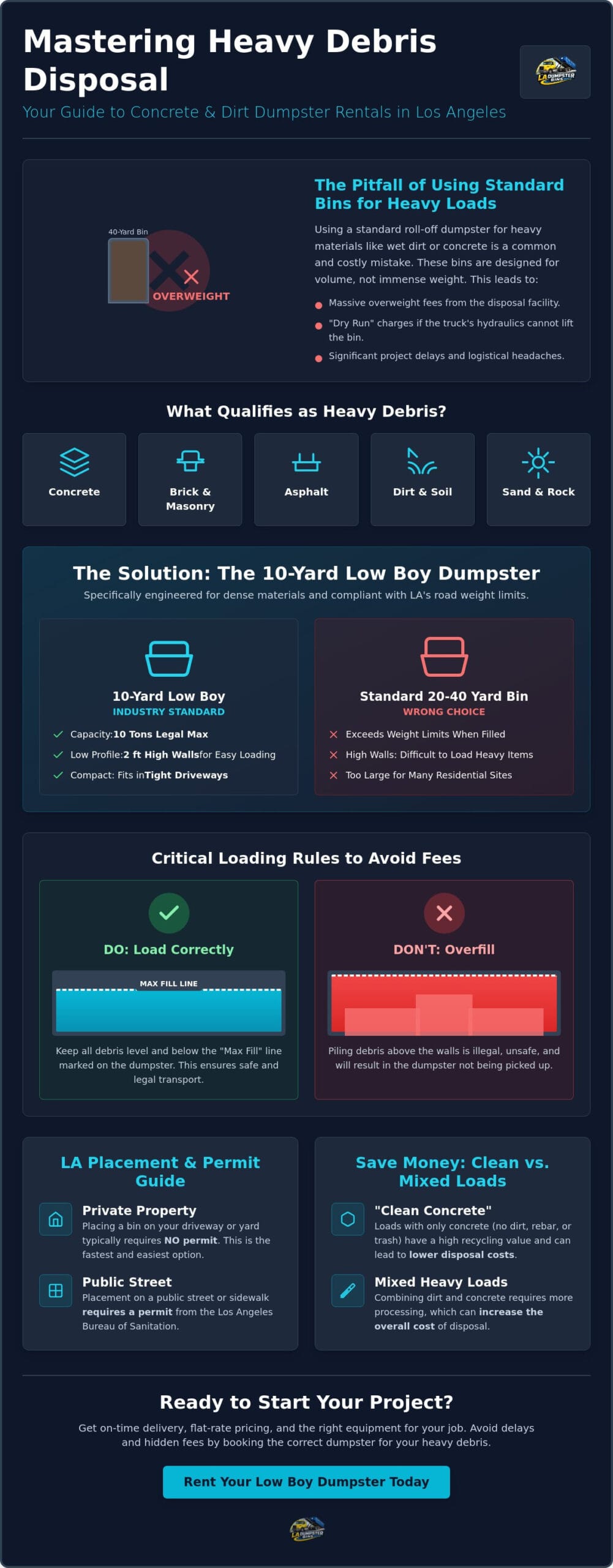
The 10-yard Low Boy is the workhorse of the local construction scene. While some national brokers market 10-yard bins for “small cleanups,” they often miss the critical point for heavy debris. For materials like concrete and dirt, a 10-yard bin is the legal maximum capacity. A standard Low Boy measures approximately 12 to 16 feet long with walls only 2 feet high. This low profile is intentional. It allows you to toss heavy chunks of sidewalk or scoops of wet soil over the side without needing a ramp. Securing a concrete and dirt dumpster rental LA doesn’t have to be a guessing game if you start with the right equipment.
LA neighborhoods are notorious for narrow streets and tight driveways. A 10-yard Low Boy fits where a 40-yard monster bin won’t. It’s the perfect size for a standard residential driveway in the San Fernando Valley. By choosing the right equipment, you avoid the massive overweight surcharges that hit when you try to guess with larger, improper bins. If you aren’t sure which bin fits your specific site layout, you can view our Low Boy Dumpster options to check specific dimensions before you order.
Clean Concrete vs. Mixed Heavy Loads
Not all heavy debris is treated the same at the scale. “Clean Concrete” refers to loads with no dirt, no rebar, and no trash. This material has a high recycling value because it’s easily crushed into road base. Under the Los Angeles County C&D Ordinance, keeping these materials separate is encouraged to meet local diversion goals. Mixed loads of dirt and concrete are common in excavation but require more labor-intensive processing. This typically increases your disposal costs. Separating your materials whenever possible is the smartest way to save money on your concrete and dirt dumpster rental LA project.
When to Scale Up: 25 and 40 Yard Options
You might think a 25 or 40-yard bin is a better value for a large project, but these are strictly for light debris like lumber, drywall, and household junk. There’s a “Forbidden” rule in the hauling industry: never fill a 40-yard bin more than one-quarter full with concrete. If you fill it to the top, the truck won’t be able to lift it. You’ll be stuck with a massive fee and a bin you have to empty by hand. For larger excavation projects, it’s always safer to rent multiple 10-yard Low Boys. This keeps your loads legal and ensures the truck can actually pull the bin when it’s time to haul it to the processing facility.
Loading Rules: Avoiding Overweight Fees and Safety Issues
Loading a bin correctly is just as important as choosing the right size. For a concrete and dirt dumpster rental LA project, the “Max Fill” line is your most important boundary. While household bins can often be filled to the top rail, heavy debris must stay significantly lower. Filling a 10-yard Low Boy to the very top with wet soil often pushes the total weight past legal road limits. One cubic yard of concrete weighs roughly 4,000 lbs. This means a full 10-yard bin could potentially weigh 40,000 lbs, which is double the 10-ton limit for most residential trucks. Stay aware of your volume to keep the load manageable.
Physics plays a major role during the pickup process. As the truck tilts the bin to winch it onto the bed, the center of gravity shifts. If your dirt or concrete is piled too high, it can shift suddenly. This creates a risk of the truck tipping or the bin sliding off the rails. You must also keep the load “clean” by excluding prohibited items. Never mix hazardous waste like paint, oils, batteries, or chemicals into your inert load. Doing so turns a recyclable concrete load into a contaminated mess that landfills will reject immediately. Keeping your materials pure ensures you get the best possible rate and stay compliant with local environmental laws.
Step-by-Step Loading for a Stable Bin
Efficiency starts with how you place the material inside the container. Follow these steps for a safe haul:
- Distribute weight evenly: Start loading from the front of the bin, which is the end closest to the truck cab, and move toward the back. This prevents excessive strain on a single axle during transport.
- Keep it level: Avoid “pyramiding” your material in the center. A flat, level load is much safer than a heap that rises above the side walls.
- Clear the rails: Ensure no chunks of concrete or rebar are hanging over the sides. The truck’s automated tarping system needs a clear path to cover the load before the driver hits the road.
What Happens if You Overfill?
If a driver arrives and sees an unsafe load, they will refuse to pick it up. This triggers a “Dry Run” fee, which adds unnecessary cost to your project. Drivers are legally responsible for the load once it is on the truck. They will not risk a massive fine or a safety hazard for an overfilled bin. The result is on-site remediation, which is the frustrating process of manually unloading heavy concrete chunks or shoveling dirt out of the bin until it meets the weight limit. It’s back-breaking work that stalls your job site. Beyond the labor, overfilled bins pose a massive safety risk on LA freeways. Loose debris falling onto the 405 or the 101 creates legal liability for you and dangerous conditions for other drivers. Follow the fill lines to keep your project moving and your costs predictable.
LA Logistics: Permits and Placement in the San Fernando Valley
Choosing where to place your concrete and dirt dumpster rental LA is a critical decision that impacts your project’s timeline and budget. If your property has a wide, sturdy driveway, this is usually the most efficient choice. It keeps the bin on private property, which means you won’t need to navigate the city’s permit process. However, many older neighborhoods in the San Fernando Valley have narrow driveways or shared alleys that aren’t built for heavy roll-off trucks. In areas like Van Nuys or Pacoima, you might find that the street is the only viable spot for your container.
A standard roll-off truck requires a significant amount of space to maneuver. You need at least 60 feet of clear, straight-line space to drop or pick up a bin. This is roughly the length of four standard cars. If the truck has to navigate tight corners or narrow SFV streets, it’s essential to clear the area of parked vehicles and debris before the driver arrives. Ensuring a clear path prevents delays and keeps your job site moving.
Getting a Street Permit in Los Angeles
A permit is mandatory the moment a dumpster touches a public street, sidewalk, or alley in the City of Los Angeles. You can handle this through the EPIC-LA online system, which streamlines the application process. These permits generally cost between $20 and $150 and typically stay valid for up to seven days. If your project is in an unincorporated area of LA County, you’ll need an Encroachment Permit from the County Department of Public Works instead. Always plan ahead. Posting “No Parking” signs at least 24 hours in advance prevents a “Dry Run” fee caused by a blocked site.
Protecting Your Property During Heavy Loads
Heavy debris bins create immense pressure points. A 10-yard Low Boy filled with wet dirt or concrete chunks can easily crack or sink into residential asphalt. We suggest using large sheets of 3/4-inch plywood as “street pads” to distribute the weight. Also, check for overhead obstructions. Low-hanging power lines, communication cables, or thick tree branches can prevent the truck from safely lifting its hoist. Ensuring the driver has 20 feet of vertical clearance is just as important as the ground space.
Ready to schedule your delivery? Get a quote for your Low Boy Dumpster and we’ll help you determine the best placement for your site.
Rent Your Concrete Dumpster from LA Dumpster Bins Today
Choosing a local partner for your concrete and dirt dumpster rental LA project makes a significant difference in your bottom line. Many websites you find online are simply national brokers. These companies don’t own trucks or bins. They take your order and sell it to a local hauler while adding a hefty markup. We are different. LA Dumpster Bins provides direct service, meaning you speak to the people who actually deliver your equipment. This direct line of communication eliminates the confusion that often leads to missed delivery windows or incorrect bin sizes.
Our 24/7 readiness means we are always available to solve your logistical waste problems. Whether you’re a homeowner in Van Nuys or a contractor working a large-scale demolition in the San Fernando Valley, we prioritize your schedule. We understand that a stalled job site costs money. That’s why we focus on on-time delivery and responsive communication. Our team knows the local LA landscape, from the permit requirements to the tightest alleyways in the city. We position ourselves as a helpful partner to ensure your heavy debris is hauled away without a hitch.
Transparent pricing is the core of our business model. We provide no-nonsense quotes that include delivery, pickup, and specific weight limits. You won’t find hidden fuel surcharges or surprise administrative fees on your final bill. We believe in being a dependable service provider. By giving you clear, upfront information about what’s included in your rental, we help you plan your project budget with confidence. This grounded approach is why local contractors return to us for every concrete and dirt dumpster rental LA project.
The LA Dumpster Bins Advantage
- Professional, dependable team: We understand the unique challenges of the local LA landscape and provide expert guidance on bin placement.
- Focused inventory: We maintain a steady supply of the 10-yard Low Boys you need for heavy hauling, ensuring you always have the right equipment.
- Local accountability: We are a trusted community fixture, not a distant call center. When you call, you talk to local experts who care about your project.
How to Book Your Rental
Booking your rental is a straightforward process designed for efficiency. Call us directly for an immediate quote based on your project’s specific needs. Be prepared to tell us your location within Los Angeles or the San Fernando Valley and the type of material you’re moving. Whether it’s clean concrete from a sidewalk demo or mixed dirt from a backyard excavation, we’ll get you the right bin at a competitive price. Our team is ready to help you master the logistics of heavy debris disposal today. Schedule your delivery today with LA Dumpster Bins!
Start Your Heavy Debris Project Today
Mastering the logistics of heavy debris disposal doesn’t have to be stressful. By choosing a specialized 10-yard Low Boy and following city permit guidelines, you protect your budget from hidden fees and failed pickups. Remember that weight limits are non-negotiable for safe transport on Los Angeles roads. Keeping your concrete and dirt separate also helps meet local recycling goals while potentially lowering your disposal costs.
LA Dumpster Bins has served Los Angeles and the San Fernando Valley since 2021. We maintain a dedicated inventory of Low Boys specifically for your concrete and dirt dumpster rental LA needs. Our team provides direct local support and 24/7 availability to ensure your job site never stops moving. Skip the national brokers and work with a dependable community fixture that understands your project’s specific requirements. Get a Free Quote on Concrete & Dirt Dumpster Rentals in LA and experience a no-nonsense approach to waste management. We look forward to helping you finish your project on time and within budget.
Frequently Asked Questions
Can I mix dirt and concrete in the same dumpster rental?
Yes, you can mix these materials, but it changes how the load is processed. Clean concrete is a pure load that goes directly to a recycler to be crushed. Mixed loads of dirt and concrete are sent to transfer stations for sorting. This typically results in a different rate than a pure, clean load. Keeping these materials separate is the most efficient way to manage your concrete and dirt dumpster rental LA costs.
How much concrete can I put in a 10-yard Low Boy dumpster?
You should never fill a 10-yard Low Boy to the very top with concrete. Because one cubic yard of concrete weighs about 4,000 lbs, a completely full bin would exceed the 10-ton legal limit for most residential trucks. Keep the material level and stay below the “Max Fill” line. This ensures the truck can physically lift the bin and transport it safely on Los Angeles freeways.
Do I need a permit for a dumpster in Los Angeles if it’s in my driveway?
No permit is required if the dumpster is placed entirely on private property. This includes your driveway, a parking lot, or a designated spot in your yard. Permits are only mandatory when the bin occupies a public right-of-way, such as a street, sidewalk, or alley. Always verify that your driveway can support the immense weight of a loaded Low Boy before scheduling your delivery.
What is the difference between a standard dumpster and a Low Boy?
A Low Boy is a specialized 10-yard bin with walls that are only 2 feet high. This design allows you to easily toss heavy chunks of sidewalk or scoops of dirt over the side. Standard roll-off bins, like our 40-yard options, have much higher walls and are meant for high-volume, light-weight debris. If you fill a standard large bin with dirt, the truck won’t be able to lift it.
How much does a concrete dumpster rental cost in the San Fernando Valley?
Pricing for a concrete and dirt dumpster rental LA depends on your location, the type of material, and the total weight. Clean loads of concrete are often more cost-effective because the material is highly recyclable. Mixed loads that include dirt or brick require different processing. We provide transparent, flat-rate quotes that include delivery and pickup so you can avoid hidden fees.
Can I put bricks or asphalt in a concrete-only dumpster?
Bricks and asphalt are accepted, but they shouldn’t always be mixed with clean concrete. Some recycling facilities only accept pure concrete for their crushing operations. If you mix in asphalt or brick, the load might be reclassified as a mixed inert load. Tell us exactly what you’re hauling when you book so we can ensure your debris goes to the right facility for the best rate.
How long can I keep the dumpster on my job site in LA?
Our standard rental periods typically range from 7 to 14 days. If your dumpster is placed on a public street, your Los Angeles city permit will usually dictate the timeframe. Most street permits are valid for 7 days. We offer flexible scheduling and can often arrange for an early pickup if you finish your project ahead of schedule.
What happens if it rains and my dirt dumpster gets heavier?
Dirt absorbs water quickly, which can significantly increase the total weight of your load. If a heavy storm is expected, we recommend covering the bin with a heavy-duty tarp. The extra water weight could push your bin over the legal transport limit, leading to an overweight fee or a failed pickup. Keeping the load dry ensures your project stays on budget and on schedule.