
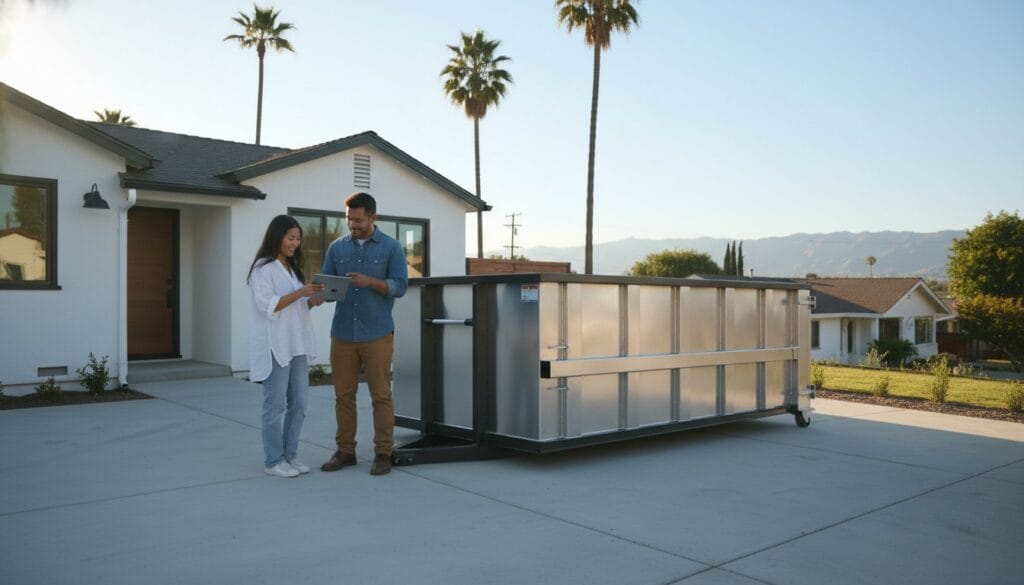
Imagine your renovation project in Silver Lake is finally moving, but the dumpster you ordered is too wide for your driveway and the city just issued a fine for blocking the sidewalk. It’s a common nightmare for local contractors and homeowners alike. Managing a construction debris dumpster rental Los Angeles shouldn’t feel like a second job. You probably already know that one wrong move with a street permit or an overloaded bin can lead to significant delays and unexpected overage fees.
We’re here to make sure that doesn’t happen. You’ll learn exactly how to master the process of renting, permitting, and loading your dumpster to keep your project on schedule and under budget. This guide provides a clear look at selecting the right bin size for heavy materials, securing your “A” Permit from the Bureau of Street Services, and staying compliant with LA waste regulations. From narrow West Hollywood streets to large commercial sites, you’ll have the practical steps needed for a hassle-free rental experience.
Key Takeaways
- Identify the right bin for your project, from the heavy-duty 10-yard low boy for concrete to the 25-yard roll off for residential renovations.
- Avoid hidden costs by mastering weight calculations and accounting for “water weight” during Los Angeles winters.
- Streamline your construction debris dumpster rental Los Angeles by following a 5-step guide for scheduling and site preparation.
- Navigate the LA Bureau of Street Services permit requirements to ensure legal placement on public right-of-ways.
- Learn how to schedule your rental 24-48 hours in advance to maintain your project timeline and avoid site delays.
Choosing the Right Construction Debris Dumpster Size in Los Angeles
Selecting the correct bin size is the most critical step in managing your project costs. A bin that is too small requires multiple hauls, while one that is too large wastes valuable space on a cramped job site. For a professional construction debris dumpster rental Los Angeles, you must match the container’s volume to the specific density of your waste. Los Angeles neighborhoods often feature tight driveways and narrow alleys, making the physical footprint of the bin just as important as its internal capacity.
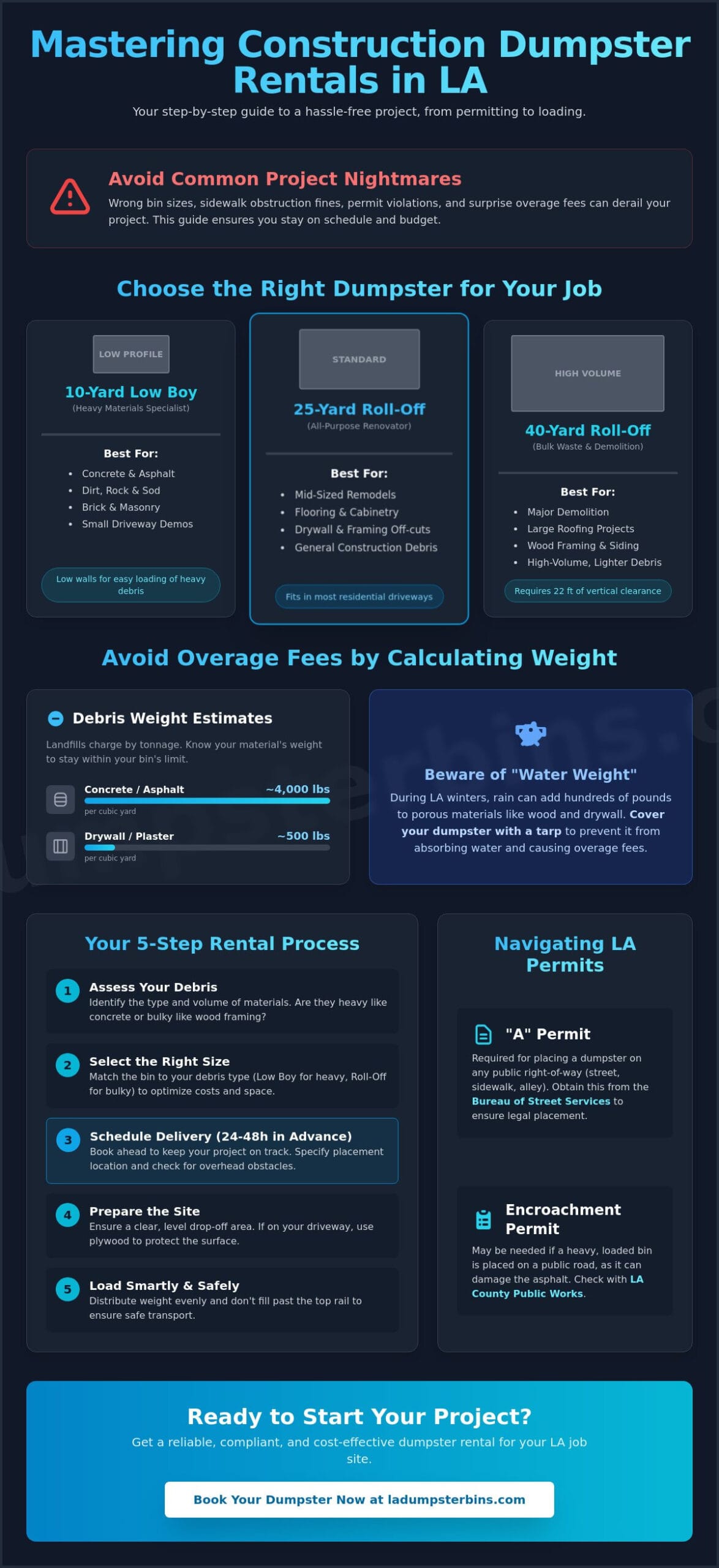
The 10-yard low boy is the industry standard for heavy, dense materials like concrete, asphalt, and dirt. It features lower side walls, usually around two to three feet high, which allows for easier manual loading of heavy masonry. If you are gutting a driveway in the San Fernando Valley or clearing a foundation, this is your best option. For mid-sized residential remodels involving flooring, cabinetry, and some drywall, the 25-yard bin offers a balanced capacity that fits into most standard residential driveways without obstructing the sidewalk.
Major demolition and roofing projects require the 40-yard commercial dumpster. These containers are built for high-volume, lighter debris such as wood framing, siding, and shingles. Before ordering, measure your site footprint. You need at least 22 feet of vertical clearance for the truck to safely tilt and drop the bin. In areas like Silver Lake or West Hollywood, always check for overhead power lines or low-hanging trees that could obstruct the delivery.
When to Use a Low Boy vs. a Standard Roll-Off
The primary difference between these units is weight distribution. Standard roll-off dumpsters have high walls that make them unsuitable for heavy masonry. A cubic yard of concrete weighs approximately 4,000 pounds. If you fill a 40-yard bin with concrete, the truck will be unable to lift it, and you will face “overweight” violations on the 405 or 101. Low boys are engineered specifically to handle these heavy loads while staying within legal transport limits. Using the wrong bin for heavy debris often results in overage fees ranging from $50 to over $100 per ton.
Matching Bin Size to Construction Phases
- Demolition Phase: This phase generates the most bulk. Use a 40-yard container to handle the high volume of old framing and bulky waste.
- Framing and Drywall: Transition to a 25-yard bin. It’s ideal for off-cuts, packaging, and lighter interior materials that take up space but don’t hit maximum weight limits quickly.
- Landscaping and Site Clearing: Stick with the 10-yard low boy. It’s perfect for soil, sod, and rock clearing where weight accumulates rapidly.
By matching your bin to the specific phase of your project, you ensure a cleaner job site and more predictable disposal costs. Always communicate the type of debris you’re hauling to ensure your construction debris dumpster rental Los Angeles stays compliant with local weight regulations.
Calculating Construction Material Weight to Avoid Overage Fees
Weight is the single most common cause of budget creep in any construction debris dumpster rental Los Angeles. Landfills charge based on tonnage, and every bin has a specific capacity limit that you must respect. Heavy materials like concrete, asphalt, brick, and wet soil accumulate weight much faster than their volume suggests. A 10-yard low boy might look half empty, but it could already be at its legal hauling limit if filled with masonry debris.
The “Water Weight” factor is a major concern during Los Angeles winters. Porous materials like old lumber, drywall, and carpeting act as sponges. A single heavy rainstorm can add hundreds of pounds to your load. If you expect rain, cover your bin with a heavy-duty tarp. This simple step prevents the debris from soaking up water and pushing your total weight over the allowed limit. To estimate drywall weight, multiply the total square footage of the boards by 1.6 to get the approximate poundage for half-inch sheets.
If you plan to park a heavy bin on a public road, check if your project requires an encroachment permit from the county. Heavy bins can damage asphalt if they aren’t placed correctly, and local authorities monitor street placement closely.
Debris Weight Estimation Table
- Concrete and Asphalt: Approximately 4,000 lbs per cubic yard. A 10-yard bin filled with concrete weighs 20 tons.
- Drywall and Plaster: Roughly 500 lbs per cubic yard. It is bulky but significantly lighter than masonry.
- Roofing Shingles: One ton of debris typically covers about 7 to 10 “squares” (100 sq. ft. areas) of three-tab shingles.
- Lumber and Framing: A standard pile of mixed wood scraps weighs about 300 to 400 lbs per cubic yard.
The Hidden Costs of Mixing Debris
Separating your waste on-site is the most effective way to save on tipping fees. “Clean” loads, which consist of only one material type like 100% concrete or 100% dirt, are often processed at lower rates. When you mix wood, plastic, or general trash into a concrete low boy, it becomes a “Mixed” load. This requires additional sorting at the transfer station, which increases your costs. Contact the experts at LA Dumpster Bins for a precise weight estimate based on your specific material list. Keeping your masonry separate from your framing scraps ensures you get the most value out of your construction debris dumpster rental Los Angeles.
Los Angeles Permitting and Street Placement Regulations
Placing a bin on a public street in Los Angeles is not as simple as just dropping it off. You must navigate the Bureau of Street Services (BSS) requirements to avoid costly citations. For any construction debris dumpster rental Los Angeles, the location of the bin determines your legal obligations. If you can fit the container entirely on your private driveway or within the property line, you don’t need a permit. However, if any part of the bin touches a public sidewalk, alley, or street, you must secure an “A” Permit.
Neighborhood-specific restrictions are common in high-density areas like West LA and Hollywood. You cannot block fire hydrants, bus zones, or handicap ramps. Street cleaning schedules still apply. If your bin blocks a “No Parking” zone during restricted hours, the city may impound it. Local enforcement programs are active. They specifically target illegally placed dumpsters to keep traffic flowing. Get it right the first time to avoid these logistical headaches.
Safety is a non-negotiable part of the permit process. Street-placed bins must have reflective tape or barricades to alert drivers at night. Failure to mark your bin properly creates a liability risk for your project. You should also align your construction debris dumpster rental Los Angeles with Los Angeles County C&D recycling regulations to ensure your waste management plan meets local ordinances.
How to Apply for an LA Use of Street Permit
The application process is handled through the StreetsLA online portal. You’ll need to provide a basic site map showing the bin’s exact location relative to the curb and nearest intersection. Typical lead times for approval range from 7 to 14 days. You should also be prepared to show proof of insurance. The permit fee usually ranges from $75 to $150 depending on the duration of your project.
Placement Tips for Tight Urban Spaces
Urban job sites present unique logistical hurdles. Before the truck arrives, look up. Ensure there are no low-hanging power lines or tree branches that could snag the hydraulic lift. A roll-off truck needs significant vertical clearance to tilt the bin into place. To protect your property, lay down two sheets of thick plywood where the bin’s steel wheels will rest. This distributes the weight and prevents the heavy container from cracking your asphalt or concrete driveway. Clear the delivery path of any parked cars at least an hour before your scheduled drop-off time to ensure a smooth transition.
How to Rent and Load Your Construction Dumpster: A 5-Step Guide
Renting a bin is only half the battle. How you load it determines if you stay within budget or get hit with safety fines. Follow these five steps for a seamless construction debris dumpster rental Los Angeles experience. It’s the best way to keep your site organized and your haulers happy.
Step 1: Schedule your rental early. Aim for a 24 to 48-hour lead time. This ensures you get priority delivery and the exact bin size you need for your project. Step 2: Clear the delivery path. Mark the drop-off spot with orange cones or chalk. Ensure there’s a 10-foot wide path for the truck. Step 3: Load heavy items first. Place concrete, bricks, or large timber at the bottom. This creates a stable base and keeps the center of gravity low for transport. Step 4: Break down bulky materials. Avoid “air pockets” by cutting down long lumber and smashing large boxes. This maximizes every cubic yard of space. Step 5: Call for pickup early. Don’t wait until the bin is overflowing. Schedule your haul-away when you’re about 90% full to avoid site delays.
Pro Loading Techniques for Contractors
The “Tetris Method” is the best way to distribute weight evenly across the bin floor. Professional crews never just toss items in. They lay flat materials first and fill gaps with smaller debris. You must never load debris above the “Fill Line” marked on the side of the container. If items stick out over the top, the driver cannot safely tarp the load. This leads to rejected pickups or safety fines from local authorities. If you have long framing lumber, cut it into smaller sections so it fits flush within the walls. This prevents items from shifting during transport on hilly Los Angeles streets.
Prohibited Items in Construction Rentals
California has strict laws regarding what can enter a standard landfill. You cannot put hazardous waste into your roll-off. This includes asbestos, lead-based paint, and industrial chemicals. Tires and electronics also require specialized disposal. These items are banned from construction bins because they require separate processing at certified facilities. If you find these materials on your job site, you must take them to a local S.A.F.E. Center or a designated hazardous waste drop-off point. Mixing these into your bin will result in the entire load being rejected at the transfer station. For a reliable and compliant construction debris dumpster rental Los Angeles, book your next bin online and keep your site running smoothly.
Optimizing Your LA Job Site with LA Dumpster Bins
Managing a high-stakes job site in the San Fernando Valley or the LA Metro area requires a partner who understands local logistics. LA Dumpster Bins provides direct, no-nonsense service designed to keep your project moving. We’re a local, family-owned business. We own our fleet and our inventory. This gives us total control over the delivery schedule. Unlike national brokers who act as middlemen, we offer a direct line to the people actually handling your waste. You won’t get stuck waiting for a call center in another time zone.
Urgent construction deadlines don’t always follow a standard schedule. Our team offers 24/7 availability to handle your immediate needs. If your crew finishes a massive demolition phase at night and needs a fresh bin by the morning, we respond quickly. This level of readiness makes us a dependable partner for contractors across the city. It ensures your construction debris dumpster rental Los Angeles is there exactly when you need it, preventing costly downtime for your labor crews.
Transparent pricing is the foundation of our business model. When you book a construction debris dumpster rental Los Angeles, you deserve to know the final cost upfront. We eliminate the hidden fees that often plague the waste industry. There are no surprise charges for delivery or pickup. You get a straightforward quote that respects your project budget and keeps your overhead predictable. Supporting a local business means your money stays in the community while you receive a higher level of accountability.
Custom Solutions for Large-Scale Projects
Professional contractors often face complex waste management hurdles. Large-scale demolition sites require more than just a single drop-off. We provide multi-bin rotations to ensure your site stays clean and your crew never stands idle. We also coordinate specialized Low Boy scheduling for heavy concrete and asphalt removal. This ensures you have the right equipment for every phase of the build. Dedicated account support means you’ll work with a dispatch team that remembers your site’s specific access points and safety requirements.
Get a Fast Quote Today
The best way to get an accurate estimate is to share your specific project details. Tell our team what you’re hauling and where the bin needs to land. Be sure to mention any site constraints like narrow alleys or overhead lines. Our dispatchers can check same-day service availability to help you meet tight deadlines. For a reliable local provider that understands the pace of the city, we’re ready to work. Providing clear details about your debris type helps us ensure you get the right bin at the right price.
Ready to start your project? Get a free quote from LA Dumpster Bins. We’re here to provide the dependable service your job site deserves.
Streamline Your Los Angeles Construction Project Today
Success on a job site depends on efficient logistics and clear communication. You now have the tools to choose the right bin size, calculate material weight accurately, and navigate the specific permitting rules of the Bureau of Street Services. By separating your debris and loading your container strategically, you’ll avoid the common pitfalls of unexpected fees and site delays. Managing your construction debris dumpster rental Los Angeles shouldn’t be a source of stress for your project.
LA Dumpster Bins was founded in 2021 to bring local expertise and dependable service to every neighborhood from the Valley to the Metro area. We understand the unique challenges of tight urban spaces and heavy masonry disposal. With our specialized Low Boy dumpsters and round-the-clock 24/7 availability, we’re ready to support your most urgent construction deadlines. Don’t let waste management slow your progress down.
Book Your Construction Dumpster Rental with LA Dumpster Bins and experience the difference that local, professional service makes. We look forward to helping you keep your project on schedule and under budget.
Frequently Asked Questions
Do I need a permit for a dumpster in Los Angeles if it is on my driveway?
No, you don’t need a permit if the bin stays entirely on your private property. Permits are only mandatory when a container occupies a public right-of-way, such as a street, sidewalk, or alley. If your driveway is large enough to accommodate the bin without blocking the public path, you can skip the city’s permit application process entirely.
What is a “Low Boy” dumpster and when do I need one in LA?
A Low Boy is a specialized 10-yard container with short walls designed specifically for heavy, dense materials. You need one for your construction debris dumpster rental Los Angeles when you’re hauling concrete, dirt, asphalt, or brick. Standard high-walled bins are not built to transport these heavy loads safely and will quickly exceed legal road weight limits.
How much construction debris can I put in a 40-yard dumpster?
A 40-yard dumpster holds approximately 40 cubic yards of light, bulky waste. This is roughly equivalent to 18 to 20 pickup truck loads of materials like wood framing, siding, and roofing shingles. It’s the ideal choice for major demolition projects where volume is high but the individual materials aren’t as dense as masonry or soil.
Can I put concrete and dirt in the same dumpster?
Yes, you can mix these materials, but it will change your load classification to “Mixed Debris.” Clean loads consisting of only one material type are generally more affordable to process at local transfer stations. If your project involves a high volume of both, renting separate bins for dirt and concrete is often more cost-effective than mixing them.
What happens if my dumpster is overweight when you pick it up?
If a bin exceeds legal weight limits, the driver cannot safely or legally transport it on Los Angeles roads. You’ll have to remove the excess debris until the load reaches a safe weight. You will also be responsible for overage fees, which typically range from $50 to over $100 per ton beyond your agreed limit.
How long can I keep the dumpster on my construction site?
Standard rental periods for a construction debris dumpster rental Los Angeles usually last between 7 and 14 days. If your project takes longer than expected, you can typically extend the rental for a daily fee. Always notify your provider at least 24 hours before your scheduled pickup if you need to keep the bin longer.
Does LA Dumpster Bins offer same-day delivery in the San Fernando Valley?
You should contact our dispatch team directly to check current availability for same-day service in the San Fernando Valley. While we recommend scheduling your delivery 24 to 48 hours in advance to guarantee your preferred bin size, we often have the logistical flexibility to accommodate urgent requests depending on our daily route schedule.
How do I avoid damage to my driveway during delivery?
The most effective way to protect your property is to lay down two sheets of thick plywood where the bin’s wheels will rest. This distributes the weight of the heavy steel container and prevents it from cracking or scratching your asphalt or concrete. Ensure the area is clear of loose rocks and debris before the truck arrives to provide a stable surface.